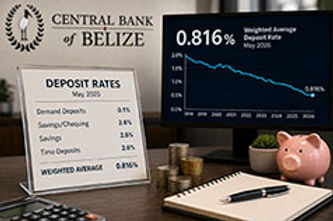
Belize’s banking sector continues to grapple with a prolonged era of ultra-low deposit returns, with the nation’s weighted-average deposit rate holding near an all-time trough at 0.816% in May 2026, according to new data from the Central Bank of Belize. This reading comes just two months after the rate hit an unprecedented low of 0.780% in March 2026, capping a multi-year downward trend that has been reshaping incentives for both savers and lending institutions across the country.
Since the Central Bank first began tracking this metric in 1977, few monthly readings have ever fallen this low. The downward trajectory began accelerating sharply two years ago, and the indicator first slipped below the 1% threshold in late 2024, where it has remained ever since. In January 2026, the average stood at 0.872%, gradually edging lower to the current reading by May.
It is important to clarify that the weighted-average rate differs from the individual interest rates advertised for specific deposit products. Banks adjust pricing for different account types to reflect withdrawal terms and risk: demand deposits, which can be accessed at any time without penalty, carried an average rate of just 0.1% in May. Both general savings and chequing accounts posted a 2.6% average rate, while fixed-term time deposits, which lock in funds for a set period, averaged 2.0%. The weighted-average figure combines all these categories, proportional to the total volume of funds held in each, to produce a holistic measure of banks’ total funding costs across their entire deposit base.
For ordinary household savers, the new data confirms that traditional savings products are delivering returns not seen in nearly 50 years. To put this in context: a saver depositing BZ$10,000 at an annual rate of 0.8% would earn just BZ$80 in interest over a full year before taxes and fees are deducted. Over a 10-year holding period, that same deposit would generate approximately BZ$830 in cumulative interest, a figure that fails to keep pace with even modest levels of inflation for many Belizean households.
The impact on businesses and the broader banking sector is far more mixed. Lower deposit rates directly cut banks’ core funding costs, which can boost bottom-line profitability. In a highly competitive banking market, these reduced costs could create space for lenders to cut interest rates on loans or expand access to credit for small businesses and consumers. However, whether these potential benefits reach borrowers ultimately depends on three key factors: strong enough loan demand to encourage lending, sufficient competition between banks to drive rate cuts, and the overall health of Belize’s broader economy.
The root cause of this prolonged downward trend is clear: persistent excess liquidity flooding Belize’s banking system. Central Bank data shows that domestic lenders held more than BZ$400 million in excess cash reserves at the end of May 2026, and this surplus has stayed above the BZ$400 million mark for the entirety of the past year. Excess liquidity refers to cash held by banks that exceeds the mandatory reserve requirements set by the central bank. When banks are already awash with cash and deposits, they have little incentive to compete for new consumer and business deposits by offering higher interest rates.
Belize’s current experience aligns with broader global trends seen in banking systems following periods of elevated liquidity, which can stem from factors ranging from rapid deposit growth and cautious lending practices to accommodative expansionary monetary policy. When financial institutions already hold far more cash than they need, attracting additional customer deposits falls far down their list of strategic priorities.
Beyond the immediate impact on savers and banks, persistently low deposit rates raise important questions about the efficiency of Belize’s financial intermediation system. When traditional bank savings products deliver such low returns, they can discourage households from saving through formal bank channels, especially when inflation already erodes the purchasing power of cash holdings over time. At the same time, large volumes of surplus liquidity in the banking system can signal that available funds are not being channeled into productive private sector investment that would drive long-term economic growth.
Looking ahead, the future path of deposit rates in Belize will depend on how quickly the current excess liquidity is absorbed through stronger loan demand, increased business investment activity, or potential shifts in monetary policy conditions. For the immediate future, however, the latest data confirms that Belize’s banking system remains flush with cash, and savers will continue to face some of the lowest overall deposit returns recorded in the past 49 years.