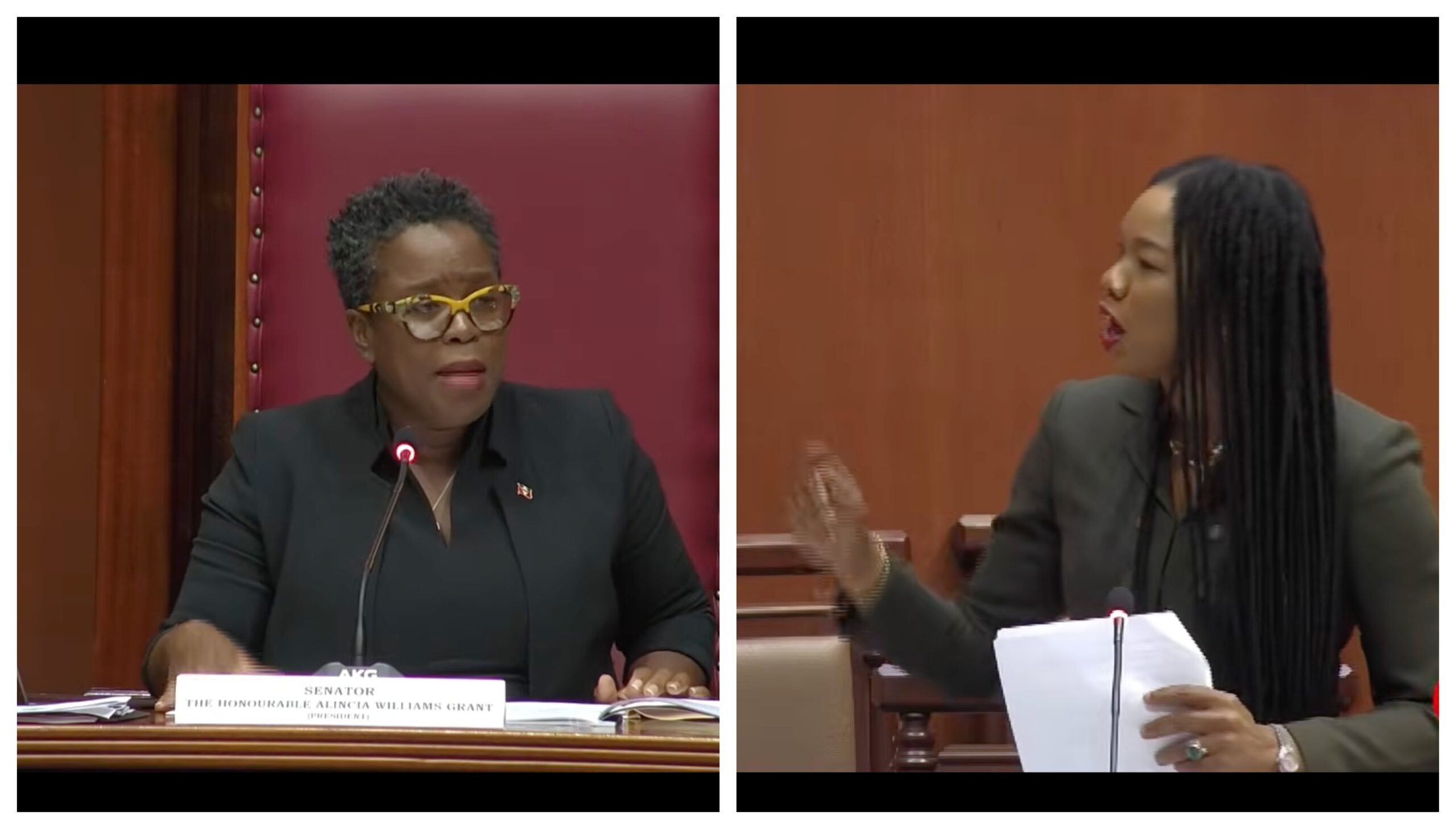
A sharp public dispute has broken out in the upper chamber of Antigua and Barbuda’s parliament, pitting Senate President Alincia Williams-Grant against opposition legislator Malaka Parker over claims of systemic unfair treatment during floor debates.
Parker opened the confrontation last week, leveling a direct allegation that the Senate’s presiding officer had deliberately refused to intervene when government senators repeatedly interrupted her remarks while she held the floor. The opposition senator told the chamber that she had consistently maintained proper decorum, allowing government representatives to deliver their full remarks without disruption, yet faced coordinated interruptions every time she rose to contribute to discussions.
“From the very first sitting of this session, every single time I stand to speak in this honorable House, I face a chorus of interruptions, and I have received no protection from the chair,” Parker stated during the tense exchange.
Williams-Grant immediately pushed back forcefully against the claims, rejecting the accusation of negligence entirely. The Senate president argued that Parker herself had often joined back-and-forth exchanges with government side senators, rather than adhering to formal procedure that requires all remarks to be directed through the chair.
“You cannot lay this accusation at my door,” Williams-Grant told the chamber. “Light back-and-forth debate is an established part of our parliamentary process. If you require my intervention to stop disruption, you must formally request that protection. You cannot simply claim that I have failed to protect you.”
Williams-Grant emphasized that she has consistently provided procedural protection to every senator, regardless of party affiliation, when it is properly requested, calling Parker’s claims “uncalled for and completely untrue.”
The exchange also included a moment of correction over parliamentary etiquette, after Parker opened her remarks with the informal phrasing “Madam President, let me tell you something.” Williams-Grant cautioned Parker on the improper address, prompting the opposition senator to immediately apologize and adjust her language to align with chamber rules.
The disagreement continued as Parker acknowledged that the two held differing interpretations of proper Senate procedure, a framing Williams-Grant rejected outright. The Senate president reiterated that the onus falls on any legislator facing excessive disruption to formally request the chair’s intervention, rather than expecting unprompted action.
“If interruptions become too much and you need protection, you simply alert me, and I will put a stop to it,” Williams-Grant said. She added that on previous occasions, Parker had chosen to engage directly with senators on the government side of the chamber instead of routing all comments through the chair, a departure from standard protocol.
As the presiding officer, Williams-Grant noted that disagreements with her rulings are an unavoidable part of the role, but her decisions are final within the chamber. “I will make statements and I will issue rulings that not everyone will agree with, and that is perfectly acceptable. I am the final arbiter in this chamber,” she said.
After the full exchange, Parker wrapped up the disagreement and confirmed she would adjust her approach moving forward. “Thank you for your clarification on this matter,” Parker said. “I will act accordingly going forward,” before resuming her interrupted presentation.