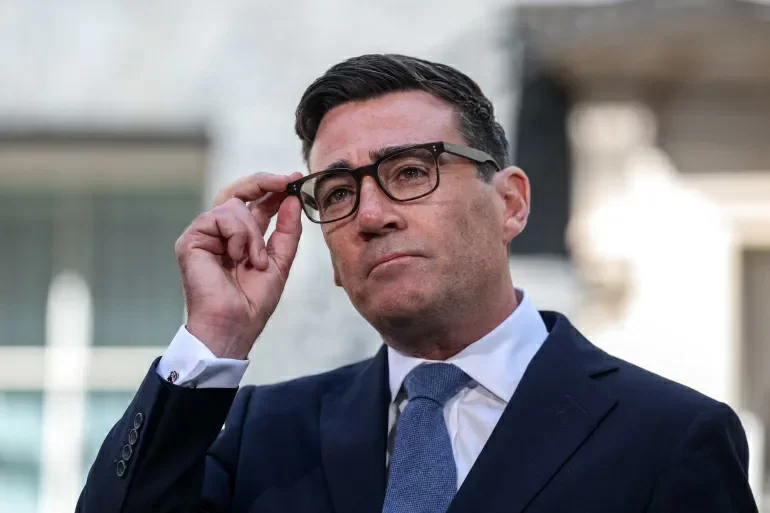
On Monday, Andy Burnham officially took office as the seventh Prime Minister of the United Kingdom in just 10 years, marking another major shift in the country’s turbulent political landscape. Following his formal audience with King Charles III at Buckingham Palace, the new Labour Party leader unveiled an ambitious, if still outline-only, plan to reshape British politics and tackle the ongoing cost-of-living crisis, anchored by a 10-year strategy to build what he calls “a new economy.”
Stepping into a role shaped by years of successive leadership turnover, Burnham openly acknowledged his government’s potentially fragile position and stressed the urgent need for a break from Britain’s recent fractured political trajectory. “We are going to change politics – it will be less about scoring points, and more about working together and finding solutions,” he stated in his first public address as prime minister. He has pledged to decentralize state power, devolve greater responsibility to local communities, and use robust government intervention to bring essential living costs back within reach for ordinary households.
A former mayor of Greater Manchester, Burnham succeeds Keir Starmer, who stepped down after two years in office and one landslide general election victory, amid mounting internal party tensions and public criticism. Starmer delivered his farewell address on Monday, saying “My work is done. I leave with my head held high and proud of what we have achieved.”
The handover of power followed longstanding royal protocol with the traditional “kissing hands” ceremony at Buckingham Palace, though the practice of kissing the monarch’s hand was not observed during this meeting. Burnham said he is “very conscious” of the rapid turnover of leadership at 10 Downing Street, and called on his generation of political leaders to “improve the game” and rebuild public trust in British democratic institutions.
Burnham ran unopposed for the Labour Party leadership, securing the backing of 379 out of 403 sitting Labour members of parliament. He inherits a daunting slate of pressing challenges: a stagnant, slow-growing national economy, the persistent cost-of-living crisis that has squeezed millions of households, overstretched public services stretched to breaking point, and complex global diplomatic priorities including the ongoing wars in Ukraine and the Middle East.
In his inaugural speech as prime minister, he also committed to ending homelessness across the United Kingdom and breaking up a political system that he argues has been marked by bad policy choices – including widespread privatization – since the 1980s.
Critical observers are eagerly awaiting the full details of Burnham’s flagship 10-year plan, which he is set to formally present on Tuesday. Joshi Herrmann, founder of Manchester-based news platform The Mill, noted that the plan will only deliver on its promises if the government can unlock substantial, sustained economic growth.
Beyond policy proposals, widespread attention is also focused on the composition of Burnham’s first cabinet. Major changes are expected at key top posts, including Chancellor of the Exchequer, Foreign Secretary, and Home Secretary.
Starmer leaves Downing Street with a number of notable legislative and policy achievements, including strengthened worker protections, reductions in childhood poverty, and increased defense spending. Even so, maintaining stable, consistent governance proved an uphill battle during his tenure, amid ongoing internal divisions and external pressures.
As Burnham moves into 10 Downing Street, he carries an inbox full of urgent, unresolved policy files and the defining mission of restoring public faith in politics for a nation that has long craved stability and tangible progress after a decade of constant upheaval.