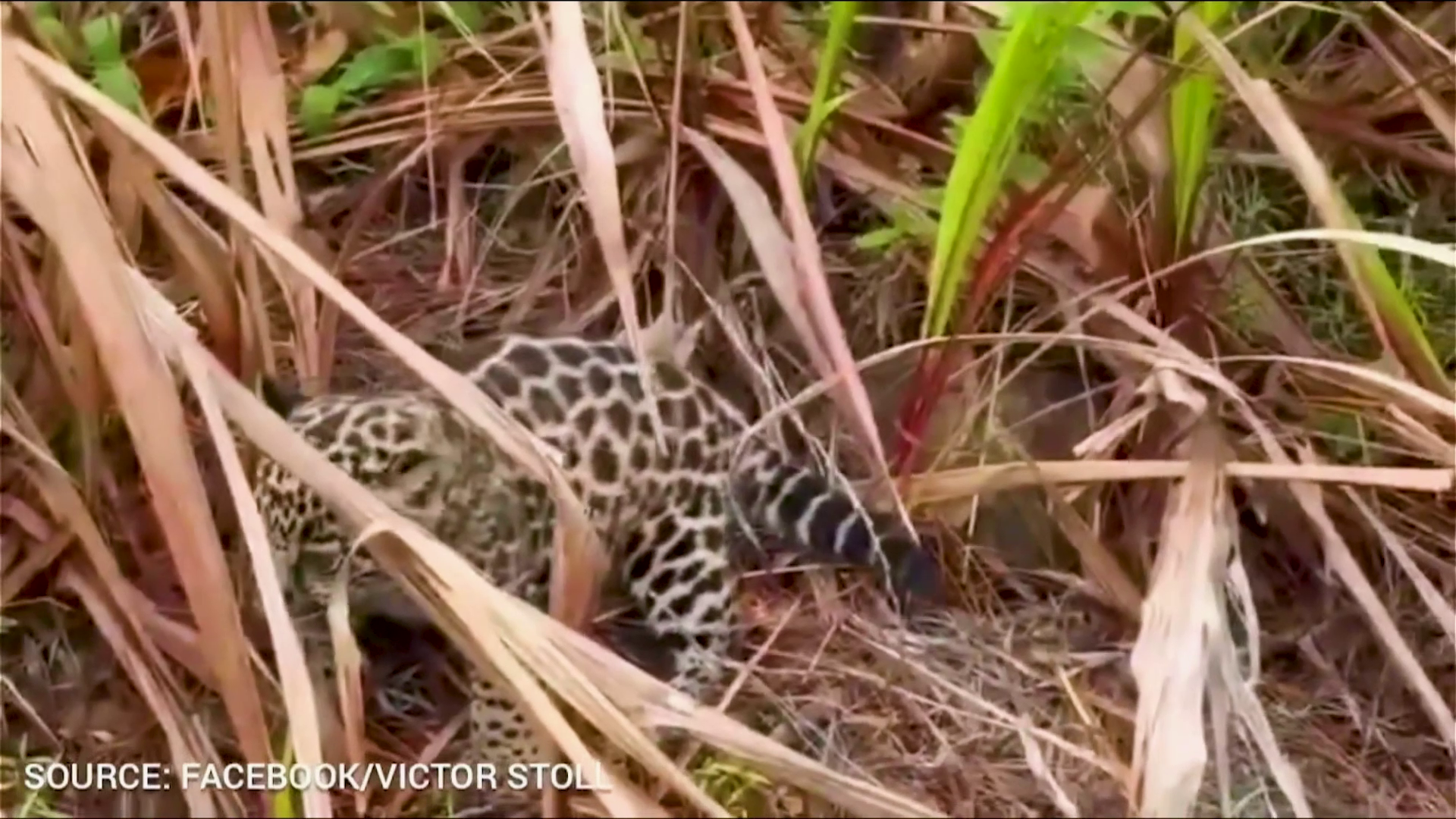
A high-profile wildlife violation case has unfolded in Belize, with authorities now hunting for Belizean-American dual national Ruben Stoll, who is believed to have fled the country ahead of his planned arrest. The case stems from a widely circulated social media video that captured Stoll interacting with a young wild jaguar cub, an endangered big cat native to Central America. The footage shows Stoll petting the cub, which was reportedly separated from its mother after a vehicle collision. The video went viral over the weekend, triggering immediate public outcry from wildlife conservation advocates and local communities, and pushing the Belize Forest Department to open a formal investigation. After reviewing the evidence, department officials confirmed they have prepared two charges against Stoll under the nation’s Wildlife Protection Act. Despite the pending charges, Stoll managed to cross Belize’s northern border and leave the country on Wednesday, before law enforcement officers could locate and detain him. As of Thursday evening, a formal arrest warrant has been issued for Stoll by Belizean authorities. Victoria Chi, a senior forest officer with the Belize Forest Department, outlined the details of the investigation and next steps for officials in a public briefing. “Stoll holds dual Belizean-American citizenship, so he uses his Belizean passport when re-entering the country,” Chi explained. “We contacted Belize Immigration immediately after the incident to request entry and exit records, and we were notified yesterday that Stoll officially exited the northern border day prior.” Given Stoll’s frequent travel back to Belize, Chi noted that the department’s key next step is to circulate the arrest warrant through national immigration channels. This will allow border agents to detain Stoll immediately upon his return to the country, so officials can move forward with the formal charges. A notable detail of the case that has drawn public discussion is the low maximum penalty for the offenses: each of the two charges carries a maximum fine of only $500 Belizean dollars, equivalent to roughly $200 U.S. dollars. The case has sparked renewed debate about whether Belize’s penalties for violating wildlife protection laws are strict enough to deter harm to endangered native species like jaguars. This report is based on a transcript of an evening television newscast from Belize.