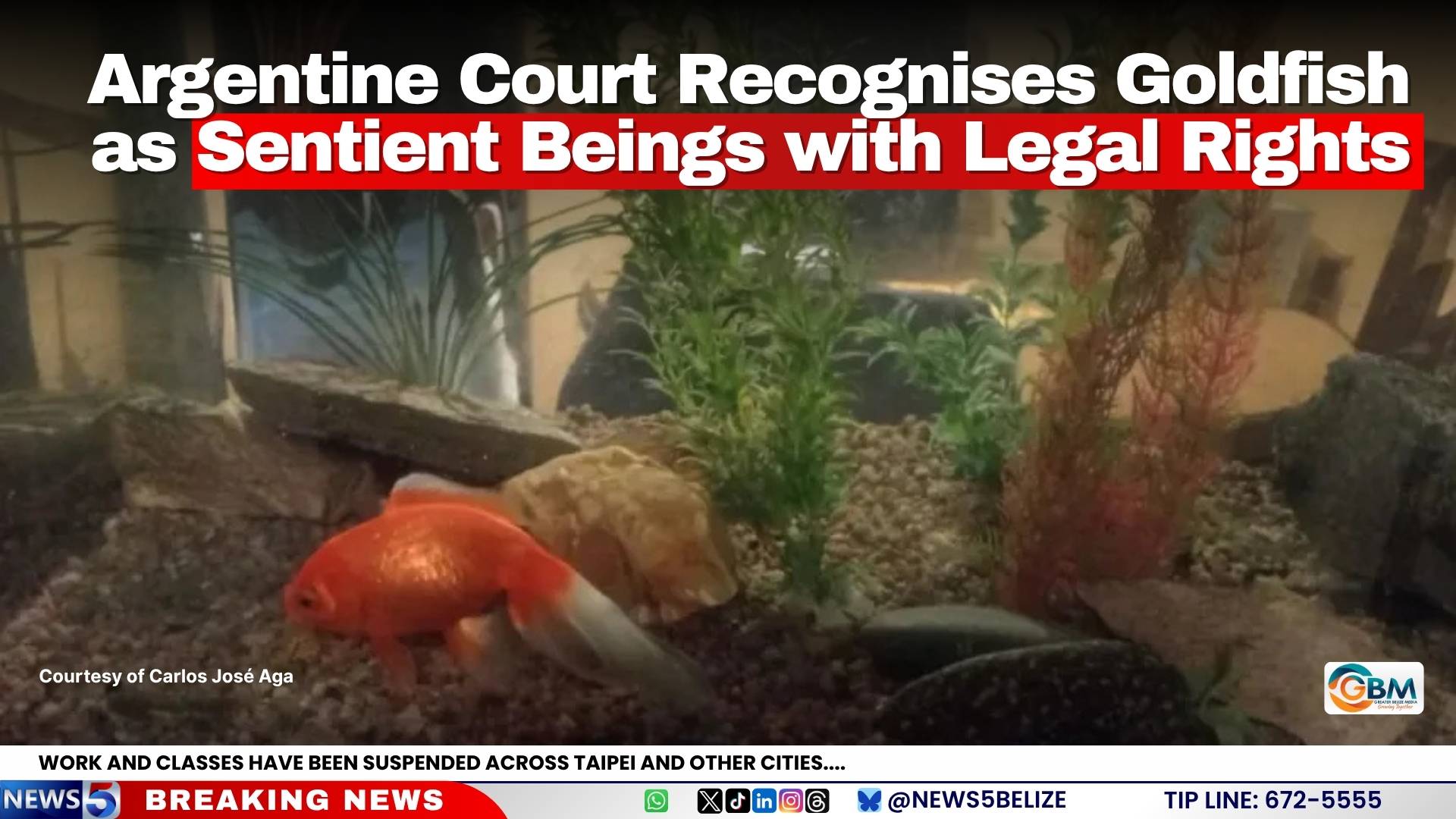
In a groundbreaking decision that has sent ripples through global animal rights movements, an Argentine court issued a historic ruling on July 15, 2026, that redefines the legal status of non-human animals by formally recognizing two goldfish as sentient beings with enforceable legal rights. The case, which began when local animal welfare advocacy group Jaulas Vacías (Empty Cages) drew attention to the poor living conditions of the two goldfish—named Fede and Magui—marks a potential turning point for animal protection jurisprudence across Latin America and beyond.
Fede and Magui were held in a tiny glass display tank positioned directly outside a Buenos Aires sushi restaurant. For an extended period, the fish were exposed to unregulated direct sunlight and constant disruptive street noise, conditions that animal rights activists argued constituted clear animal cruelty. Unlike traditional cases that only seek fines or changes to care practices, Jaulas Vacías structured its complaint to challenge a long-standing legal principle: that animals are classified as mere property under the law. The group filed suit under Argentina’s existing national animal welfare framework, arguing that the goldfish’s constant suffering met the legal definition of mistreatment and that they deserved recognition as more than inanimate objects.
After reviewing the evidence of the poor living conditions, the court ruled in full alignment with the advocacy group’s core argument. The ruling not only ordered the immediate removal of Fede and Magui from the restaurant tank but also formally declared the two goldfish to be “subjects of law,” a legal designation that confirms their status as sentient beings capable of experiencing harm with protected legal rights. Following the court order, the fish were relocated to a far more suitable habitat: a 2,500-litre custom aquarium maintained by independent aquatic specialist Carlos José Aga, who volunteered his space and expertise to care for the pair long-term.
Matías Trufero, the animal rights attorney who represented Jaulas Vacías in the case, emphasized that the ruling carries far-reaching implications for future animal protection litigation. While the decision does not outlaw private ownership of goldfish as pets, it establishes a clear legal precedent that keeping fish (or any other animal) in conditions that cause unnecessary suffering—including insufficient tank size, inadequate nutrition or poor environmental management—violates Argentina’s existing animal protection statutes. Animal rights advocates across the globe have already hailed the ruling as a landmark step forward, noting that it could open the door for broader legal challenges to industrial animal farming, exotic pet trade, and other practices that have historically been allowed under the legal framework that classifies animals as property.