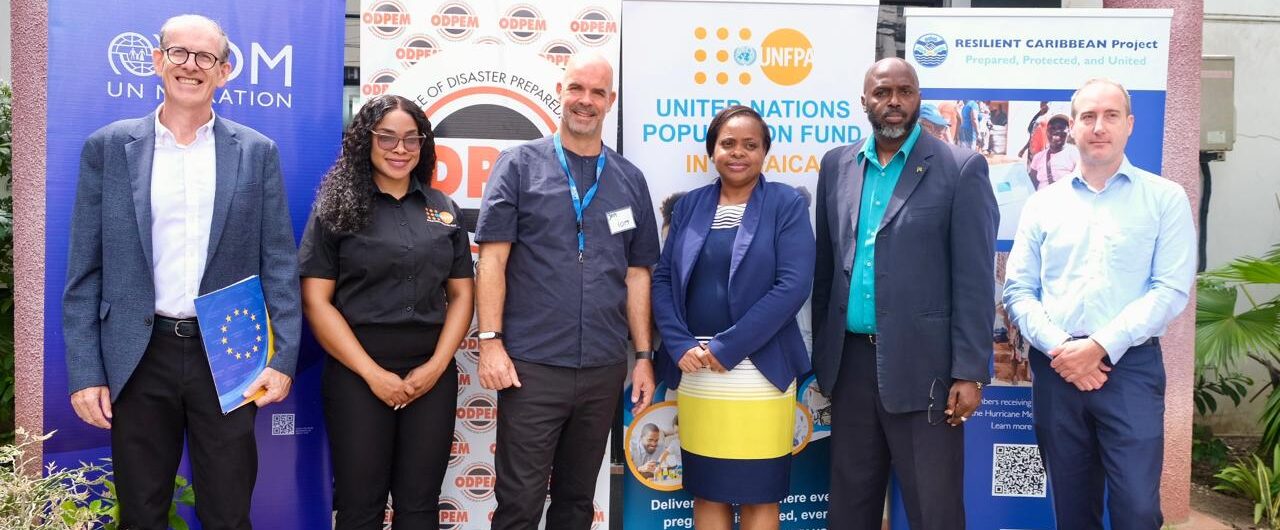
KINGSTON, Jamaica – Twenty-four seasoned disaster response professionals from four Eastern Caribbean nations have convened in Jamaica’s capital for a targeted three-day training initiative designed to fix a longstanding critical gap in regional disaster relief operations. Launched on July 14 at the headquarters of Jamaica’s Office of Disaster Preparedness and Emergency Management (ODPEM), the Last Mile Distribution Training of Trainers aims to build a self-sustaining network of local experts capable of delivering emergency supplies faster, more fairly, and more safely to vulnerable communities hit by extreme weather events.
Participants in the workshop hail from Dominica, Jamaica, Saint Lucia, and Saint Vincent and the Grenadines, drawing representatives from national disaster management agencies, local humanitarian organizations, and community-level response groups. The program is hosted by ODPEM, with technical facilitation provided by three leading regional and global bodies: the International Organization for Migration (IOM), the Caribbean Disaster Emergency Management Agency (CDEMA), and the United Nations Population Fund (UNFPA). The entire initiative is funded by European Union Humanitarian Aid as part of the broader Resilient Caribbean Project, a regional effort to strengthen disaster preparedness and address disaster-related displacement across the Caribbean.
The training directly responds to key findings from a 2025 regional needs assessment, which flagged last-mile distribution – the final stage of getting emergency aid from central storage hubs to individual affected households – as one of the most significant weaknesses in the Caribbean’s disaster response ecosystem. Recent high-impact hurricanes have underscored the urgency of addressing this gap: during 2024’s Hurricane Beryl and 2025’s Hurricane Melissa, damaged road networks and destroyed critical infrastructure left many vulnerable families waiting days or longer for essential supplies including tarpaulins for emergency shelter, solar lanterns for power, and personal hygiene kits.
Unlike traditional classroom-based training, the program prioritizes hands-on practical learning, with participants completing immersive simulation exercises that replicate the chaotic conditions of a post-disaster environment. The comprehensive curriculum covers every stage of the last-mile process, from pre-distribution planning and beneficiary registration to organizing distribution sites and managing crowd flow. It also addresses often-overlooked critical priorities including accountability to affected communities, protection from gender-based violence and exploitation at relief sites, end-to-end supply chain management, pre-positioning stock readiness, and post-distribution monitoring to identify gaps and improve future operations.
Patrice Quesada, IOM Caribbean Coordinator, emphasized that building local expertise is the foundation of long-term improvement in regional disaster response. “When Caribbean responders are trained and empowered to pass their knowledge on to others, we build a lasting, self-sufficient pool of professionals who can run safe, dignified aid distributions that meet the unique needs of our region,” Quesada explained.
Richard Thompson, Deputy Director General of ODPEM, echoed this sentiment, noting that local responders have unmatched insight into the needs of their own communities. “This training doesn’t just bring new concepts – it gives frontline workers practical, tested tools they can put to use immediately after they return home,” Thompson said. “When the next storm hits, people across Jamaica and the Caribbean will get the aid they need, exactly when they need it.”
Organizers stress that effective last-mile systems are particularly critical for families displaced by disasters, as they ensure aid is delivered in a safe, orderly, and respectful manner while keeping affected communities informed at every step of the process. Andre Fache, Programme Manager at the Delegation of the European Union to Jamaica, Belize and The Bahamas, reaffirmed the EU’s long-term commitment to strengthening regional disaster management capacity.
“Strengthening institutional and technical capacities at both national and regional levels remains a key priority for the European Union,” Fache said. “Effective last-mile distribution is essential to ensure that life-saving assistance reaches the most vulnerable people quickly, safely, and equitably.”
Once the training concludes, each participant – now a certified master trainer – will return to their home country and organization to deliver the same curriculum to local frontline workers. This train-the-trainer model is expected to expand the initiative’s impact to reach roughly 300 additional disaster response personnel across the Caribbean. Graduates will also join a new regional community of practice, designed to promote shared standards for last-mile distribution and foster ongoing cross-border collaboration during future disaster responses.
This training is the first of two regional capacity-building events supported by the Resilient Caribbean Project. From July 21 to 23, 2026, a second advanced training focused on emergency shelter management will take place in Barbados, continuing the project’s work to build a more resilient Caribbean better equipped to handle the growing threat of climate-fueled extreme weather events.