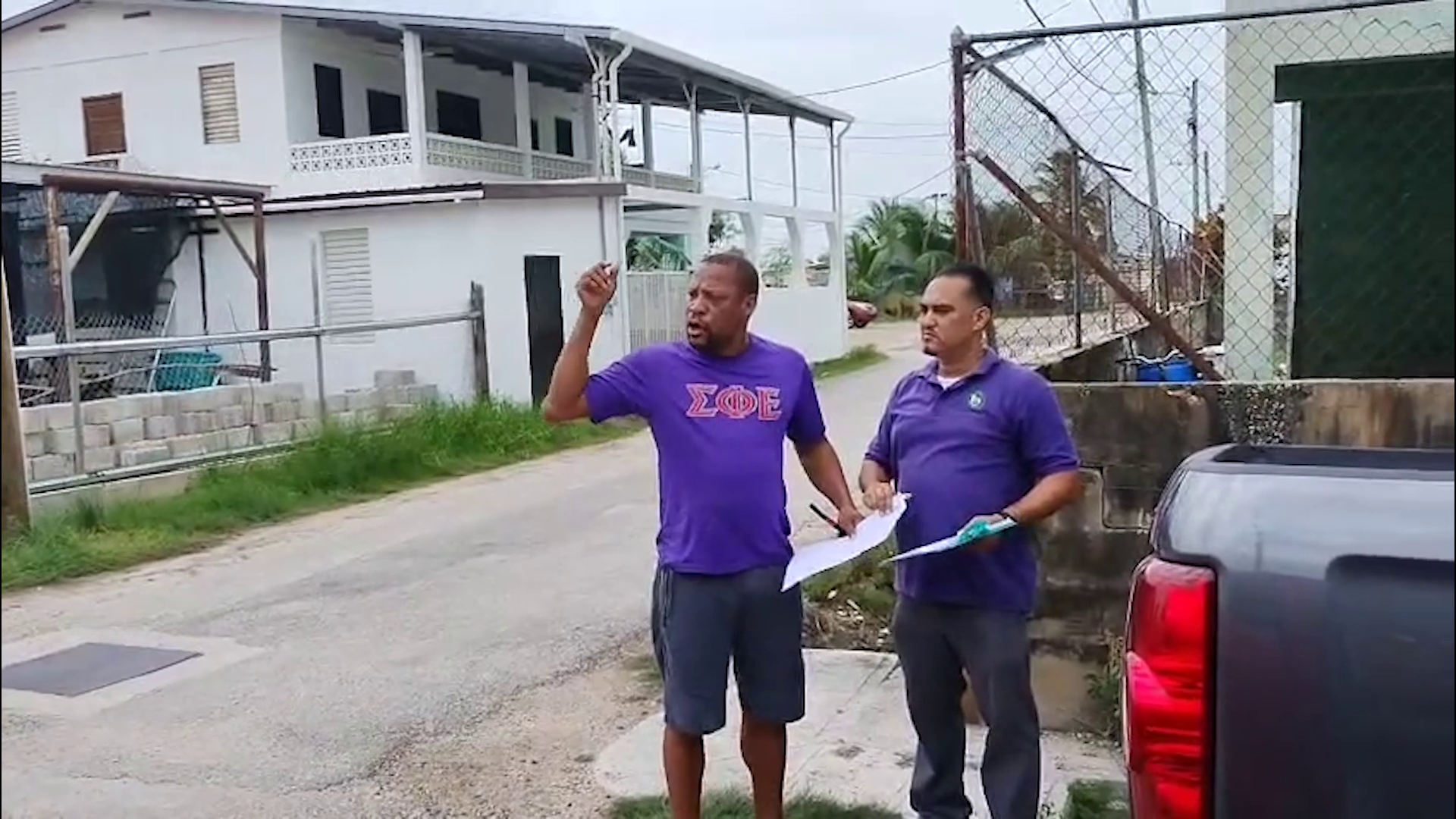
On a routine working trip to cover an unrelated story in Mesopotamia, a reporting team from News Five stumbled across an unfolding public dispute centered on voter registration activities, that could now land a local opposition party operative in legal trouble.
The confrontation broke out Tuesday at the intersection of Iguana and Bocotora Streets, when a registration officer from Belize’s Elections and Boundaries Department arrived to update voter rolls. Brian “Yellowman” Audinette, a long-time operative for the United Democratic Party (UDP), stepped in to block the process, claiming that the individuals attempting to register did not actually reside at the address in question.
“That noh fi happen. That noh wah happen under my watch,” Audinette told reporters on scene, asserting that he was acting to prevent what he calls illegal voter registration – an offense that carries penalties including fines and even jail time under Belizean electoral law. “Unu noh wa register nobody ya like that. Unu noh wah come with no illegal registration ya.”
But Chief Elections Officer Josephine Tamai clarified that while Audinette had every right to challenge questionable registrations, he chose the wrong approach. Belize’s Representation of the People Act lays out a clear, formal process for voters to raise objections to any entry on the voter rolls, Tamai explained. To file a formal challenge, an elector must submit a written notice of objection on the official Form 14A, outlining clear grounds for their challenge, by the 25th day of the month in which the registration takes place. Once a challenge is submitted correctly, a revision court overseen by a sitting magistrate will be convened before the end of the month to hear evidence, review the case, and issue a binding ruling on whether the voter’s name stays on the list or is removed.
Instead of following this formal legal process, Tamai noted, Audinette chose to interfere directly with the registration officer’s official duties, an act that itself violates electoral regulations. The Elections and Boundaries Department is treating the incident with significant seriousness, Tamai emphasized, stressing that no private citizen is permitted to obstruct public officials as they carry out their legally mandated election work. “Any person who wishes to object must follow the process for objections as the process is clearly written in the Representation Of the People’s Act and action will be taken against anyone who interferes or obstruct officers from carrying out their duties,” Tamai said.
Many independent political observers in the country note that this incident is not an isolated case tied to one party, pointing out that operatives from both major political parties in Belize have a long history of attempting to block voter registrations in competitive constituencies through extra-legal means. They argue that any enforcement action taken against Audinette should prompt a broader review of such tactics across all political groups, to ensure all parties are held equally accountable for violations of electoral law. This report was prepared by Shane Williams for News Five.