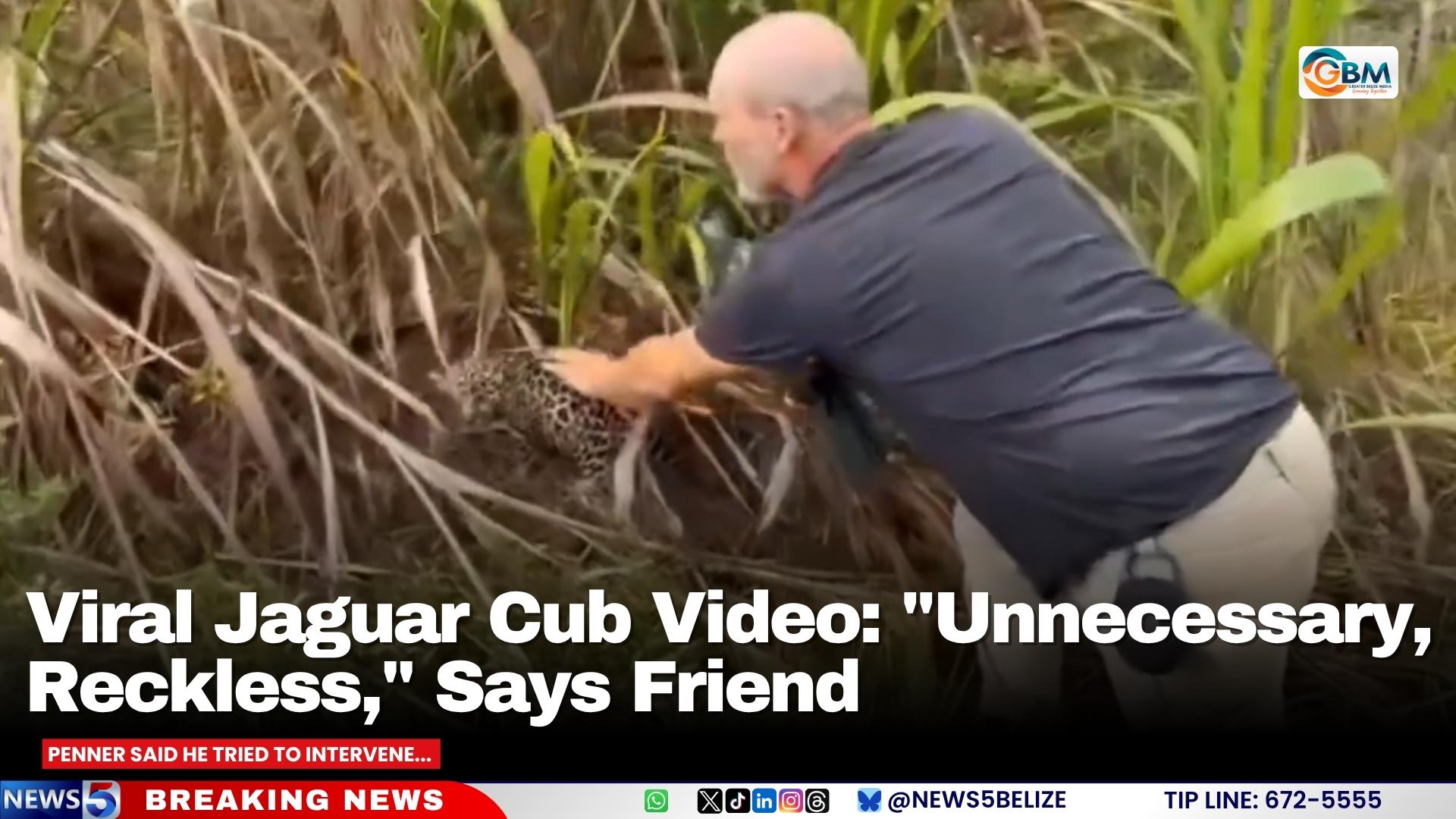
A viral video capturing two men cornering and touching a young jaguar cub in Belize’s Mountain Pine Ridge reserve has ignited fierce condemnation from wildlife conservation experts across the globe this week, and a third person present during the incident has now stepped forward to share new details of the problematic encounter. Leslie Penner, who describes himself as a long-time friend of the two brothers at the center of the controversy, provided an exclusive account to local outlet News Five, outlining how what began as an ordinary birdwatching trip spiraled into an incident that puts both human and big cat safety at risk.
According to Penner’s version of events, the group was navigating remote backcountry trails in the protected reserve when they spotted an adult female jaguar on the path ahead of their off-road vehicle. Moments later, they noticed her cub walking along the same trail, moving directly toward its mother. That is when, Penner says, one of the brothers—identified only as Ruben—made the sudden decision to exit the vehicle to get a closer look at the young animal.
“I immediately felt a spike of concern, because I knew just how much danger that decision put Ruben in,” Penner recalled in his interview. Penner told reporters he attempted to stop Ruben from approaching the cub, holding the vehicle’s passenger door as close to Ruben as possible to block his path, but his intervention did not succeed. The cub eventually veered off the trail toward Ruben’s position, moving into the same underbrush where the adult jaguar had been spotted just moments earlier. Penner added that he did not even realize Ruben had made physical contact with the cub until after the encounter had concluded, as the interaction unfolded on the opposite side of the vehicle from where he was positioned.
In his statement, Penner echoed the widespread criticism of the incident that has emerged from conservation circles, calling the brothers’ actions completely avoidable and dangerously irresponsible. He emphasized that the encounter created an unnecessary risk of violent conflict between humans and wild jaguars, a conflict that could have easily been avoided entirely if the group had stayed inside their vehicle and observed the animals from a safe distance. Penner also sought to contextualize Ruben’s actions, noting that Ruben failed to recognize the level of danger he created in the moment. “The idea that touching the cub could lead to serious harm for either the jaguar family or himself never even crossed Ruben’s mind,” Penner explained. “He never would have approached if he had stopped to think through the consequences.”
Notably, Penner also pushed back against the idea that the brothers are entirely unconnected to conservation work, pointing to their long-standing efforts to promote wildlife protection among Belize’s conservative Mennonite community. Penner explained that the brothers visit Belize regularly, and have a standing agreement with local poultry farmers: if the farmers do not harm hawks that prey on their chickens, the brothers will reimburse the farmers for any birds lost to the birds of prey. Penner confirmed that the brothers have always honored this agreement, which has reduced retaliatory killing of raptors in the region.
Jaguar populations across Central America face ongoing threats from habitat loss, human-wildlife conflict, and poaching, with Belize hosting one of the region’s last remaining stable wild jaguar populations. Conservationists have warned that unnecessary human interactions with big cat cubs can trigger defensive attacks from protective mother jaguars, and in some cases can lead to adult jaguars abandoning their young if the cub carries unfamiliar human scents. This incident has already sparked renewed calls for stricter enforcement of wildlife viewing rules in Belize’s protected areas, with advocates pushing for mandatory education on responsible wildlife interaction for all visitors to ecotourism sites.