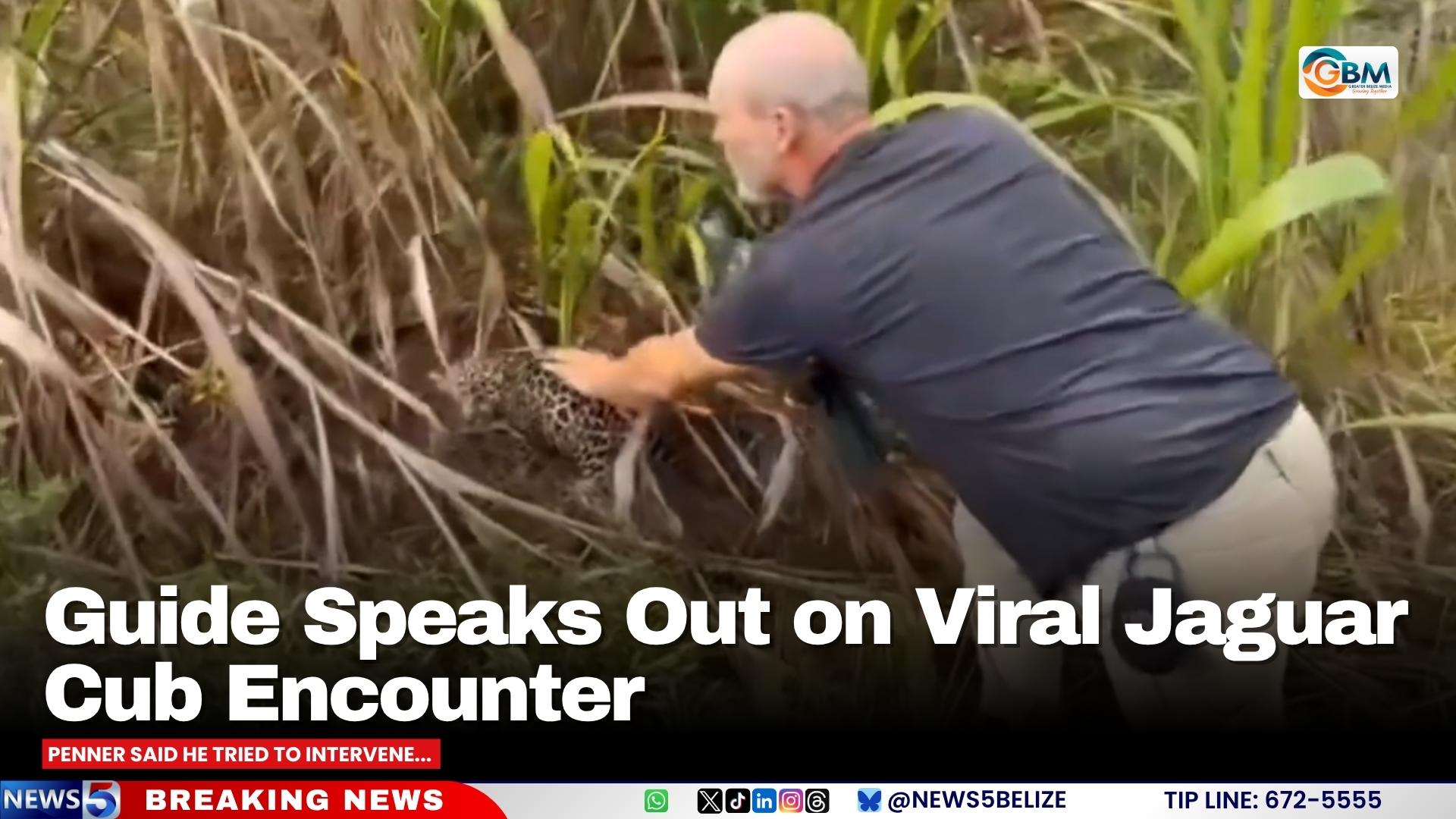
A viral video capturing two men cornering and touching a wild jaguar cub in Belize’s Mountain Pine Ridge Reserve has sparked fierce backlash from the global conservation community this week, and the expedition guide accompanying the pair has now broken his silence to condemn the incident as unnecessary and recklessly dangerous.
Leslie Penner, the guide who led the two brothers on a birdwatching excursion that devolved into the controversial encounter, shared new details with local outlet News Five to contextualize the widely shared footage, revealing that the incident unfolded unexpectedly during a routine trail exploration.
According to Penner’s account, the group first spotted an adult female jaguar along the trail ahead of their off-road vehicle, before her young cub emerged walking along the path toward its mother. That was when Ruben, one of the two brothers in the group, made the unplanned decision to exit the vehicle’s back seat and move toward the front to get a closer, unobstructed view of the big cat cub – a choice that immediately triggered alarm for Penner.
Penner said he acted quickly to intervene, voicing his immediate concern about the safety risk and attempting to position the vehicle’s passenger door to block Ruben’s path toward the cub. But his efforts failed: the cub veered off the trail onto the passenger side of the vehicle, moving into the same area where the adult jaguar had been spotted just moments earlier. Penner added that he did not even realize Ruben had made physical contact with the cub until after the encounter had concluded.
In his statement, Penner aligned with widespread criticism of the incident, calling the act of touching the wild jaguar cub an unnecessary, reckless choice that created avoidable risk of dangerous conflict between humans and wildlife. Penner noted that Ruben failed to recognize the gravity of the danger he created in the moment, saying the possibility that touching the cub could lead to harm for either humans or the jaguar family did not cross his mind, and he would not have acted had he understood the risk.
Notably, Penner defended the brothers’ broader history with conservation work in Belize, explaining he has known the pair for many years and praised their ongoing efforts to advance conservation among Belize’s conservative Mennonite community. Penner added that the brothers visit the country regularly and have established a formal agreement with local poultry farmers: they guarantee that any hawks preying on farmed chickens will be safely relocated rather than killed, and they reimburse farmers for any chickens lost to predation under the agreement – a commitment they have consistently honored.