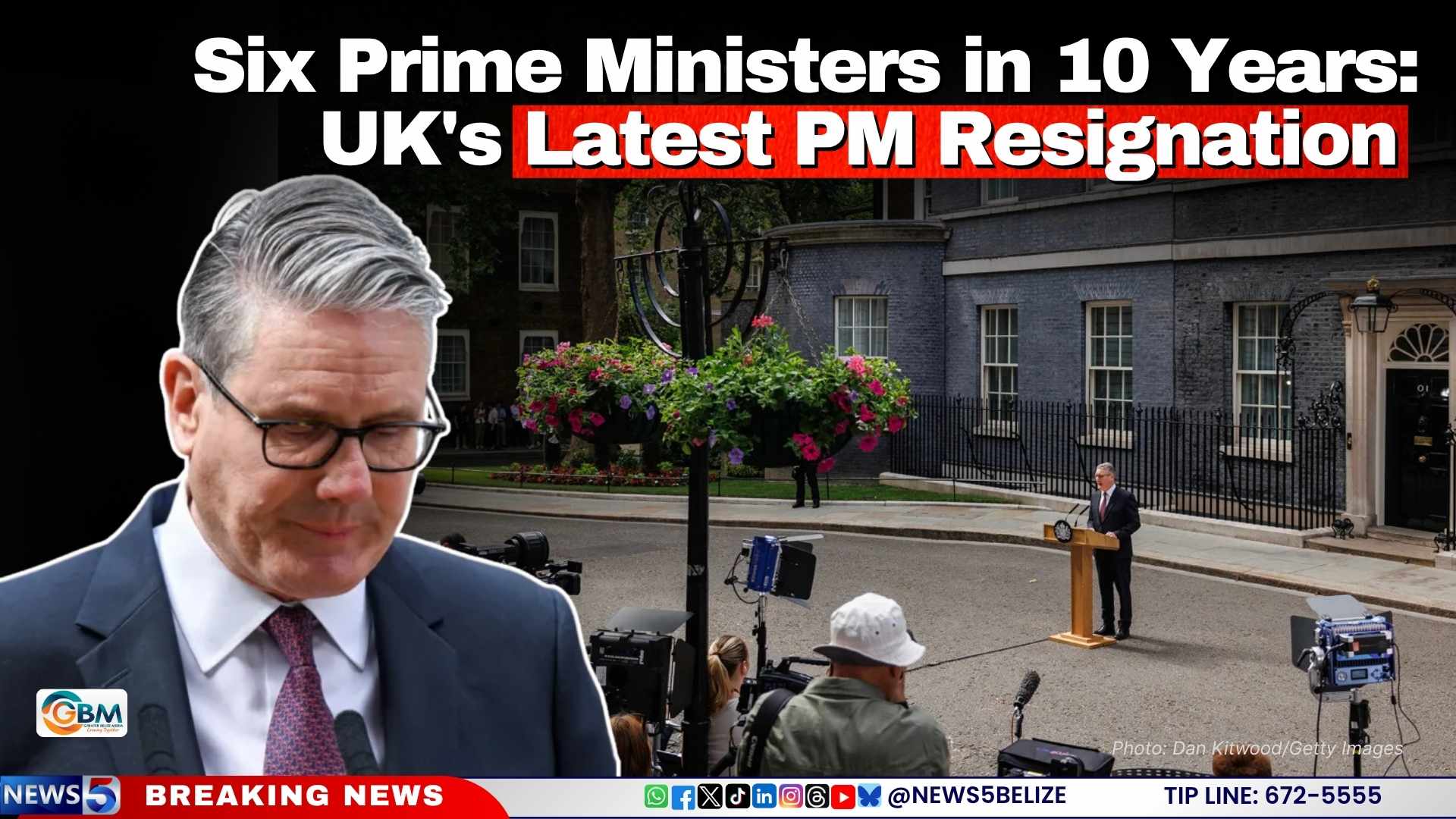
LONDON – In a move that cements a decade of unprecedented leadership turbulence in British politics, Prime Minister Keir Starmer has announced his resignation from both the office of prime minister and his position as leader of the Labour Party, just two years after securing the largest parliamentary majority for his party in modern history.
Starmer’s landslide 2024 election victory catapulted him into Downing Street, making him the sixth person to hold the UK’s highest office in less than 10 years. Under the terms of his announcement, he will remain as a caretaker prime minister until a successor is selected, a process he confirmed will conclude before Parliament reconvenes for its autumn session in September.
The 64-year-old’s departure came after months of growing internal friction within the Labour Party, which gradually eroded his authority. By the end of his tenure, polling data put Starmer as the least popular sitting prime minister in recorded British public opinion history, CNN reports. According to the BBC, three connected events delivered the final push for his resignation: catastrophic losses for Labour in May 2026 local elections, the departure of multiple senior cabinet ministers in protest of Starmer’s leadership, and a resurgent public scandal over his appointment of Peter Mandelson – a politician with documented past links to convicted sex offender Jeffrey Epstein – as British ambassador to the United States.
The path to the leadership now appears cleared for Andy Burnham, the former mayor of Greater Manchester, who political analysts and party insiders widely name as the clear frontrunner to replace Starmer. Burnham, who has long been seen as a popular unifying figure within Labour, was officially sworn in as a Member of Parliament for the Makerfield constituency on Monday, just one week after winning a critical by-election that secured him a seat in the Commons – a long-held requirement for any would-be Labour leader.
Starmer’s exit extends a stunning streak of leadership turnover that has shaken the foundations of UK governance since 2016. Over the past 10 years, six prime ministers – David Cameron, Theresa May, Boris Johnson, Liz Truss, Rishi Sunak, and now Starmer – have all left Downing Street before completing their full terms, each felled by a unique political crisis ranging from Brexit fallout to internal party revolts and personal scandal. Political analysts warn that the constant rotation at the top has left the UK with weakened policy continuity, eroded public trust in political institutions, and growing uncertainty ahead of key domestic and international policy deadlines.