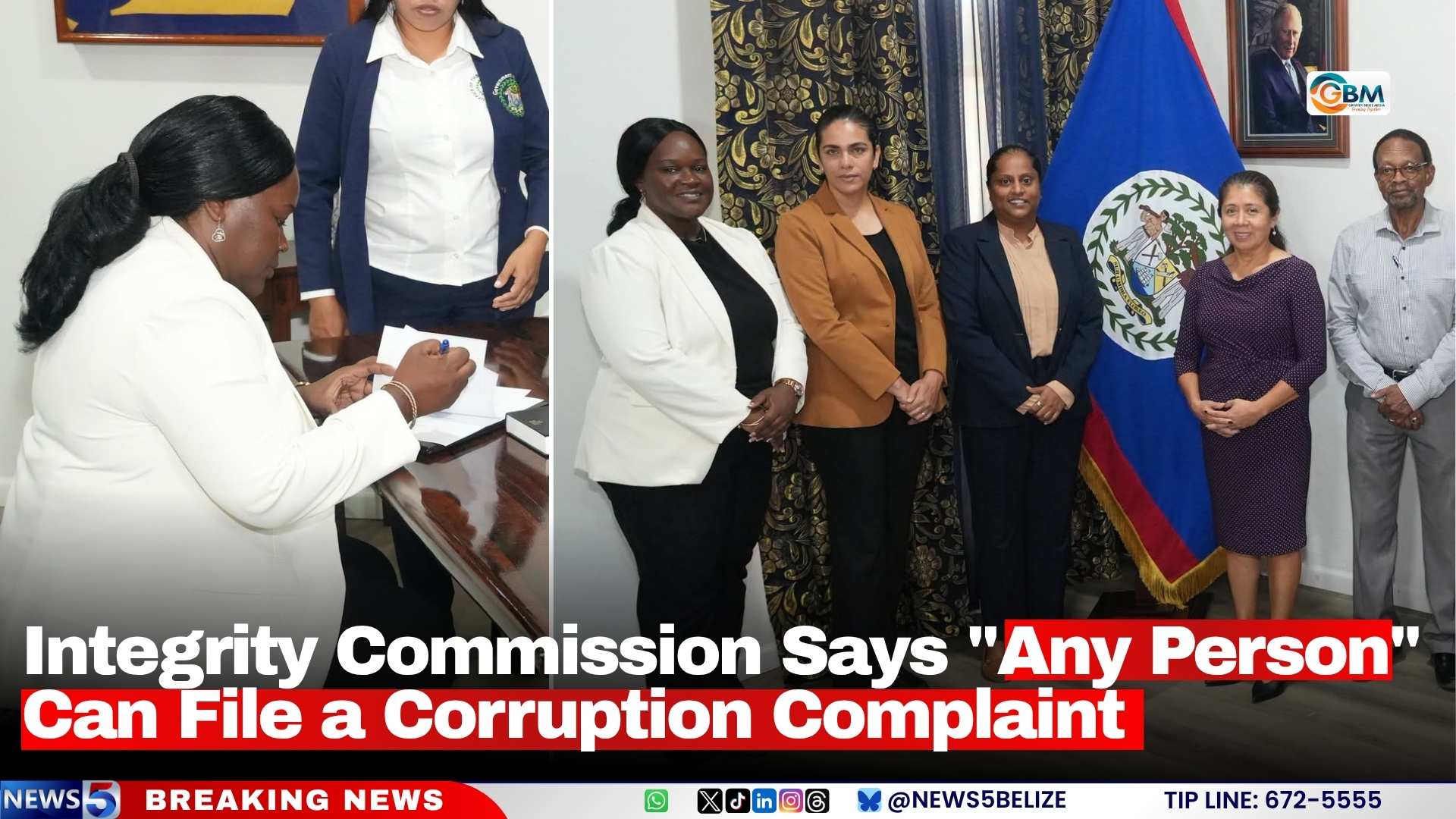
As a high-profile corruption scandal involving senior Belizean government official continues to unfold, the country’s Integrity Commission has moved to clarify the public’s right to report suspected corrupt activity, reaffirming that any member of the public can file formal complaints that will trigger statutory investigations under existing Belizean law.
The controversy centers on Oscar Mira, Belize’s Minister of Home Affairs, after leaked financial documents revealed that multiple members of Mira’s immediate family have received hundreds of thousands of dollars in government payments over recent months. The biggest transaction recorded is nearly $400,000 in public funds paid to MP Farms, a company owned by Mira’s brother Brian. To avoid formal high-value procurement oversight, the payments were split into dozens of individual invoices each valued under the $10,000 reporting threshold – a structuring move that has sparked widespread allegations of rule-breaking. Additional scrutiny has also fallen on past public payments to Mira’s sister Jenny, as well as reported government ties to another of the minister’s brothers, Stanley, deepening public anger and mistrust over the family’s extensive undisclosed financial links to state contracts.
In response to growing media and public attention on the case, News Five contacted newly appointed Integrity Commission chair Andrea McSweeney-McKoy for comment. McSweeney-McKoy declined to issue specific comment on the Mira case, citing legal requirements that all commission corruption investigations remain strictly confidential under the body’s governing legislation. However, she used the opportunity to outline the commission’s formal complaint process for the public, drawing attention to the statutory procedures laid out in Sections 34 through 42 of the Integrity Commission Act that activate immediately after any person files a complaint alleging corrupt activity.
McSweeney-McKoy emphasized that any individual who suspects an act of corruption has occurred is eligible to submit a complaint to the commission. Once filed, complaints go through a structured process of review and investigation; after completing its assessment, the commission can issue a finding, or refer the matter to a formal public inquiry or dedicated law enforcement investigative body. She also confirmed that the commission will publish a full, step-by-step guide to the complaints process on its official social media channels in the near future to improve public access.
The Integrity Commission’s clarification comes shortly after Prime Minister John Briceño announced plans for an independent external review of all government payments linked to Mira’s relatives. Speaking to reporters in Orange Walk Town this past Thursday, Briceño said he has directed the Financial Secretary to partner with the Auditor General to conduct a full audit of the contested transactions. The prime minister noted that the audit will focus on two core questions: whether all required procurement protocols were properly followed, and whether the government received fair value for the public funds spent. He added that he would not pre-judge the outcome of the review, and all further action will be determined by the audit’s final findings.
For his part, Minister Mira has issued a public denial of any wrongdoing, insisting he never used his position to influence the awarding of government contracts to family members. He told the public that he does not serve on any government procurement committees, and has no direct input or influence over contract awarding processes.
Back in March, the Integrity Commission publicly reminded citizens that corruption is defined as a criminal offense under Belizean law. The commission’s definition of corruption extends far beyond direct bribes of cash: it covers any act of giving or receiving an improper advantage, unfair manipulation of government decisions, and improper interference in public contracting. Improper advantage can include non-monetary benefits such as gifts, property, preferential employment terms, or any other form of special treatment.