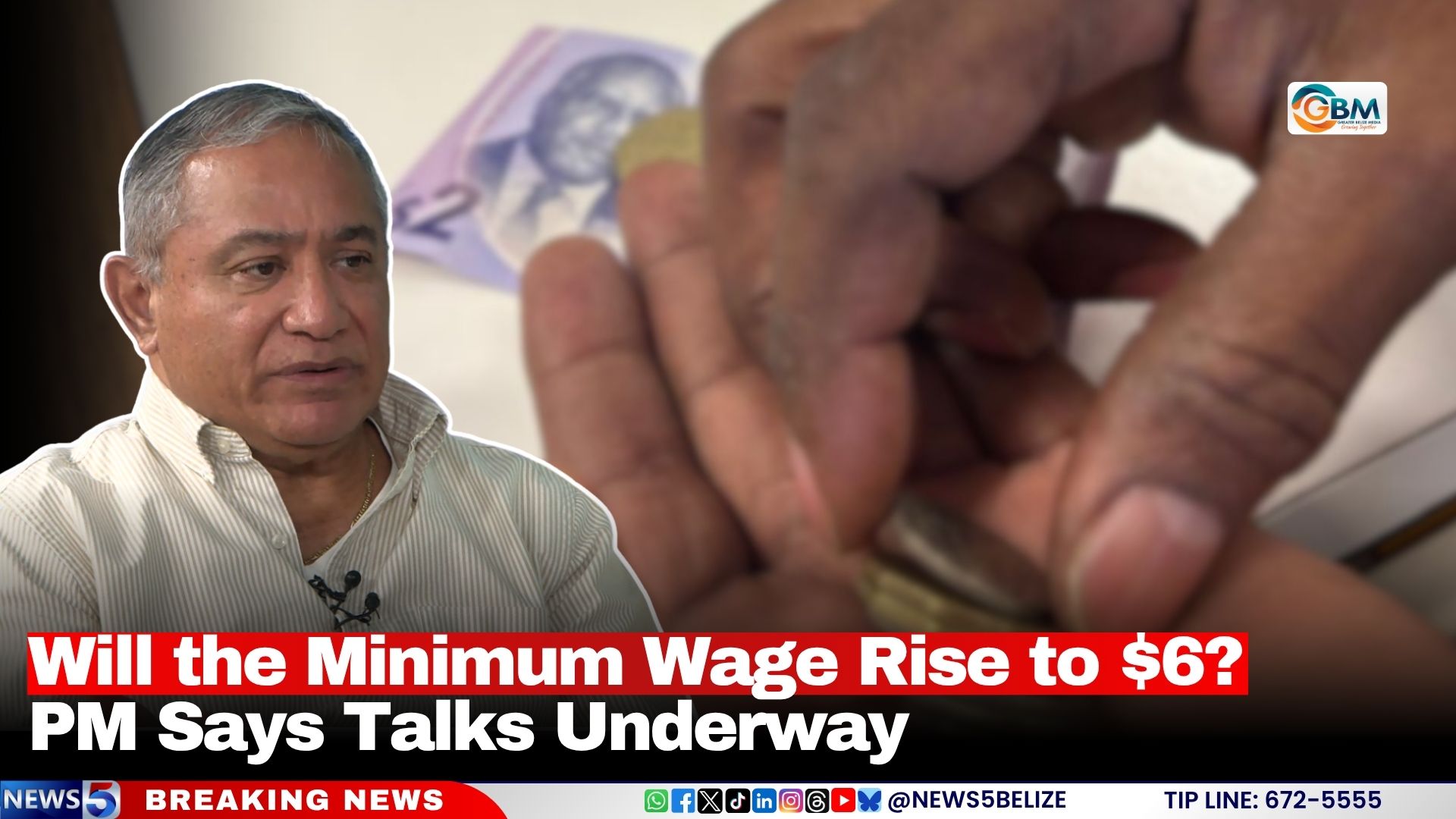
As households across the nation continue to grapple with soaring living costs, Belize Prime Minister John Briceño has confirmed that his administration is currently holding active discussions to lift the country’s minimum hourly wage to $6, a policy shift that would mark a 20 percent increase from the current rate of $5.
Briceño shared details of the ongoing deliberation during an appearance on the popular *Open Your Eyes* morning talk show last Wednesday, framing the proposed wage adjustment as a core component of the government’s broader agenda to reduce financial strain for working families. Responding to widespread public calls for relief, the Prime Minister emphasized that he is deeply attuned to the struggles of ordinary citizens, noting that his regular travel across the country keeps him connected to the realities facing households outside of government offices.
“I understand the cry; I hear it. I see it. I walk the streets. I don’t just stay in the office; I’m all over this country,” Briceño told the program’s viewers.
While the government cannot exercise direct control over prices for imported goods, a major driver of recent inflation in the small open economy, Briceño outlined a suite of existing relief measures already rolled out to ease household budgets. These include a hike in the income tax threshold to $29,000, expanded access to tuition-free public education, increased scholarship funding for post-secondary students, universal school feeding programs for low-income communities, and sustained grocery assistance initiatives for vulnerable households. On the topic of minimum wage, he added that the government aims to finalize and implement the adjustment in the near term.
The Prime Minister also addressed longstanding pushback from the national business community, which has raised concerns that sudden minimum wage increases would force small and medium enterprises to cut jobs. Briceño recalled that when the minimum wage was last raised to $5, employers widely warned of mass layoffs that never ultimately came to pass. He attributed that positive outcome to robust economic growth at the time, a trend that continues into 2026: the country’s GDP expanded by 4.7% in the first quarter of the year, putting the country in what Briceño described as “pretty good” economic condition.
Even so, the Prime Minister acknowledged that the country’s small, trade-reliant economy imposes natural limits on how much additional cost businesses can absorb. “The reality is that businesses can only pay what they can pay…We are a small open economy,” he said.
As of June 1, 2026, no official timeline has been announced for a final decision on the wage adjustment, and negotiations between government representatives, labor unions, and business associations are continuing. Local outlet News 5 has committed to ongoing coverage of the policy process as it develops.