Barbados’ largest umbrella labor organization, the Congress of Trade Unions and Staff Associations of Barbados (CTUSAB), has publicly announced its principled support for the newly passed Protection of Wages Bill — but issued a series of critical demands to fix gaps the group says will undermine the law’s ability to protect workers if left unaddressed.
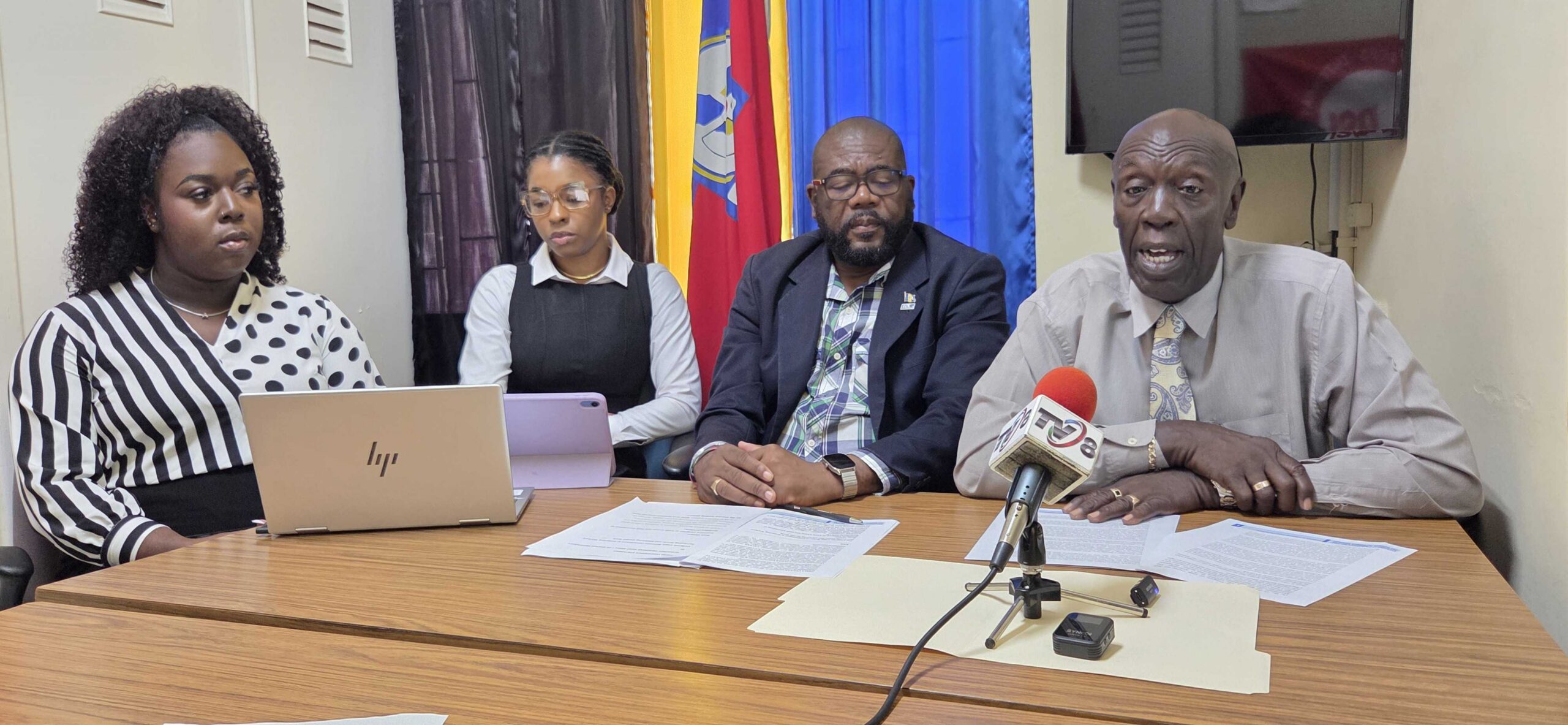
Speaking at the organization’s regular monthly press briefing, CTUSAB General Secretary Dennis De Peiza explained that even though the legislation has already cleared Parliament, the national trade union movement deemed it necessary to formalize its position and push for key regulatory adjustments ahead of the law’s full implementation. De Peiza noted that CTUSAB aligns with the core principle of fair wage treatment that all major social partners in Barbados, including the Barbados Workers’ Union, Barbados Employers’ Confederation, Barbados Chamber of Commerce and Industry and Barbados Coalition of Service Industries, have publicly endorsed. However, he stressed that written statutory protections are meaningless without consistent, robust enforcement.
“CTUSAB is very much, I must say in principle, at this point in support for the Protection of Wages Bill,” De Peiza told reporters. “The congress emphasises that there must be enforcement of the provisions of the legislation. I repeat that… there must be enforcement of the legislation if this thing is to be taken seriously. If workers have to be treated fairly and not to be disadvantaged, then it requires that we ensure that the employers honour their obligation to the workers.”
De Peiza specifically welcomed the bill’s introduction of formal, explicit penalties for employers that fail to remit required statutory deductions, including national insurance contributions, on behalf of their workers. But he quickly pushed back against the idea that financial penalties alone are enough to deter wage violations, pointing to long-running delays in Barbados’ judicial system for labor disputes. He warned that slow dispute resolution processes leave workers who have already lost income waiting months or even years for remedy, arguing that “justice delayed is justice denied.”
To fix this systemic flaw, De Peiza called for binding statutory timelines to be written into the operational regulations that govern wage dispute hearings, requiring all cases to be resolved within set deadlines to avoid prolonged uncertainty for affected workers. “Hence this necessitates that clear time frames and deadlines are established within the rules for the hearing and conclusion of any case brought by an employee against the employer,” De Peiza said. “It should not be allowed that the victim experiences an extended period of suffering due to the slow enactment of the process.”
The most contentious gap CTUSAB has identified is a legislative exemption that currently shields state-owned entities and government departments from the same penalties that apply to private employers when they fail to pay public workers on time. De Peiza called this exemption a blatant violation of the principle of equal treatment under the law, arguing that there is no justification for holding private businesses to a different standard than the government.
“This is wholly inconsistent with the practice as it applies to fairness and the equality of treatment before the law,” De Peiza argued. “If this is to suggest that the State as the employer is above the law, then we have problems. So we are saying that we do not believe that the State is above the law.”
De Peiza recalled that public sector wage delays are not a hypothetical issue in Barbados, noting that government departments and statutory agencies have a well-documented history of late salary disbursements, often citing administrative hold-ups such as pending internal approvals as an excuse. “Why should the law hold private sector employers to one standard and the government to another?” De Peiza questioned. He added that public workers who face severe wage delays must have the same legal right to pursue compensation for damages through the courts as private sector employees, saying: “The worker has not been paid for work …. There should be no restraint of pursuing this matter before the law courts for compensation for inconvenience and suffering caused.”
Addressing the root of public sector wage delays, De Peiza argued that most late payments stem from unnecessary administrative bureaucracy rather than unavoidable technical issues. He pointed out that the government publishes a fixed annual schedule of paydays for all public sector workers well in advance, meaning that outside of rare technological failures, there is no valid excuse for missed payment deadlines. “It would seem that any undue delays and discrepancies may be ascribed to administrative inefficiencies. This, in part, is a bureaucratic problem which must be remedied within public sector management,” he said.
De Peiza also highlighted a often-overlooked barrier that exacerbates financial hardship for low-income Barbadian workers, urging regulators to address banking industry practices that harm workers paid by cheque. Many low-wage workers do not hold active bank accounts, forcing them to rely on costly third-party check cashing services, while even workers with accounts are often charged arbitrary transaction fees to deposit their paychecks. “Provisions should have been made to alleviate the stress suffered by those workers who are paid by cheque and do not have a bank account to deposit the cheque in order to have it redeemed,” he said. “Moreover, employees have to deal with the application of a transactional banking fee, which is imposed. This should not be allowed and needs to be addressed by the requisite government authorities.”