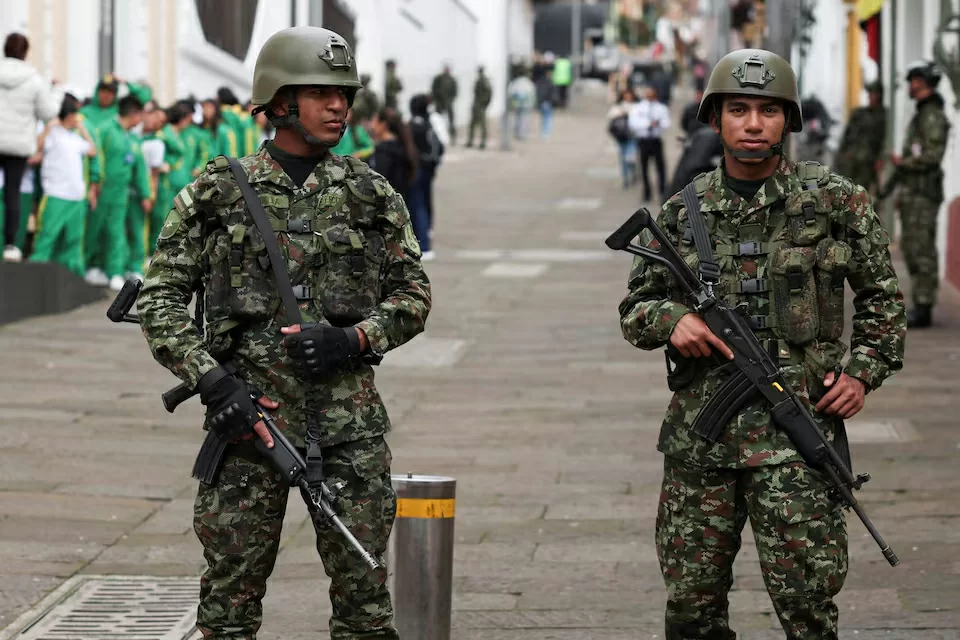
On May 31, Colombia kicked off the first round of its pivotal presidential election, a vote that will chart the South American nation’s future course on core issues ranging from domestic security to economic policy and international relations. More than 40 million eligible Colombian voters are heading to polling stations, which opened at 8 a.m. local time, with final official results projected to be announced by 8 p.m. the same day. Given pre-election tensions and security concerns, roughly 400,000 military personnel and police officers have been deployed nationwide to safeguard voting operations, with security teams maintaining a visible presence on streets across major cities including Bogota.
Three leading candidates dominate the race, each offering sharply different policy visions for the country. Topping pre-election opinion polls is 63-year-old left-wing Senator Iván Cepeda, the son of a assassinated communist leader. Cepeda, who has pledged to continue and deepen the progressive reforms begun by current left-wing President Gustavo Petro, currently holds enough support to place first but is not projected to clear the 50% threshold needed to win the election outright in a single round. That outcome would push the race to a runoff round scheduled for June 21.
Cepeda’s core policy platform centers on advancing peace negotiations with illegal armed groups, a strategy that has made limited progress under the Petro administration. He has also proposed sweeping structural social reforms to reduce Colombia’s entrenched inequality and poverty, including higher taxes on the nation’s wealthiest citizens, the transfer of 1 million hectares of land to victims of the country’s 60-year-long internal armed conflict, and expanded public access to healthcare.
Trailing Cepeda closely in the polls is 47-year-old independent lawyer and businessman Abelardo De La Espriella, a political outsider who has never held public office. Often compared to El Salvador’s hardline President Nayib Bukele for his blunt rhetoric and policy priorities, De La Espriella has centered his campaign on an aggressive crackdown on illegal armed groups. His platform includes plans to construct 10 new mega-prisons, alongside anti-poverty measures focused on expanding access to education, healthcare, and affordable housing. He has repeatedly warned voters that a Cepeda victory would entrench the controversial economic policies of the Petro administration, including the ban on new oil exploration projects.
In third place in pre-election polling is right-wing Senator Paloma Valencia, backed by former Colombian President Álvaro Uribe and until recently the front-runner among right-wing candidates. Her policy agenda overlaps broadly with De La Espriella’s, calling for tough action against corruption, drug trafficking, and illegal armed groups. She also supports cutting corporate taxes to spur job growth, and funding new social programs through a resumption of large-scale oil and gas exploration.
The election is widely viewed as a critical bellwether for Colombia’s long-term direction, with particular focus on how the new administration will approach domestic security and the country’s long-standing diplomatic and economic relationship with the United States. Voters are deeply divided over the future of Petro’s progressive agenda, with sharp disagreements over how to address decades of violence, widespread economic inequality, and the role of fossil fuels in the country’s economy.