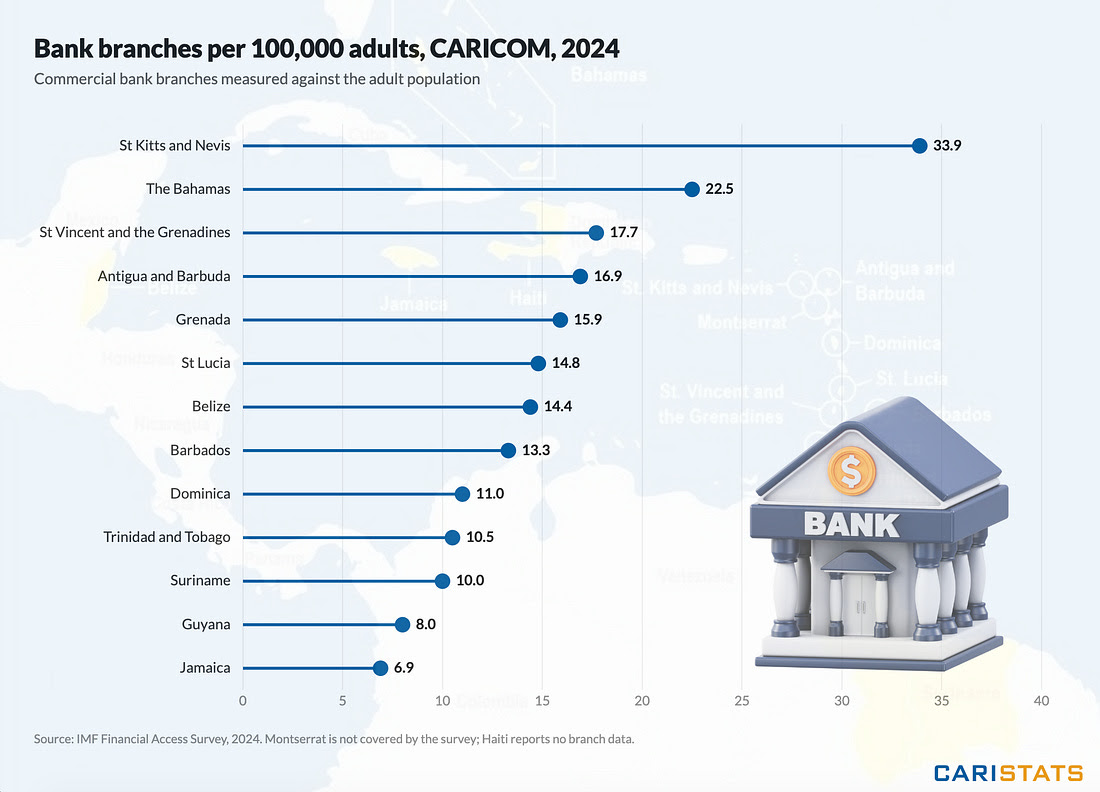
Across the Caribbean Community (CARICOM), access to in-person banking services remains a deeply uneven landscape, with significant gaps between urban hubs and rural, outlying communities that threaten to exacerbate financial exclusion across the region. For millions of residents in small island developing states that make up CARICOM, physical bank branches are not just a convenience—they are a critical lifeline for accessing basic financial services, securing loans for small businesses, cashing checks, and receiving in-person support that digital banking platforms often fail to provide. Yet new research into regional banking infrastructure shows that major population centers in wealthier member states, such as Trinidad and Tobago, Barbados, and Jamaica, hold a disproportionate share of operating branches, while smaller islands and remote rural areas across the bloc have seen steady closures over the past decade.