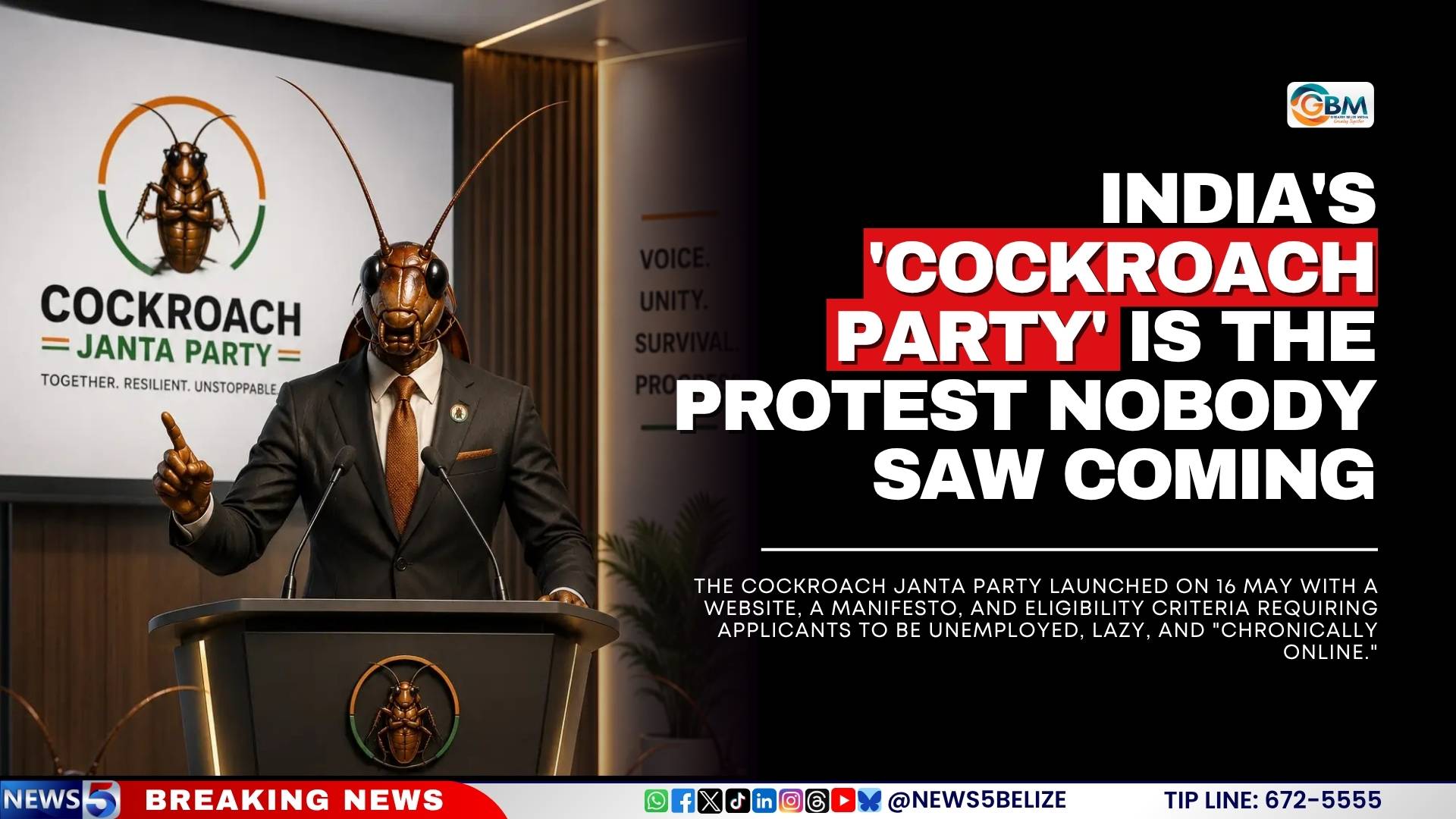
In a turn of political events that caught both establishment figures and observers completely off guard, a new grassroots protest movement has taken India by storm, sparked by a single ill-judged comment from the nation’s top judicial official. On May 15, 2026, Chief Justice Surya Kant made global headlines for his inflammatory remarks during a routine Supreme Court petition hearing, where he compared unemployed Indian youth to “cockroaches”. The justice went further, claiming that jobless young people turn to social media activism only to lash out at institutions, labeling them parasitic. Though Kant quickly walked back the comments once public backlash erupted, the harm to public sentiment had already been done.
Within 24 hours, an unexpected leader turned that public anger into a tangible political movement. Abhijeet Dipke, a 30-year-old former political strategist and Boston University graduate, posed a simple provocative question on the social platform X: “What if all cockroaches came together?” What started as a throwaway comment quickly materialized into a formal political organization: the Cockroach Janta Party (CJP), launched the same day.
The new party was built with deliberate, satirical edge from its inception. Its name is a direct rebuke to Prime Minister Narendra Modi’s ruling Bharatiya Janata Party, and its founding rules lean into the identity the Chief Justice insulted: only unemployed, chronically online people are eligible for membership. The party lists its headquarters as “anywhere with a working wifi connection” and proudly notes it has received zero funding from corporate donors. It launched with a fully functional website and a clear manifesto channeling widespread youth frustration.
The movement went viral almost instantly. Within just seven days of its launch, CJP amassed 19 million followers on Instagram – nearly double the follower count of India’s official government account on the platform. More than 350,000 unemployed youth have formally signed up to join the party. Social media feeds across India have been flooded with CJP memes, protest videos, and viral content featuring supporters in homemade cockroach costumes. Two high-profile opposition Members of Parliament, Mahua Moitra and Kirti Azad, have publicly announced their affiliation with the new movement, and major international news outlets from CNN to Al Jazeera have already covered the unexpected political uprising.
The viral success of the satirical party stems from very real, deep-seated economic pain that resonates across India’s massive youth population. Official data shows nearly 40% of Indian graduates between the ages of 15 and 25 are currently out of work. India is home to the largest youth population in the world, and for a generation that was promised widespread economic opportunity after 12 years of Modi’s administration, the Chief Justice’s “cockroach” label was not just an insult – it was seen as an accidental admission of the government’s failure to deliver on its promises.
That frustration is laid out clearly in CJP’s founding manifesto, which targets the close ties between India’s ruling establishment and big business. The party’s key policy demand is the revocation of broadcast licenses held by billionaire tycoons Mukesh Ambani and Gautam Adani, both widely perceived as close allies of Modi’s government, to make space for a truly independent Indian media sector.
Indian authorities have already moved to crack down on the movement. On May 21, regulators blocked CJP’s official X account under a court-ordered legal demand. But the censorship attempt has only accelerated the movement’s growth, turning a viral satirical joke into a serious political force. Supporters are now actively exploring plans to field an official electoral candidate in an upcoming by-election in the state of Bihar. As early CJP supporters have put it: when you label a generation of young people cockroaches, you quickly learn that cockroaches are almost impossible to exterminate.