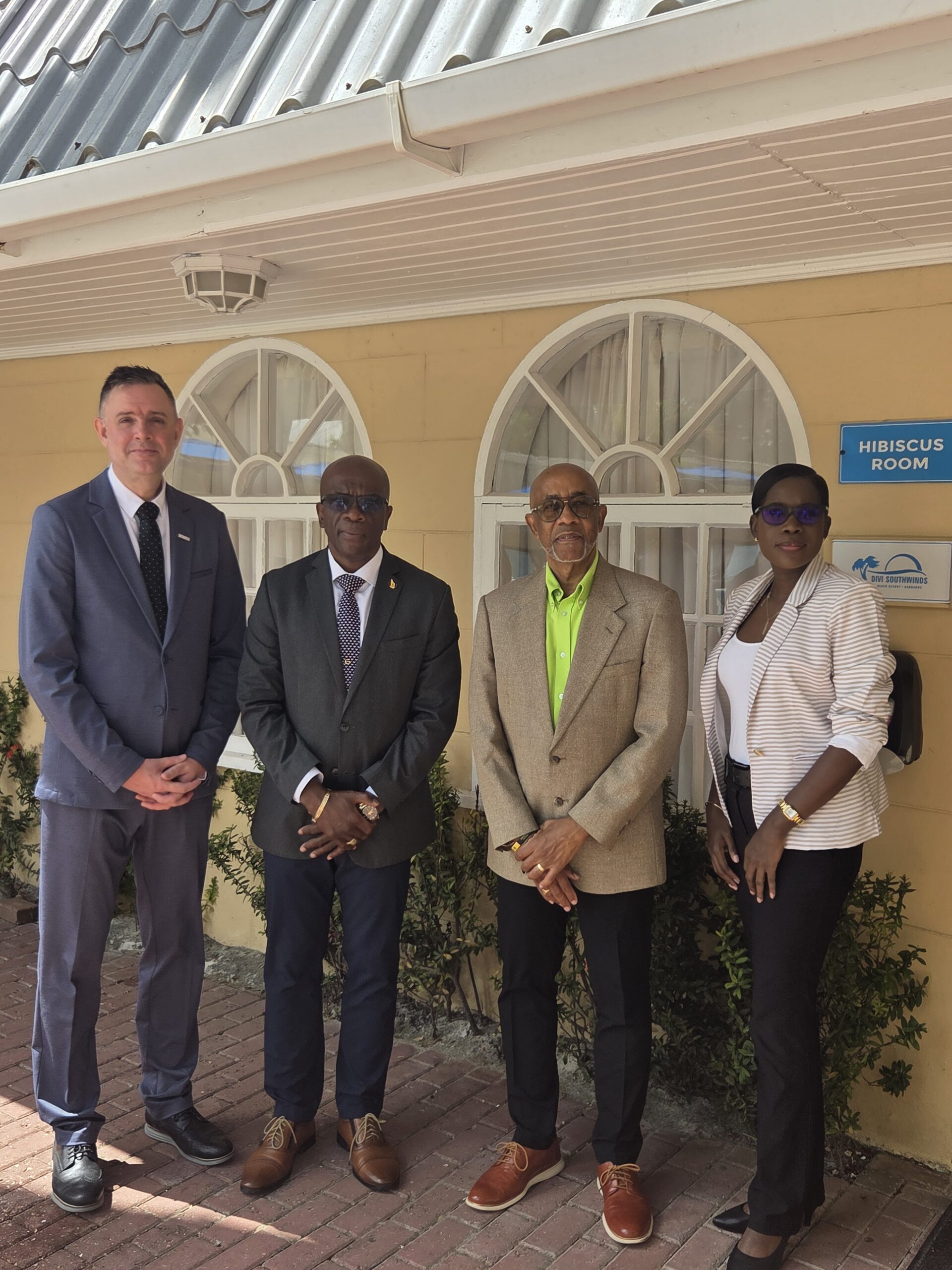
Against a backdrop of rising costs for doping sample analysis and growing threats to clean sport in the Caribbean, Barbados’ Minister of Sport and Community Empowerment Charles Griffith has formally called for the creation of a regional anti-doping testing laboratory based on the island, a move designed to slash the heavy financial burden of sending samples overseas for screening. Griffith made the appeal Friday during the opening ceremony of the National Anti-Doping Commission’s Doping Control Officer Re-certification programme, being hosted this week at Divi Southwinds Resort, which draws participants not just from Barbados but six other Caribbean nations. For years, Caribbean countries have been forced to bear the high cost of shipping samples thousands of miles to accredited testing facilities in Canada, Griffith explained, with current analysis costs exceeding $400 U.S. per sample. To turn the regional lab concept into a reality, Griffith is calling for a public-private partnership between the Barbadian government and local private sector stakeholders to fund and build the facility on-island. Some critics have raised questions about whether a Caribbean lab would have enough sample volume to be financially viable, but Griffith pushed back on that concern, noting that a regional facility would process roughly 1,000 samples annually from across the Caribbean – a volume that would make the lab fully sustainable. A regional lab would eliminate the need to ship samples all the way to North America, cutting costs and wait times for all Caribbean member states, he added. Beyond infrastructure investment, Griffith also called for a fundamental shift in anti-doping outreach, urging local officials to adopt a community-centered approach that starts education as early as primary school. By introducing clean sport principles to young students early, the movement can build grassroots peer pressure that reinforces official anti-doping policies, especially for young athletes who see sports as a long-term professional path. “If we can start this from as early as primary school, I think it is important that we move not only at community levels but we go to the schools and be able to impact those youngsters at the schools,” Griffith said. “This is so the peer pressure coming from anti-doping will be strong, and it will buttress everything that is coming from you and your team in relation to how we can strengthen those individuals who are seeing sports as a viable career.” He reaffirmed that the Barbadian government remains fully committed to supporting every step of the process to advance anti-doping work across the region. Griffith also emphasized that the timing of this year’s re-certification programme could not be more critical for Barbados, coming fresh off a national controversy over a local athlete’s decision to compete in the so-called Enhanced Games – an unregulated event that allows performance-enhancing drugs and lures athletes with large cash prizes. “I know that it is a major struggle because of the amount of cash that is being thrown at athletes to participate in these type of events. There is really a need for us to have this particular event here today, in relation to the anti-doping project on the island,” Griffith said. The importance of the ongoing training and re-certification effort was echoed by Dr. Adrian Lorde, Chairman of Barbados’ National Anti-Doping Commission, who called the workshop one of the most critical components of the global anti-doping system. Lorde stressed that even minor errors in sample collection procedures can result in athletes who have violated anti-doping rules being cleared on technicalities, making ongoing training non-negotiable as global standards evolve. “If procedures done in sample collection are not done properly, athletes who are tested positive or have committed anti-doping rule violations are cleared. It’s important to have this type of workshop and retraining as things have evolved in anti-doping,” Lorde said. “So through your work, you must continue to uphold the principles of clean sport and to protect the rights of clean athletes.” The three-day training workshop is being facilitated in partnership with Sport Integrity Canada, an organization with long-standing ties to anti-doping bodies across the Caribbean. Matthew Koop, Director of Anti-Doping Services at Sport Integrity Canada, said the workshop marks an important step forward for regional anti-doping capacity. “Over the course of the next few days, we will focus on equipping participants with the knowledge, practical skills and confidence required to carry out doping control responsibilities in full alignment with the World Anti-Doping Code and the international standards,” Koop explained. “For those joining us as new doping control officers, this marks the beginning of an essential role within the anti-doping system. For those being recertified, it is an opportunity to strengthen your expertise, remain aligned with evolving standards, and reaffirm your commitment to excellence.”