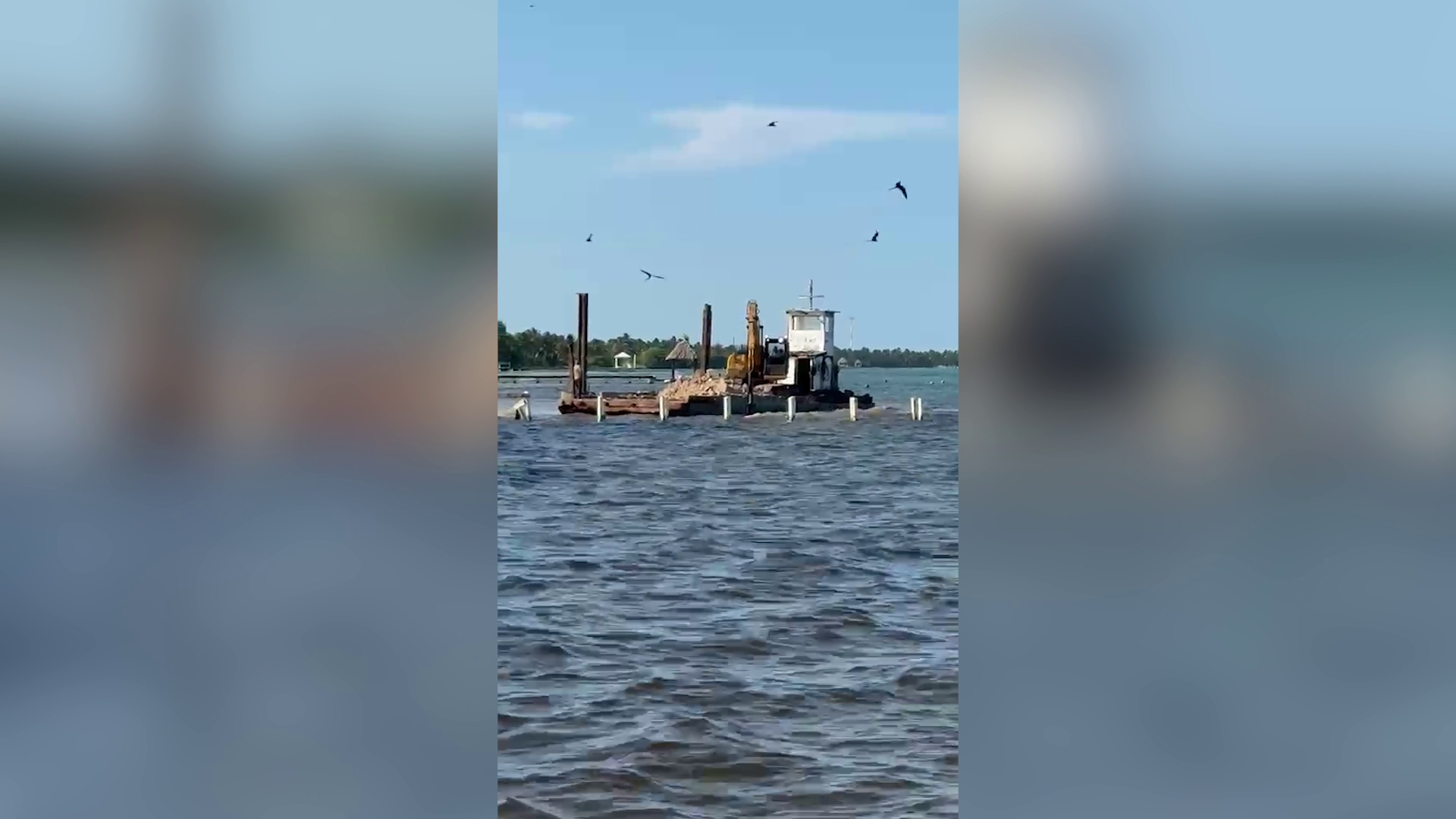
Scheduled for publication on May 19, 2026, a simmering dispute over unauthorized sand extraction from Belize’s Placencia Lagoon has erupted into a broader conflict over coastal development governance, pushing environmental accountability and community representation into the national spotlight. What began as local outrage over a private contractor violating the terms of its dredging permit has grown into a coordinated demand from local leaders for a formal voice in critical environmental and resource development decisions.
After the country’s Department of Environment and national Mining Unit stepped in to address the initial violation, the Placencia Village Council launched an independent investigation that uncovered multiple additional permit breaches. Now, the council is pushing for a permanent seat at the table when government agencies review environmental clearances and mining permits for the peninsula.
Placencia Village Councilor Kristine Small emphasized that the stakes of the conflict extend far beyond the boundaries of a single local jurisdiction. Any development activity along the Placencia Peninsula, she explained, shapes the economic and environmental well-being of all residents across the region. Small noted that the unregulated dredging has already damaged critical coastal ecosystems, including seagrass beds that serve as core habitat for manatees, commercial fish species and other forms of marine life that form the foundation of the peninsula’s livelihoods. Many local residents, tour guides and artisanal fishers rely on the lagoon’s natural resources for both food and income, she added.
At the center of the community’s complaint is the lack of local oversight over high-impact coastal development. Small pointed to long-standing government claims that understaffing prevents consistent monitoring of permitted projects, a gap that the Placencia Village Council is ready to fill. “We want to appoint a trusted local representative to carry out consistent oversight to ensure all projects follow the rules moving forward,” Small said, stressing that cross-jurisdictional impacts make local input non-negotiable for projects along the peninsula.
The controversy in Placencia Lagoon has coincided with growing opposition criticism of the government’s approach to coastal development across Belize. Gabriel Zetina, United Democratic Party caretaker for Belize Rural South, has accused the ruling government of trading long-term environmental sustainability for quick short-term economic gains, amid parallel complaints from residents of Ambergris Caye and the Placencia Peninsula over unregulated dredging operations.
Zetina said that no level of government has been willing to accept accountability for the flawed permitting process. When questioned, national officials in Belmopan shift blame to local leaders, while local leaders point back to the national Department of Environment (DOE) as the authority responsible for granting permits. The DOE, in turn, claims that permits are only approved when local leaders issue a letter of no objection, creating a circular blame game that leaves no one responsible for monitoring and enforcement.
“We are killing the goose that lays the golden eggs just to sell the feathers,” Zetina said, noting that Placencia residents have watched for weeks as dredging equipment damages one of the country’s most biologically diverse coastal ecosystems. He added that residents across Belize Rural South will continue pushing for full transparency around dredging and coastal development projects, where critical public information has been largely inaccessible.
For its part, the Placencia Village Council says it remains optimistic that national authorities will agree to include local stakeholders in future decision-making processes, addressing the governance gap that allowed repeated permit violations to occur.