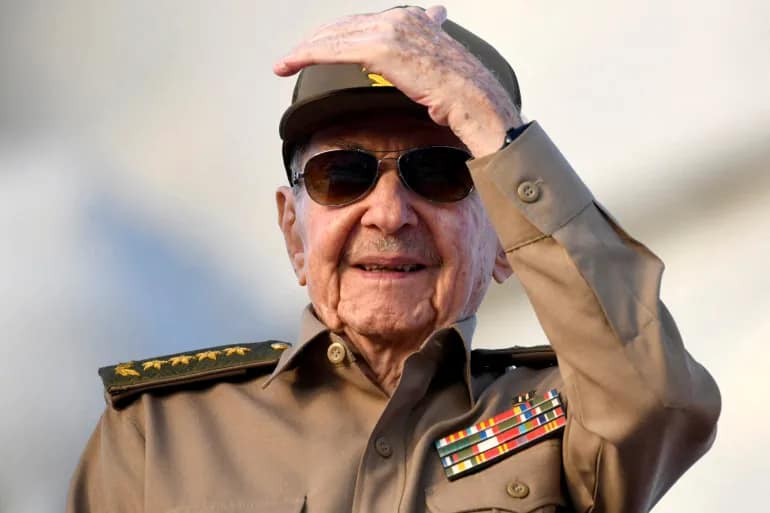
In a move that reignites long-standing diplomatic tensions between the United States and Cuba, federal prosecutors in the U.S. are actively working to secure a criminal indictment against former Cuban president Raúl Castro, multiple sources familiar with the matter have confirmed.
The development, first reported by U.S. news outlets, marks an extraordinary escalation in Washington’s decades-long adversarial stance toward Havana’s revolutionary leadership. While specific details of the alleged charges remain under seal as of this reporting, people familiar with the investigation have indicated the case centers on longstanding allegations of narcotics trafficking, human rights abuses, and alleged conspiracy related to Cold War-era and post-revolutionary activities that date back decades.
Raul Castro, 92, stepped down as Cuba’s president in 2018 after leading the country as head of state and the Communist Party for nearly a decade, following the retirement of his older brother Fidel Castro. He ceded leadership of the Communist Party, the country’s dominant political institution, in 2021, formally stepping back from all public office after more than 60 years as a core figure in Cuban governance.
Diplomatic analysts note that pursuing an indictment against a former head of state of a sovereign nation is an extremely rare action that carries significant geopolitical ramifications. It comes at a time of fragile, incremental improvement in U.S.-Cuba relations that began under the Obama administration, with the re-opening of embassies in 2015, followed by rollbacks of many of those policy shifts under the Trump administration, and a largely status quo approach under the Biden administration amid ongoing political disputes over human rights, trade sanctions, and migration.
The Cuban government has not yet issued an official response to the reports of the pending indictment, but it has long rejected any U.S. legal actions against its leadership as illegitimate violations of Cuban sovereignty and international law. Foreign policy experts warn that the move could further derail any prospects for normalized relations between the two nations for years to come, and complicate ongoing cooperation on issues of shared interest, including counter-narcotics, climate change, and migration management.
U.S. officials have declined to comment on the ongoing investigation, citing the sensitivity of the grand jury process, which operates confidentially in federal criminal cases.