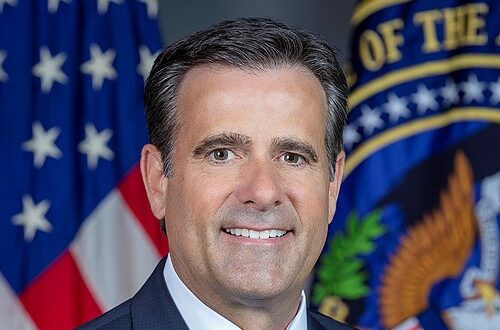
In a rare, high-profile diplomatic encounter between two long-adversarial nations, a United States delegation headed by CIA Director John Ratcliffe traveled to Havana for official talks with Cuban government representatives on May 14, 2026. The meeting was held at the explicit request of the U.S. government, as part of ongoing efforts to sustain structured political dialogue between Washington and Havana, Cuban state authorities confirmed in an official public statement released following the closed-door discussions.
Cuba’s revolutionary leadership granted formal approval for both the visit and the scheduled meeting between the U.S. delegation and senior officials from Cuba’s Ministry of the Interior, the statement confirmed. The talks unfolded against a uniquely challenging backdrop for bilateral relations, which have remained fraught with decades-long tensions, alongside a growing domestic crisis in Cuba that intensified just 24 hours before the U.S. delegation arrived. On Wednesday, May 13, Cuban Energy Minister Vicente de la O Levy publicly announced via state media that the island nation faced a total shortage of crude oil and diesel fuel, triggering spontaneous civilian protests in the streets of the capital just one day ahead of the scheduled diplomatic meeting.
Throughout the negotiations, Cuban officials forcefully pushed back against longstanding U.S. claims that have placed the island on the U.S. list of state sponsors of terrorism. Cuban representatives categorically reiterated that the country poses no legitimate threat to U.S. national security, arguing there is no valid or justifiable basis for its continued inclusion on the contentious terrorism sponsorship list.
The Cuban side reaffirmed the country’s decades-long, unwavering official position opposing all forms of international terrorism. Officials emphasized that the Cuban government and its relevant national agencies have consistently confronted and unequivocally condemned terrorism in every form and manifestation, regardless of its origin or target. Cuba further maintained that it does not harbor, provide assistance to, finance, or tolerate any terrorist or extremist organizations operating within its borders, and confirmed that no foreign military or intelligence bases operate on Cuban territory.
“Cuba has never supported any hostile activity against the United States, nor will it allow actions against another nation to be carried out from Cuban soil,” the official Cuban statement read.
Beyond addressing the status of the terrorism list, the talks also highlighted a shared mutual interest between both parties in expanding collaborative work between their respective security and law enforcement agencies. Officials on both sides noted that enhanced cross-border cooperation in these areas would not only improve domestic safety and security for both nations, but also contribute to broader stability across the Caribbean region and the international community more broadly.