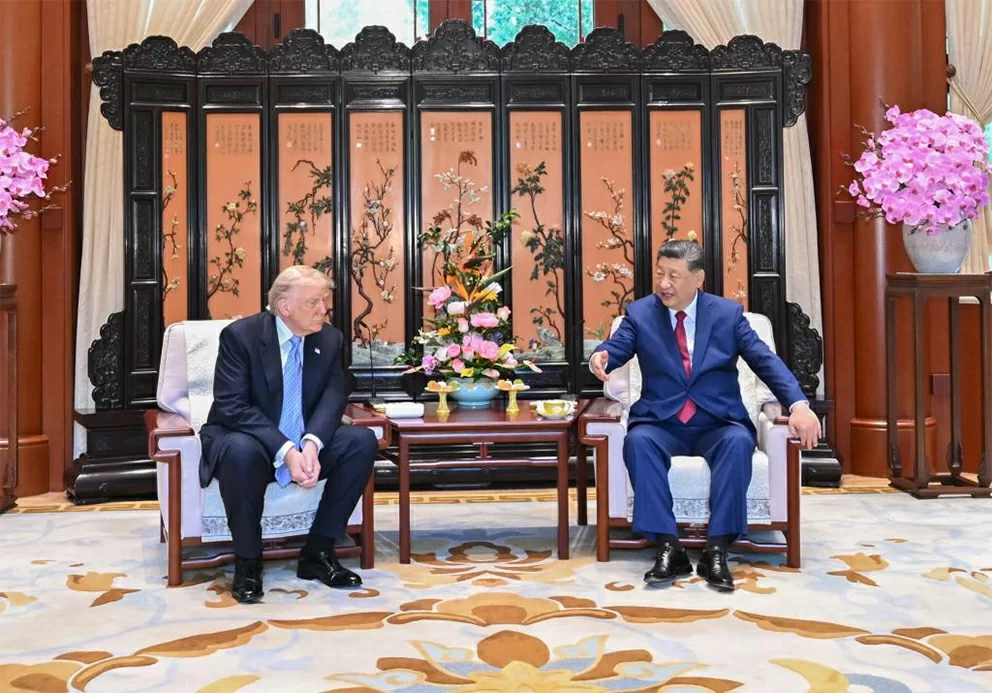
On Friday, May 15, Chinese President Xi Jinping and U.S. President Donald Trump concluded a two-day state visit to Beijing capped with a private meeting between the two leaders. While the visit left Trump publicly praising his Chinese counterpart and calling the trip an “incredible visit” with strong long-term potential, it delivered little tangible progress on the high-stakes issues that brought the U.S. leader to Beijing, from trade cooperation to diplomatic action over the Iran war.
Behind closed doors, President Xi issued a stark warning to Trump that mishandling the Taiwan question would push bilateral relations into “very dangerous territory,” reaffirming China’s consistent stance against any form of Taiwanese independence. Though Trump acknowledged Xi’s position on the issue, he offered no binding commitments to reverse planned U.S. arms sales to the self-governing island. The U.S. has maintained its long-standing policy of “strategic ambiguity”: it formally recognizes Taiwan as part of China while continuing to provide military support for the island’s self-defense, and Trump confirmed his administration would issue a final decision on the proposed arms deal in the near future.
On the trade front, the only major announcement to emerge from the summit was a Chinese order for 200 Boeing commercial aircraft — a figure far smaller than the 500 jets that markets had previously anticipated. The underwhelming deal triggered a more than 4% drop in Boeing’s share price immediately after the announcement. No other major trade breakthroughs were announced, and key long-standing agenda items such as Chinese structural economic reforms and global economic governance were not addressed during the talks. This marked a notable shift from Trump’s 2017 state visit to Beijing, where such high-level economic issues occupied a central place in negotiations.
On the topic of the ongoing war in Iran, both leaders agreed on the shared goal of keeping the Strait of Hormuz, a critical global energy chokepoint, open to commercial shipping. However, China refused to offer a concrete commitment to exert significant diplomatic pressure on Iran to move toward a peace agreement. While Beijing has formally expressed frustration with the conflict and publicly supports international peace efforts, regional analysts widely doubt that China would be willing to take a hard line against Iran, a key strategic partner that balances U.S. influence in the Middle East.
The summit also failed to resolve uncertainty surrounding an expiring temporary trade arrangement, under which the U.S. cut import tariffs in exchange for increased Chinese exports of rare earth minerals. These materials are an essential input for U.S. semiconductor and aerospace manufacturing, and the unclear future of the trade deal leaves the issue as a persistent point of friction in bilateral economic relations.
Political observers note that Trump entered the Beijing visit seeking to shore up his domestic political standing ahead of upcoming elections, but left with a clearer, more grounded understanding of the deep-seated challenges shaping U.S.-China ties. For his part, President Xi introduced a new framing for bilateral relations: “constructive strategic stability,” a term framed as less confrontational than the “strategic competition” framework that guided the prior U.S. administration’s approach to China.
After their formal talks, the two leaders walked through the gardens of Zhongnanhai, China’s central leadership compound, pausing to admire the grounds’ greenery and floral displays before closing the summit with warm public remarks and a shared statement of commitment to bilateral stability. Despite the cordial public-facing tone of the visit, analysts emphasize that core disagreements over trade, Taiwan, and regional security will remain the central forces shaping the future of the world’s most important bilateral relationship.