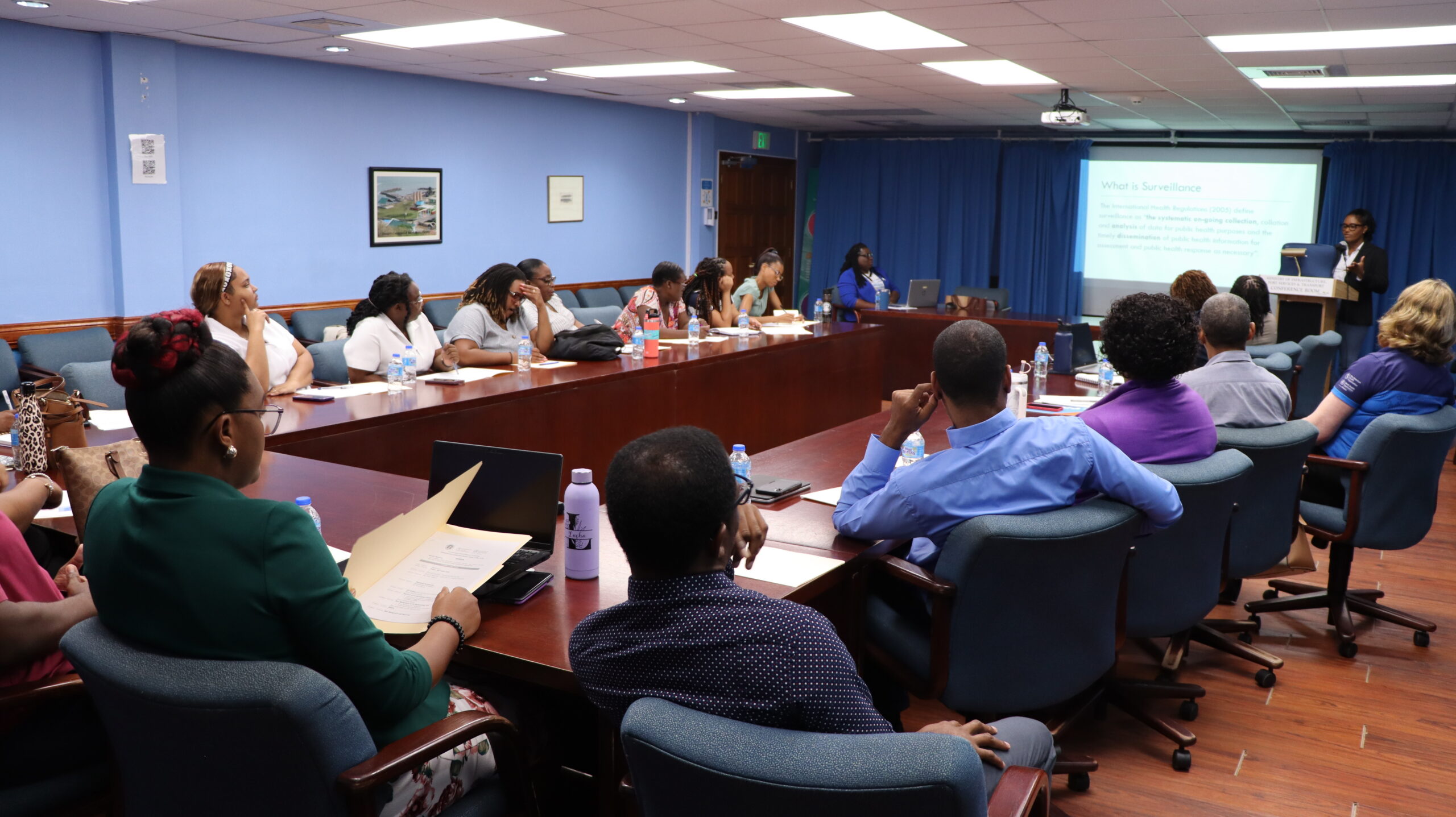
As part of 2026 Vaccination Week of the Americas activities, Saint Lucia has launched a nationwide disease surveillance training program aimed at equipping frontline healthcare workers with the skills to detect and report vaccine-preventable diseases at their earliest stages. Organized by the country’s Ministry of Health, Wellness and Nutrition, the training sessions are being hosted at venues across the island, including the opening session held at the Ministry of Infrastructure conference room, drawing participating medical professionals from every region of Saint Lucia.
This initiative forms a core part of the Caribbean nation’s ongoing work to boost its public health emergency preparedness and response framework, with a specialized focus on syndromic surveillance — a proactive monitoring approach that tracks clustered patient symptoms to catch emerging outbreaks before they spread widely. Beyond core surveillance techniques, participating workers also received training on modernized protocols for collecting, analyzing, and sharing surveillance data, designed to streamline reporting workflows and make critical health information more accessible for both clinical teams and the general public.
Dr. Dana DaCosta Gomez, Medical Surveillance Officer at Saint Lucia’s Ministry of Health, outlined the program’s core objectives during the opening session, emphasizing that frontline worker competency is the backbone of effective public health action. “This training is built to strengthen the capacity of healthcare workers to accurately recognize and categorize symptoms into standard syndromes for early detection of communicable diseases,” she explained. Dr. DaCosta Gomez added that the initiative will also improve the timeliness and accuracy of reporting through the country’s Health Management Information System (HMIS), while closing gaps between national surveillance infrastructure and the nation’s Expanded Programme on Immunization (EPI).
She stressed the irreplaceable role of frontline staff in the nation’s public health system, noting: “As frontline healthcare workers, you are the first line of contact with the public, of course, and you provide us with the information that we need. The information you provide is not just data, it is the foundation upon which public health decisions are made.”
Regional public health partners are continuing to back Saint Lucia’s efforts to strengthen its health systems. Fiona Anthony, Country Programme Specialist for the Pan American Health Organization (PAHO) in Saint Lucia, reaffirmed PAHO’s long-term commitment to supporting the island’s public health goals. “PAHO will continue supporting the country and the Ministry of Health with surveillance, rapid outbreak response, communication, and community engagement to counter misinformation,” she said.
Anthony added that PAHO’s support extends beyond training to broader capacity building and equitable access to immunizations. “Support will include capacity building of our health care providers, and equitable vaccine access through its revolving fund,” she explained. She also noted that the decision to host training sessions in both northern and southern districts of the island this week demonstrates the Ministry of Health’s full commitment to building a robust, nationwide surveillance network, rather than concentrating resources in just a few population centers.
By upskilling healthcare teams across the country, Anthony explained, Saint Lucia will be far better positioned to mount fast, effective responses to a range of pressing public health threats, including vaccine-preventable diseases such as seasonal influenza and COVID-19. In the long term, the Ministry of Health projects that this targeted training will strengthen both disease surveillance and national immunization programs, creating a more resilient public health system that safeguards all communities across Saint Lucia from preventable disease outbreaks.