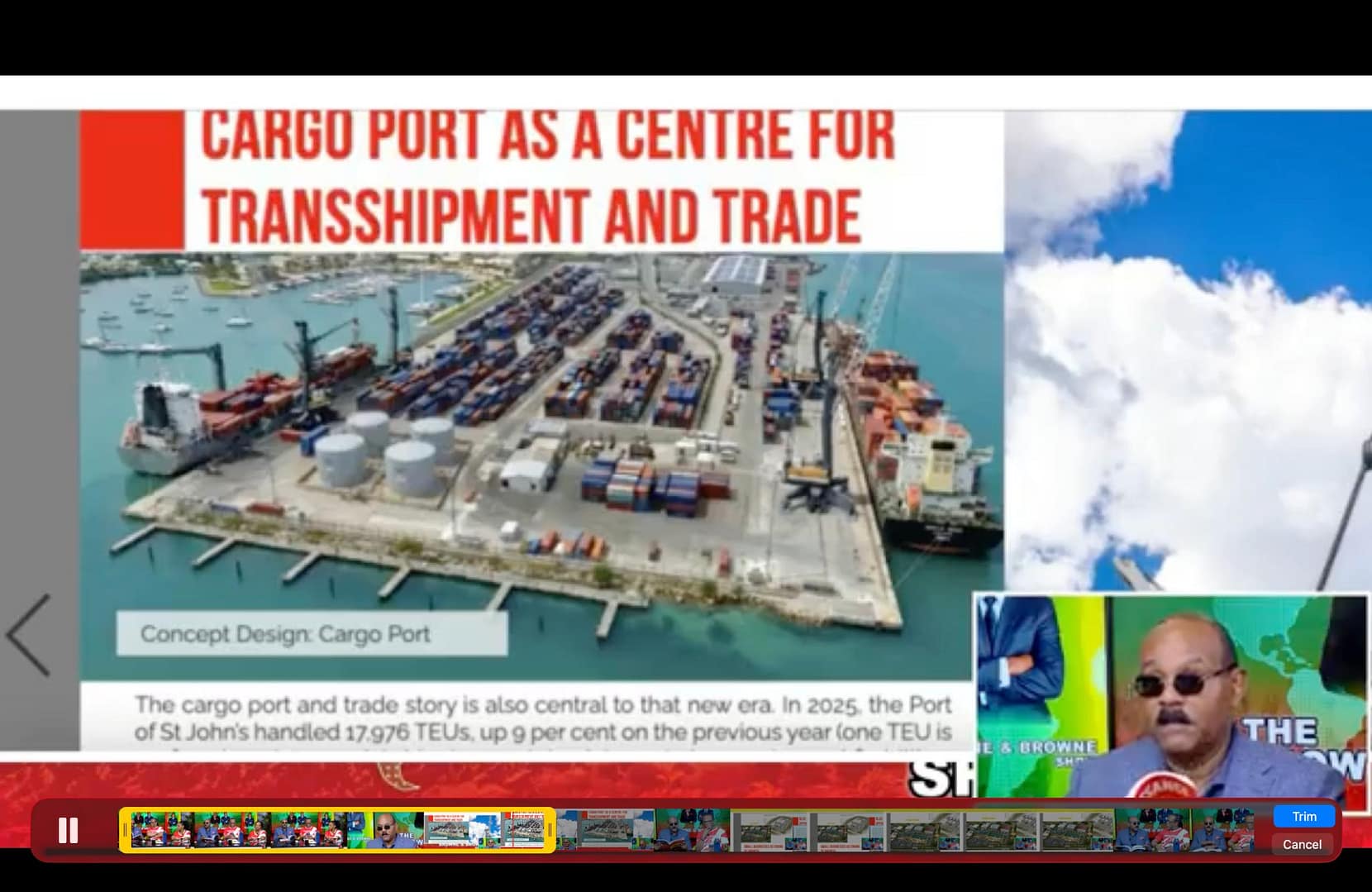
Prime Minister Gaston Browne, leader of the Antigua and Barbuda Labour Party, has disclosed that the island nation’s government is currently holding negotiations with a Japanese automobile dealership to establish Antigua and Barbuda as a transshipment hub for thousands of vehicles. This initiative forms the opening phase of a far-reaching infrastructure project designed to expand the country’s primary port and elevate its status as a central logistics and trade node for the Caribbean region.
Speaking during an appearance on Pointe FM’s *Browne and Browne Show*, Browne explained that the proposed transshipment agreement hinges on creating sufficient storage capacity to house thousands of incoming vehicles before they are routed to their final destinations. The entire port modernization and expansion initiative is structured in multiple sequential phases, with the vehicle transshipment project marking the first step of the multi-year transformation, he confirmed. Currently, the project remains in its early developmental stages, with planning and preliminary negotiations ongoing.
One of the most controversial components of the expansion plan is the proposed clearing of Rat Island, a small landmass near the existing port, to reclaim additional space for expanded cargo storage and logistics operations. Browne confirmed that the island will be leveled to create the flat, usable land required to accommodate the growing volume of goods and vehicles passing through the port. Beyond expanding cargo and vehicle storage, the development blueprint also includes the construction of multiple new marinas positioned between Fort James and Judge Bay, as well as on the eastern edge of Fort James. These marinas are intended to boost the island’s thriving yachting tourism sector and increase overall vessel berthing capacity.
The expansion project does not stop at vehicle transshipment and yachting infrastructure. The Antigua and Barbuda government is actively pursuing a suite of additional partnerships to cement the country’s role as a full-service regional shipping hub. Browne noted that a fully developed transshipment gateway will deliver tangible benefits to local businesses, allowing them to source imported goods from South American and European markets at lower overall costs, reducing the price of consumer and industrial goods across the island.
Another key revenue-driving component of the plan is the installation of dedicated liquefied natural gas (LNG) and conventional fuel storage tanks, which will enable the port to offer bunkering services to passing commercial and leisure vessels. Browne explained that this new service will create a standalone profit center for both the port authority and the West Indies Oil Company (WIOC), generating consistent new revenue for the country.
To accommodate the projected growth in transshipment activity, the redeveloped port will be redesigned to allow cargo ship berthing on both sides of the St. John’s harbour, effectively doubling available berthing space to handle increased shipping volumes. Browne emphasized that this structural upgrade is a critical requirement to support the higher traffic that will come with the country’s new role as a transshipment hub.
When fully completed, Browne projected that the expanded port could grow its total economic contribution to as much as 10 percent of Antigua and Barbuda’s overall gross domestic product. The initiative is a core part of the government’s broader strategy to diversify the country’s revenue streams and strengthen long-term economic resilience. Framing the project as a transformative milestone for the nation, Browne described the current period as an exciting moment for Antigua and Barbuda, as the government works to position the small island state as a leading competitor in regional maritime trade and logistics.