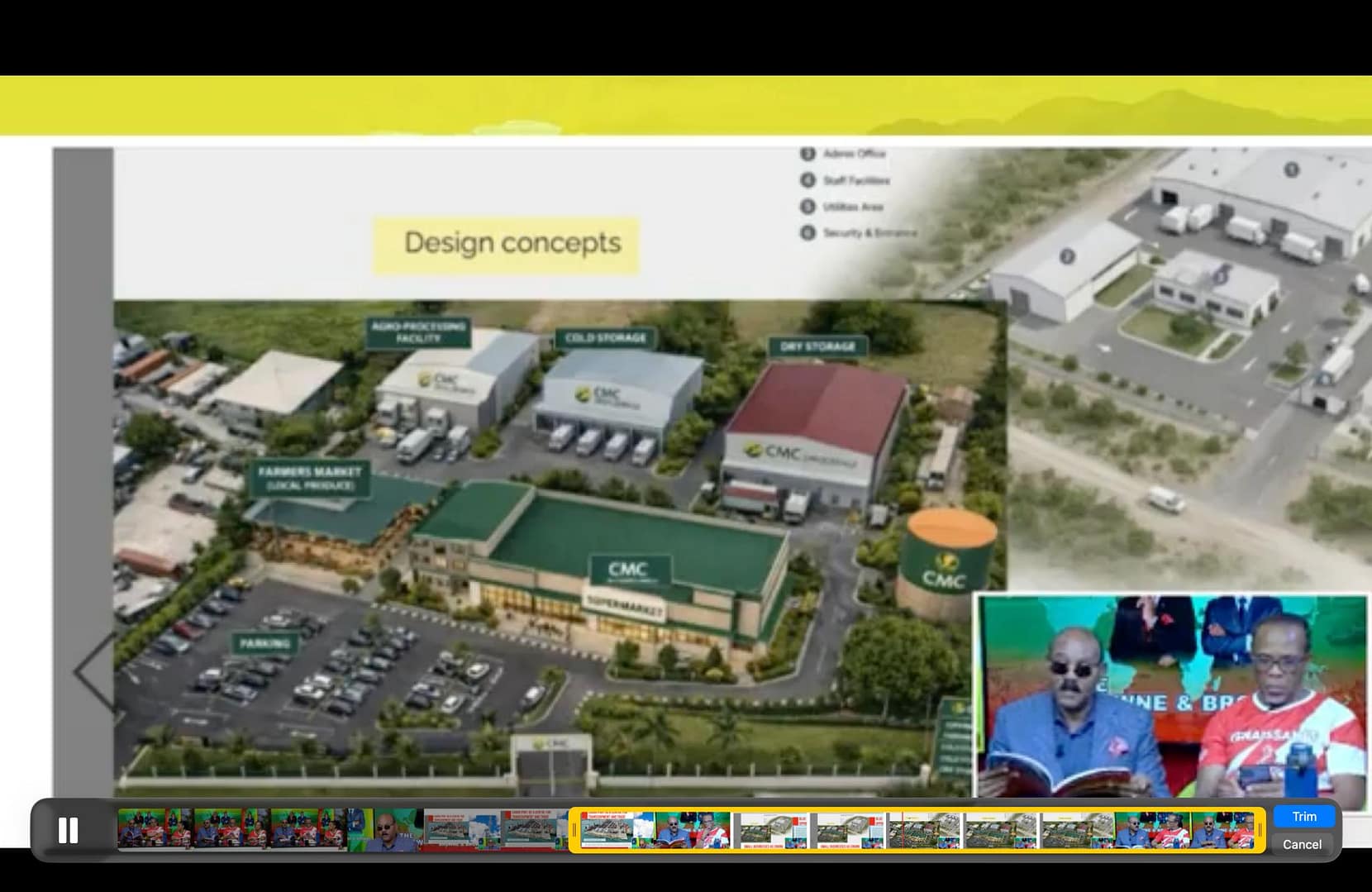
In a recent interview on Pointe FM’s popular Browne and Browne Show, Prime Minister Browne of Antigua and Barbuda outlined an ambitious government-led initiative to transform the country’s existing food distribution network through the development of a new Central Marketing Corporation (CMC) complex, a project he says will cut national food import volumes, stabilize consumer prices and strengthen long-term food security.\n\nBrowne emphasized that the core goal of the overhaul is to expand domestic food production and processing capacity, while making consistent, high-quality, affordable staples and animal products accessible to all households across the nation. “We have to prepare ourselves to make sure that we can sustain ourselves, and at the same time to make sure that we can produce good quality and affordable produce and meats,” he told listeners.\n\nAt the heart of the initiative is the conversion of the CMC into a fully integrated, one-stop “food emporium” that connects local smallholder farmers, independent food vendors and end consumers through a centralized distribution and processing hub. To accommodate this major expansion, the Antigua and Barbuda government has already invested $9 million to acquire the 5.5-acre former Kennedy’s Club property in Cassada Gardens, which will serve as the site for the main complex. “We have already bought the facility, it’s on five and a half acres,” Browne confirmed.\n\nThe new campus will host a full range of food-focused infrastructure, including a public supermarket, open-air farmers’ market, temperature-controlled cold storage, dry storage for non-perishable goods, and dedicated agro-processing units built exclusively to handle locally grown produce and harvested livestock. With these new facilities in place, Browne explained, local producers will be able to bring their goods directly from farm to market, cutting out unnecessary middleman markup that raises costs for consumers.\n\nA critical pillar of the plan to expand domestic meat production is the construction of new chicken and pork abattoirs in Piers, work on which is already progressing. Browne noted that these modern facilities will be capable of processing livestock into consumer-ready cuts, including fresh split chicken portions, and will be open for use by small-scale local livestock farmers who currently lack access to professional processing infrastructure.\n\nTo further reduce production costs for local meat producers, the government also plans to build a dedicated domestic feed mill. This facility will cut the sector’s reliance on expensive imported animal feed, bringing down input costs and making locally raised meat far more price-competitive with imported alternatives. “We also will be establishing a feed mill to drive down the costs,” Browne said.\n\nWhile long-term expansion of domestic production is the core focus, Browne outlined immediate short-term measures to deliver price relief to consumers: the CMC has already partnered with a United Kingdom-based supplier to import lower-cost staple food products, with the first shipments scheduled to arrive within a few months. “That should start within a matter of months,” he confirmed.\n\nBrowne argued that this dual strategy—ramping up local food output while securing more affordable imported goods in the near term—will stabilize domestic food prices and shield consumers from volatile global price shocks, including the impact of rising tariffs in major international export markets. He warned that without developing competitive local food alternatives, the country would remain vulnerable to worsening external price pressures as import volumes continue to climb. “Imports continue to increase, and you never can tell,” he said.\n\nBeyond immediate price relief, the expanded CMC network is designed to cut the country’s total food import bill, improve strained foreign exchange balances, and build a more resilient, reliable national food supply chain. To illustrate the untapped potential of scaling local production, Browne pointed to his own private agricultural operation, which currently produces roughly 150 pigs per year raised to modern food safety standards.\n\n“This is just going to be quite a beautiful food emporium to accommodate our farmers and to have CMC import more produce and meats at an affordable price,” Browne said, adding that the CMC overhaul forms one part of a wider government agenda to modernize Antigua and Barbuda’s agricultural sector, support small and medium local food businesses, and raise overall living standards for residents across both islands.
WATCH: PM Browne Says New CMC Complex Will Cut Food Imports, Lower Prices