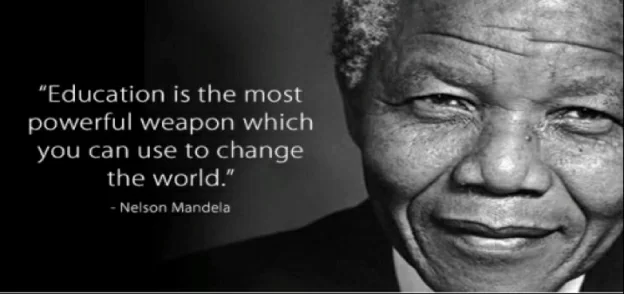
Education is far more than the simple acquisition of literacy, numeracy, and rote facts. It is the foundational catalyst for individual self-development, collective societal advancement and long-term national growth. Through education, people uncover their innate talents, cultivate critical thinking capabilities, and learn to engage meaningfully and actively with their communities. For nations, investing in robust education systems is synonymous with investing in long-term prosperity: a skilled, knowledgeable population drives continuous innovation, fuels sustainable economic expansion, and preserves social cohesion.
This inherent value of education is deeply understood by millions of parents and children across communities, who hold tight to the belief that education can break down systemic barriers and transform their life trajectories. Indra Toelsie, the author of this commentary, shares a personal reflection on this truth: her own parents, neither of whom completed primary education, sacrificed relentlessly to ensure their children could access secondary and higher education. Rain or shine, her father traveled with her across the region on his old Zundapp motorcycle to the education library, collecting reference materials for school assignments. He helped cut and paste materials for school projects, reached out to colleagues for hard-to-find information, and offered constant guidance. For Toelsie’s parents, education was the most valuable gift they could give their children, and no effort to support their schooling was too great.
Yet, this clear understanding of education’s importance is alarmingly missing from many current policy making circles, Toelsie argues. Instead of committing to long-term, structural investments in school infrastructure, educator development, and accessible learning resources, a deeply concerning trend has emerged: policy making is increasingly driven by short-term populism. Politicians prioritize flashy, superficial policy measures that win quick public support over the durable, systematic reforms that would actually strengthen education systems from the ground up. As critics have repeatedly highlighted, modern education policy is trapped in a constant cycle of unplanned, half-baked experiments that leave the system adrift. This constant upheaval breeds widespread frustration among both educators and students, leaving the sector with no clear long-term vision or roadmap for where it aims to be decades from now.
This populist-driven approach to education policy is not just unproductive—it is dangerous and short-sighted, Toelsie warns. By failing to give education the top policy priority it deserves, leaders are eroding the future prospects not only of today’s youth, but of the entire nation. Populist education measures may deliver quick electoral gains for politicians, but they fail to address the root structural challenges holding the sector back. In fact, they exacerbate existing gaps, leading to wider skills deficits and growing social inequality over time.
The shifting priorities facing the education workforce also demand urgent attention. While countless educators remain deeply committed to their students and their craft, growing financial pressures are increasingly pushing passion for teaching and student development to the background. Many teachers report feeling demoralized and undervalued, leading them to invest less time and energy in their own professional growth and their students’ development than the system requires. The core mission of nurturing young people is increasingly being sidelined by competing priorities.
Toelsie emphasizes that no child is inherently incapable; every person carries a unique set of talents and skills waiting to be nurtured. Unlocking that potential requires well-designed, functional systemic structures, and that responsibility falls squarely on policy makers. They must craft policies that make learning accessible, enjoyable, and motivating for all students. Meaningful innovation in education is also non-negotiable: learning should not be limited to theoretical instruction, but should expand opportunities for hands-on, practical experience, from structured company site visits to educational trips to cultural institutions like museums.
Every parent wants the best possible opportunities for their children, greater or equal to what they themselves received. Not every student can afford to study abroad or secure a competitive scholarship; the vast majority of young people must rely on their domestic public education system to build their futures. When that system fails to deliver, leaving both students and teachers discouraged and disempowered, the long-term stability and prosperity of entire societies is put at risk.
It is long past time for policy makers to step up and accept their core responsibility, Toelsie concludes. Education must be restored to its rightful place at the very top of the national policy agenda, recognized as the irreplaceable building block of both individual flourishing and national strength.