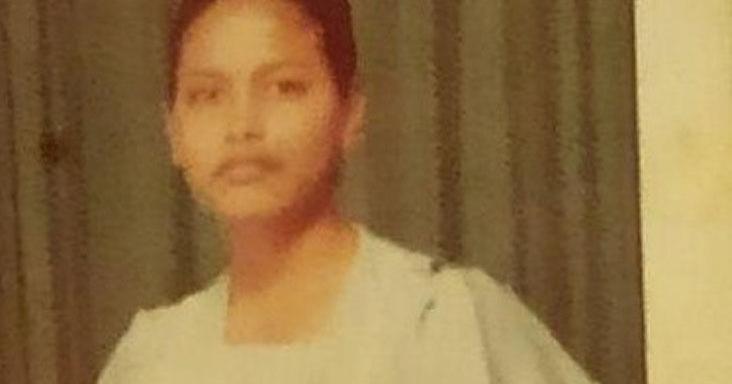
More than three decades after a Trinidadian immigrant was brutally murdered as one of the first victims of Long Island serial killer Rex Heuermann, the long-buried family trauma that shaped her short life has finally come to light, revealing a tragic trajectory of violence, loss and broken dreams.
Sandra Costilla, born Sandra Rajkumar in the small town of Sangre Grande, Trinidad and Tobago, was one of at least four women confirmed killed by Heuermann, a towering New York architect who targeted vulnerable women working in the sex trade along Long Island’s remote coast. Like many of Heuermann’s other victims, Costilla faced persistent economic instability that pushed her into survival sex work, making her an easy target for the killer who lured women with promises of cash before torturing, strangling and dismembering them, leaving their dismembered remains scattered across Long Island’s marshlands and remote shorelines.
Costilla immigrated to the United States in 1982 at the age of 17, through a marriage of convenience with a U.S. Army soldier stationed at Schofield Barracks, Hawaii, arranged by her older half-brother Anthony, who had already settled in the U.S. Born to Ramkissoon “Ramki” Rajkumar, a well-known local police officer, and Milly Rattansingh, a skilled seamstress with a reputation for providing underground abortion services in mid-20th century Trinidad, Costilla — called Popo by her family and Sandy by her friends — experienced unthinkable violence from childhood that would shape the rest of her life.
In June 1975, when Costilla was just 10 years old, her father Ramki arrived at the family’s Foster Road home carrying his service revolver, confronting Milly over allegations of infidelity. What followed that day was witnessed firsthand by Costilla’s 7-year-old younger brother Manny, who still carries vivid, traumatic memories of the massacre that left both his parents dead.
“The bedroom door opened out into the living room area. I was standing there watching. I pi… myself,” Manny recalled in a 2024 interview, decades after the event. “They had to move me off that spot. I was frozen there. I saw everything. Ramki shot my mother. Sandra ran towards him and grabbed the gun. It went off and a bullet went straight through her right palm. After checking that my mother was dead, he put the gun to the side of his head and pulled the trigger.”
Left orphaned, Costilla and Manny were bound by shared trauma that would haunt both of their lives for decades. Costilla long grieved the broken family she lost as a child, and after immigrating to the U.S., she struggled to build a stable life of her own, eventually spiraling into economic hardship and addiction that led her to sex work in New York. She was killed by Heuermann in November 1993, her remains dumped on Long Island like discarded meat.
For Manny, the trauma of losing both parents as a child led to a life of instability, marked by brushes with the law, addiction, and incarceration on three separate occasions in the U.S. After being deported back to Trinidad, he currently awaits trial on a robbery charge in Arima, still consumed by grief and rage over his sister’s murder more than 30 years ago. Though he was never able to protect Costilla from their father’s violence as a child, or from Heuermann’s brutality nearly two decades later, he has never let go of his desire for revenge.
“Her death destroyed me. It changed everything,” Manny said. “She died from blunt force trauma. I would like to blunt force trauma him! I want to stand over him and…” His words cut off, the pain of his loss still raw after more than 30 years.