
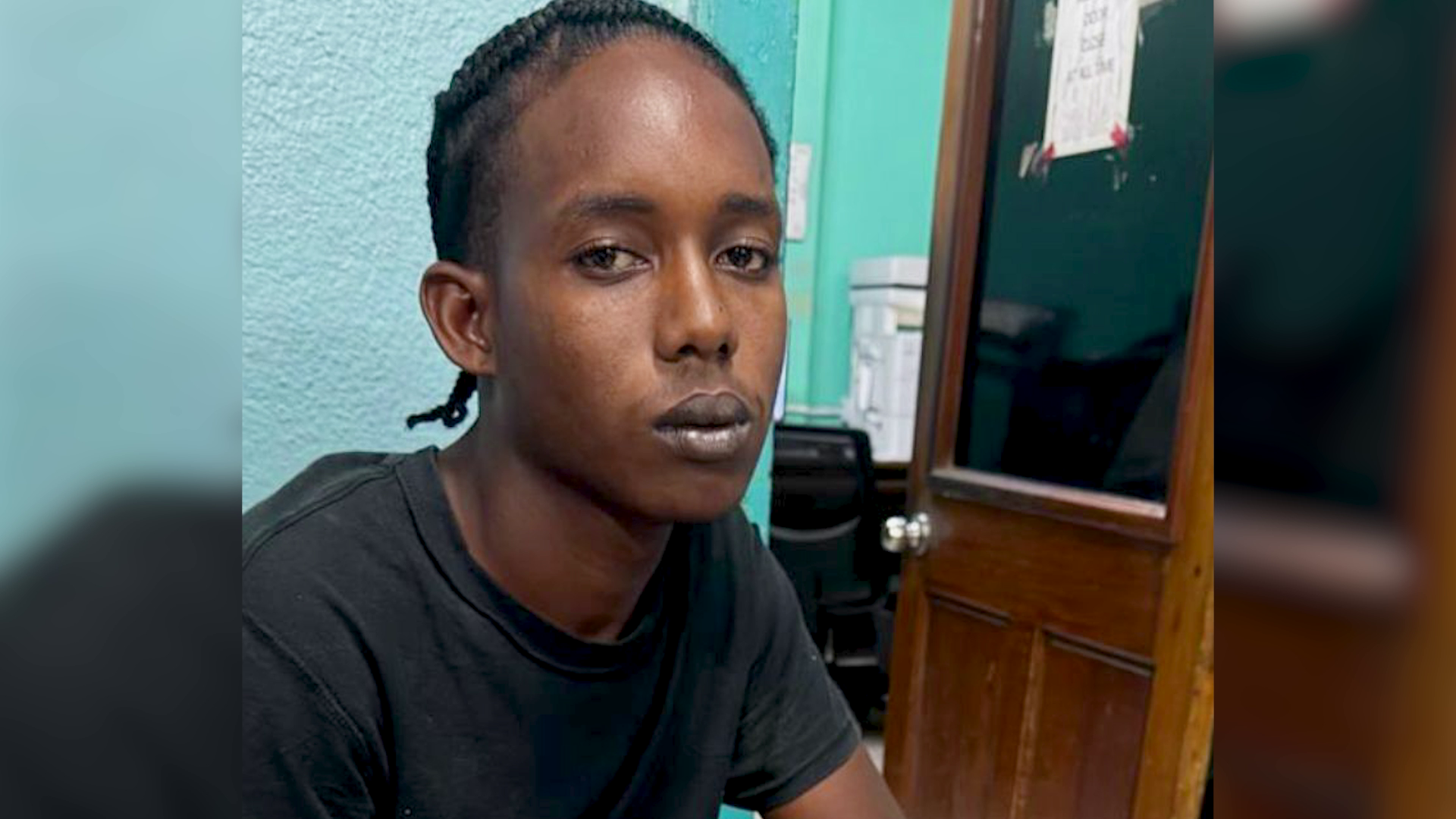
In a recent proceeding at St. Vincent and the Grenadines’ Serious Offences Court, a 23-year-old resident of Union Island entered a guilty plea to illegal gun and ammunition charges, marking his first criminal conviction and resulting in a three-year prison sentence. His two co-accused—his parents, 62-year-old Dexter Frogget and 58-year-old Josephine Jones—walked free after prosecutors withdrew all charges against them, following their not guilty pleas. The defendant, Rasheed Frogget, who works as a marine engineer, stood accused alongside his family of possessing an unlicensed Glock 17 pistol and 35 rounds of 9mm ammunition at their Ashton, Union Island residence on June 6 this year. The case traces back to that same day, when local police executed a judicially authorized search of Dexter Frogget’s home, acting on an anonymous tip they received. The search party, led by Sergeant 45 Forde, encountered Jones at the property when they arrived. After identifying himself and their legal search documents, Forde questioned Jones about her husband’s location, shortly before Dexter Frogget emerged from the rear of the residence. Both parents gave formal consent for officers to search the home, and the search began in Rasheed Frogget’s bedroom with all three property residents were present. During the search, investigators uncovered the loaded Glock pistol, marked with serial number BUND419, and the 35 9mm rounds hidden in the bottom drawer of a chest of drawers in the younger Frogget’s sleeping quarters. After seizing the items as evidence and photographing them for court records, Forde placed both Dexter Frogget and Jones under arrest, transporting them to the Union Island Police Station for questioning. The pair were interviewed separately, with a justice of the peace present for each interrogation, and both consistently maintained that they had no knowledge of the unlicensed weapons being stored on the property. One week later, officers brought Rasheed Frogget in for questioning and formal caution. He told investigators that he had found the firearm and ammunition, but had completely forgotten to hand the items over to law enforcement before he traveled from Union Island to mainland St. Vincent for work. All three family members were ultimately arrested and charged with firearms offenses. During Monday’s sentencing hearing, defense attorney Grant Connell argued for a non-custodial sentence, urging Chief Magistrate Colin John to impose only a financial penalty. Connell emphasized that Rasheed Frogget is the primary breadwinner for his family, and asked the court for leniency to give the young first-time offender an opportunity to continue contributing to his community as a law-abiding citizen. The defense further claimed that by holding onto the ammunition instead of allowing it to circulate on the black market, Rasheed Frogget had potentially prevented dozens of deaths that could have occurred if the weapons fell into dangerous hands. Rejecting the defense’s request for leniency, Chief Magistrate John sentenced Rasheed Frogget to 36 months of imprisonment for the illegal possession of the firearm, and an additional 24 months behind bars for the ammunition charge. The two sentences will run concurrently, meaning the young defendant will serve a total of three years in prison. The court also ordered the permanent confiscation of the Glock pistol and all 35 rounds of ammunition. Following the court’s ruling, prosecutors formally withdrew all outstanding charges against Dexter Frogget and Josephine Jones, ending the case against the older couple.
分类: crime
-
Five People Charged for One Gun in Belize City
In coordinated anti-illegal weapons operations across two Belizean communities last weekend, law enforcement agencies have seized three unregistered firearms and 23 rounds of ammunition, leading to criminal charges against six people – five in Belize City and one in Dangriga. As part of ongoing urban crackdowns on unlicensed weaponry, the busts mark the latest progress in local police’s targeted efforts to curb gun-related violence across the country.
The first operation, carried out Saturday June 6, 2026 at a residential property on Yampa Street in Dangriga, was a joint effort of three specialized police units: the Special Patrol Unit, Dangriga Quick Response Team (QRT), and the Gang Intelligence Investigation and Interdiction Unit. Acting on intelligence related to illegal weapons activity, teams searched the home of 21-year-old Jaylen Nunez (alternatively spelled Nunes in official police documentation) and uncovered two unregistered handguns loaded with live ammunition. The first recovered weapon was a black 9-millimeter pistol, which was loaded with 14 live 9mm rounds. The second was a .38 caliber revolver holding two live rounds of matching ammunition. Nunez was taken into custody immediately following the search, and now faces two counts each of unlicensed firearm possession and unlicensed ammunition possession.
Just two days later, a second operation by the Special Patrol Unit at a Crow Road residence in Belize City yielded another illegal 9mm pistol loaded with seven live 9mm rounds. In an unusual development, five individuals were jointly charged in connection with the single weapon: 36-year-old Natasha Hughes, 30-year-old Devon Pratt, 27-year-old Eldon Pratt, 27-year-old Andrew Biser, and a 17-year-old male minor who cannot be named publicly under Belizean juvenile justice law. All five face one count each of unlicensed firearm possession and unlicensed ammunition possession.
In an official statement released to local media, Assistant Superintendent of Police Stacy Smith, Staff Officer for the department, confirmed the details of both operations and charges. Smith emphasized that the busts are part of sustained, proactive campaigns by specialized police units to root out illegal gun stockpiles in Belize’s populated urban centers, where unregulated firearms have been linked to rising violent crime in recent years. Investigations into both cases remain ongoing, with law enforcement indicating they are still working to trace the origin of the seized weapons and determine if the individuals charged are connected to broader gun trafficking networks or gang activity in the region.
-
CMU says staff arrest shows internal controls work
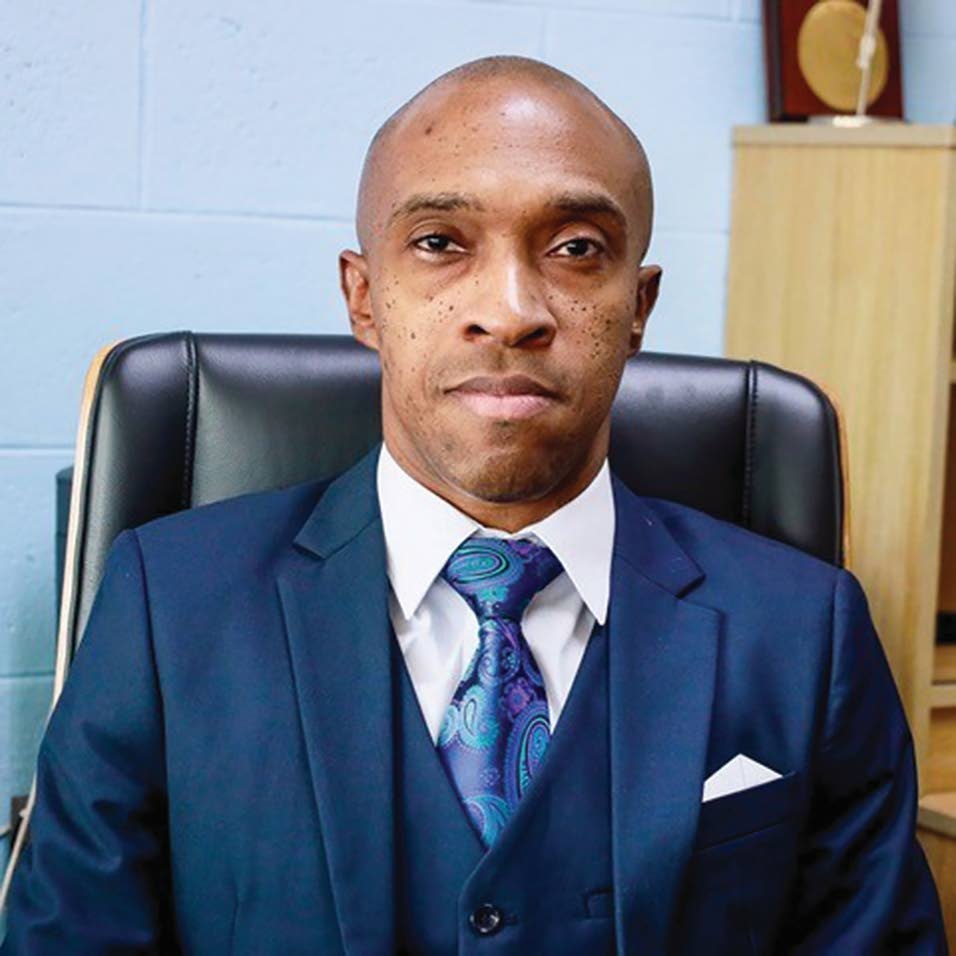
A financial fraud scandal has unfolded at the Caribbean Maritime University (CMU), leading to the arrest of a long-serving administrative staff member on multiple charges connected to misappropriation of student payments. The case marks the second high-profile fraud investigation to hit the Jamaican higher education institution in recent years, and has prompted fresh conversations about financial accountability in public educational bodies.
Kevan Anthony Panton, an accounting and customer service officer employed by CMU, was taken into custody this week following a joint investigation led by Jamaica’s Financial Investigations Division (FID), with support from the Special Investigation Branch of the Jamaica Constabulary Force’s Constabulary Financial Unit. In an official statement released Thursday, shortly after the FID publicized the arrest, CMU Principal Professor Andrew Spencer emphasized that the alleged irregularities were first flagged by the university’s own internal monitoring systems.
Spencer emphasized that CMU followed all established institutional protocols from the moment discrepancies were detected, and has maintained full cooperation with law enforcement throughout the probe. “This outcome confirms that our governance and oversight structures are working as intended, designed to spot inconsistencies and escalate issues through the proper regulatory channels,” Spencer said. He added that core university operations, including teaching, training and research programs, have not been disrupted by the investigation, and the institution remains focused on its public mandate.
FID officials confirmed that CMU’s leadership first reached out to the division to launch a formal probe, after a series of inconsistent financial records emerged. Following Panton’s arrest, the suspect underwent an interview with investigators in the presence of his legal representation, before being arraigned on 70 total criminal charges: 14 counts each of embezzlement, transaction of criminal property, possession of criminal property, facilitation of criminal property transactions, falsification of accounts, and conspiracy to defraud. Panton was granted bail in the amount of J$700,000 and is scheduled to make his first court appearance at the Kingston and St Andrew Criminal Court in Half-Way Tree on July 6.
The roots of the investigation stretch back to November 2024, when an initial discrepancy was uncovered during a period of scheduled university system maintenance. While reconciling daily cashier close-out reports against official bank deposits, auditors found that J$970,000 in recorded funds had not been deposited to the university’s accounts. Though Panton eventually returned the missing sum, the sequence of events deviated sharply from standard cash handling policies, leaving investigators with lingering concerns.
New red flags emerged in January 2026, during the university’s main examination period, when dozens of students presented manual payment receipts for fees that did not appear anywhere in CMU’s centralized financial records. That discovery prompted a full formal audit of CMU’s manual receipting, banking and accounts receivable processes. The audit found that sequential numbering had been broken across multiple manual receipt books, and several complete books could not be located for review.
In total, auditors were unable to account for just over J$1.7 million in student payments recorded on manual receipts. Of that missing sum, J$552,500 has since been returned to the university, leaving an outstanding deficit of more than J$1.1 million. Both Panton and a second CMU employee were suspended immediately after the audit findings were finalized in January 2026, and a formal criminal report was submitted to the FID shortly after.
Keith Darien, FID’s Principal Director of Financial Crimes Investigations, said the case reinforces how critical robust internal controls and timely reporting are to catching and addressing financial malfeasance in public institutions. “Every institution that collects funds on its own behalf must maintain clear accountability at every step of the cash handling, receipting and reconciliation process,” Darien said. “The FID will continue partnering with law enforcement and institutional stakeholders to root out suspected financial crime, and ensure that all cases with supporting evidence are brought before the courts.”
This arrest comes as CMU already faces another massive fraud prosecution: former CMU head Professor Fritz Pinnock is one of five people on trial accused of defrauding the university and Jamaica’s Ministry of Education of more than J$25 million. The co-accused in that ongoing case include former Minister of Education Ruel Reid, Reid’s wife Sharen, their daughter Sharelle, and Jamaica Labour Party councillor Kim Brown Lawrence.
-
Current, ex-JP granted bail in Manchester forgery case
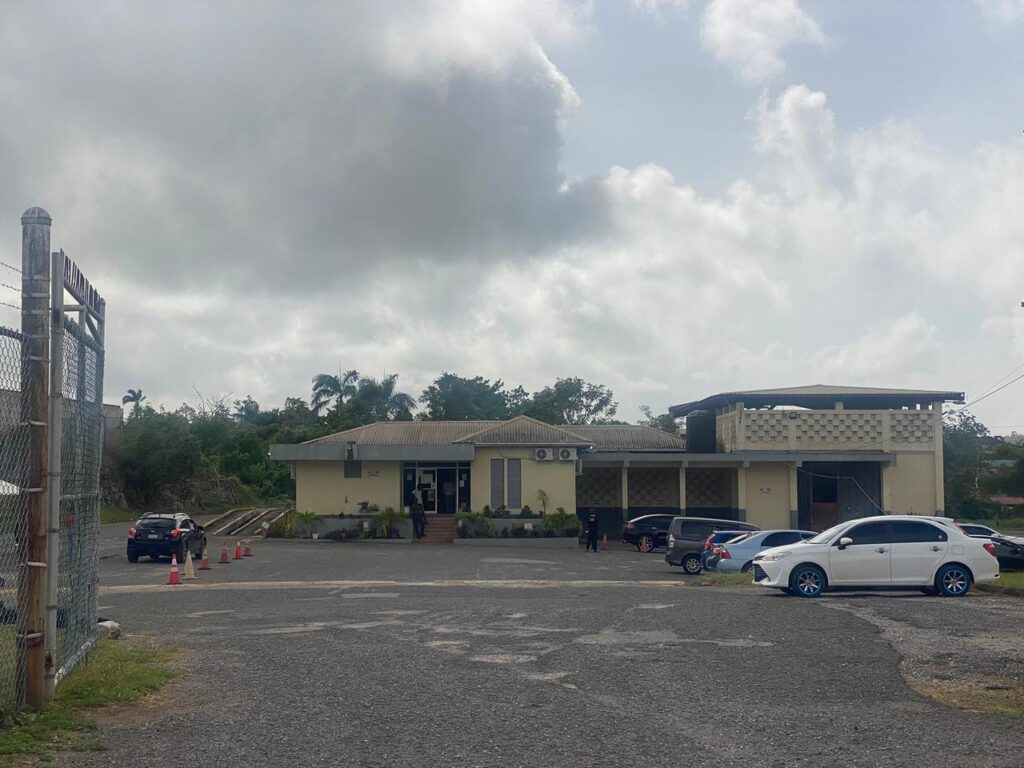
MANCHESTER, Jamaica — Two men facing a raft of criminal charges tied to an alleged driver’s license fraud scheme have been released on bail following a Wednesday hearing at the Manchester Parish Court.
The accused are 46-year-old Marvin Dean, a retired justice of the peace (JP) who resides in Manchester’s Cross Keys and Newport communities, and 64-year-old Dudley Powell, a sitting JP and active businessman based in Glenco, Spalding, along the shared border of Clarendon and Manchester parishes. Both men were charged last week following a coordinated police operation that took place at the Island Traffic Authority’s Mandeville Service Hub on May 18, where authorities took them into custody.
Presiding judge Monique Harrison set bail at $600,000 for Dean and $400,000 for Powell, with strict pretrial conditions attached to their release. As part of the bail agreement, Dean is required to check in with officers at the Newport Police Station every Monday, Wednesday, and Friday, while Powell must complete the same check-in protocol at the Spalding Police Station on the same scheduled days. Both men have been ordered to surrender all valid travel documents, and Jamaican authorities have issued a formal stop order across all national ports of entry and exit to block any attempt to leave the country ahead of trial.
Legal representation for the hearing was split between local attorneys: Odane Marston appeared on behalf of Powell, while Rodain Richardson and Amy Dunkley represented Dean.
The charges against the pair stem from allegations that they posed as licensed medical doctors to illegally sign off on mandatory health checks required for new driver’s license applications. Investigators filed 12 separate criminal charges against Dean last Thursday, including impersonating a medical professional, forgery of government and notary public seals, uttering forged documents, possession of falsified official paperwork, cheating public revenue, obtaining funds through false pretenses, conspiracy, attempted bribery, and possession of forged official stamps.
Powell was arraigned on four distinct charges the following day: cheating public revenue, conspiracy to commit fraud, misuse of an official seal for unlawful activity, and misconduct in public office, a charge tied to his ongoing role as a sitting justice of the peace.
The case is scheduled to return to Manchester Parish Court for a next hearing on July 1, as the investigation into the alleged fraud ring continues.
-
Drug Case Against Jamaican Businessman Discontinued
A major cannabis trafficking investigation that originated from a large drug seizure at the Deep Water Harbour in 2025 has concluded unexpectedly for one of the two accused individuals, as prosecuting authorities have dropped all charges against prominent Jamaican businessman Francis Young.
During a court appearance on Monday presided over by Chief Magistrate Ngaio Emanuel, prosecution representatives formally notified the judicial body that the office of the Director of Public Prosecutions had issued a formal order to end all legal proceedings against Young. At the time of the announcement, no official rationale or additional context was provided for the decision to discontinue the case.
The charges against Young were filed back in May 2025, when law enforcement personnel discovered 62 pounds of cannabis hidden inside a cargo shipment passing through Deep Water Harbour. The seized drug stock was estimated to have a street value of roughly $372,000. Alongside Young, local man Nadeem Brandon Doumith was also taken into custody and hit with matching trafficking charges connected to the seizure.
While Young has walked free from all legal accusations related to the high-profile case, the prosecution is moving forward with its case against Doumith. The legal proceeding against the second accused is still active, with the next court date scheduled for August 8, 2026.
-
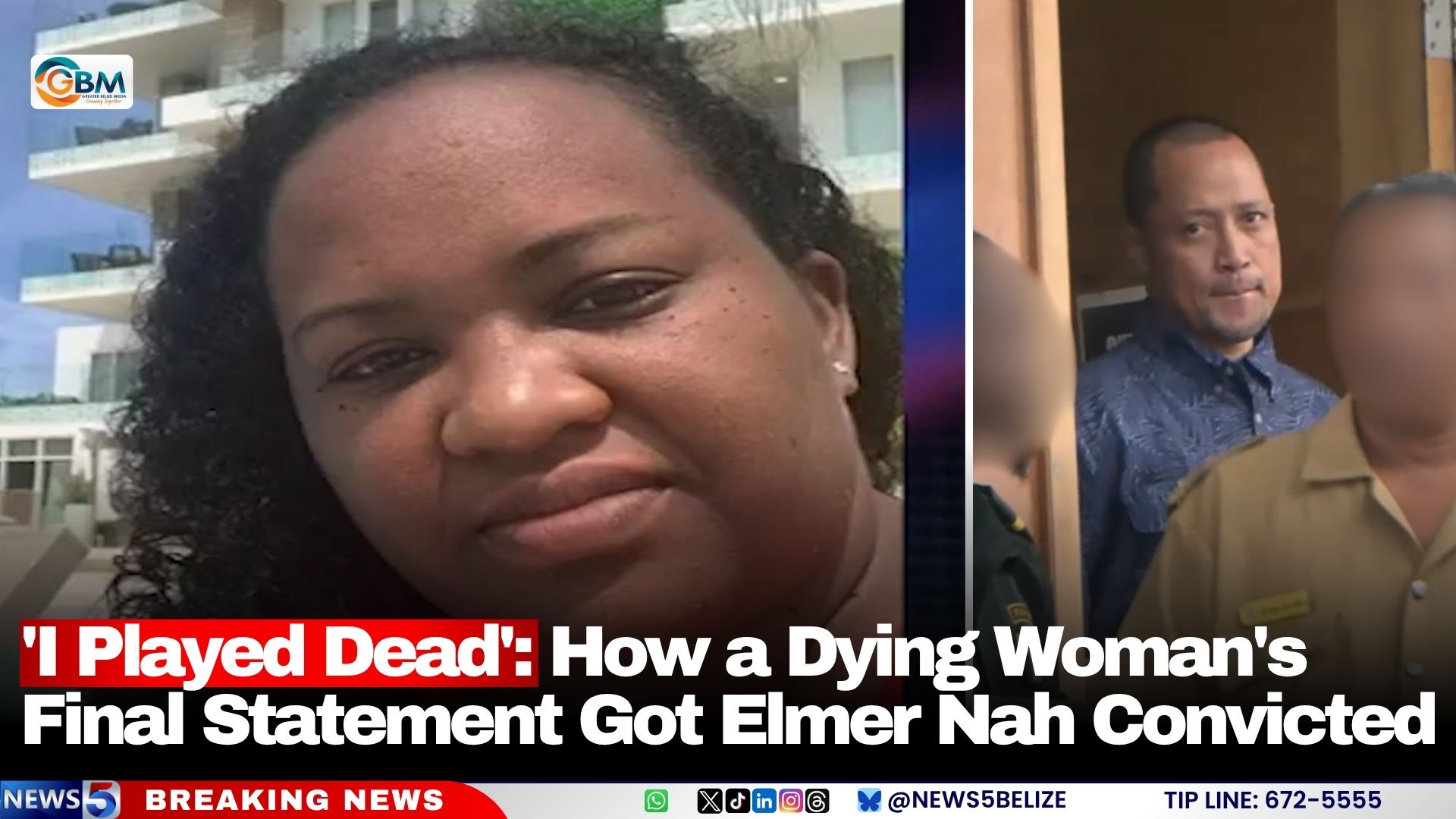
‘I Played Dead’: How a Dying Woman’s Final Statement Got Elmer Nah Convicted
In a landmark murder trial that has gripped Belize, former Belize Police Department officer Elmer Nah has been found guilty of three counts of murder and one count of attempted murder, closing a more than three-year-long case built on extraordinary evidence from a fatally wounded victim. The convictions stem from a brutal New Year’s Eve 2022 attack in Belmopan that claimed the lives of Jon Ramnarace, David Ramnarace, and Vivian Ramnarace, and left a fourth victim, Yenie Alberto—David Ramnarace’s common-law partner—with life-altering injuries.
The sequence of violence unfolded shortly after 7:30 p.m. on December 31, 2022, when the Ramnarace family’s dog began barking unexpectedly. Jon and David Ramnarace stepped outside to investigate the disturbance, followed by Vivian Ramnarace (Jon’s wife) and Alberto. A masked gunman never was in this case: the attacker, clad entirely in dark clothing, approached the home unmasked and opened fire in a 25-second assault captured entirely by the family’s home security system. Jon and David were killed instantly; Vivian was shot multiple times and Alberto, hit in the abdomen, managed to escape through the home’s back entrance to get help.
Vivian Ramnarace survived the initial gunfire but ultimately died on January 15, 2023, from complications caused by her gunshot wounds. What made her survival between the attack and her death extraordinary, however, was the critical evidence she collected and shared with authorities before she died. Even with four life-ending gunshot wounds, she managed to retrieve her mobile phone, alert a neighbor, contact family via WhatsApp, and call emergency services before first responders arrived. Less than 48 hours after the attack, while recovering in intensive care at Belize City’s Karl Heusner Memorial Hospital, she gave a formal, detailed statement to police that would become the linchpin of the prosecution’s case.
In her statement, which was admitted to court as hearsay evidence due to her passing before trial, Vivian recalled that she saw the attacker for a combined 8 to 10 seconds: first 15 feet away outside the home, illuminated by streetlamps and the family’s Christmas decorations, and again 8 feet away inside the home under kitchen lighting. She told investigators the gunman wore no mask, allowing her to see his face clearly. She described him as a 5’6” light-complexioned young man in full dark clothing, with a small light-emitting device mounted on his head. Most critically, she told police she recognized him from media coverage: he was the nephew of former senior police superintendent Marco Vidal, a former officer who had been publicly charged in a 2021 drug trafficking plane landing case. That description, the court ruled, was an unmistakable reference to Elmer Nah, who fit every detail of the account and had been widely featured in Belizean media and social media following his 2021 drug charge.
Later that same day, still bedridden in her hospital room, Vivian participated in a photo array procedure. After reviewing 12 photos of men with similar physical characteristics, she immediately and without hesitation pointed to photo number 10: a photo of Elmer Nah.
Nah’s defense team launched an aggressive challenge to the identification evidence, arguing that extreme duress had compromised Vivian’s ability to accurately identify her attacker, that her comment “it looked like Number 10” betrayed uncertainty, that the failure to conduct a formal in-person identification parade made the identification unreliable, and that no physical evidence—including DNA, fingerprints, or gunshot residue—linked Nah to the crime scene. The defense also noted that Nah has a prominent tattoo stretching from his wrist to his knuckles on one hand, which was not visible on the shooter in the grainy surveillance footage.
Presiding Justice Nigel Pilgrim rejected every one of the defense’s arguments, upholding the conviction in a ruling that relied heavily on the consistency between Vivian’s account and the surveillance footage she had never seen before giving her statement. Justice Pilgrim identified nine specific points where Vivian’s written description matched the video record exactly: the timing of the dog’s barking, the order in which family members stepped outside, the attacker’s fast approach, the sequence in which victims were shot, the attacker forcing open the front door, the light on his head, the outdoor light sources she described, and the indoor kitchen lighting.
On the question of her phrasing “it looked like Number 10”, Justice Pilgrim noted that this reflected common colloquial speech patterns in Belize, and came immediately after an unprompted, firm identification of the photo. On the tattoo, he ruled the surveillance footage was too grainy to confirm whether a tattoo was present or not. On the absence of a formal identification parade, he accepted the prosecution’s explanation that Vivian was bedridden in intensive care and physically incapable of attending, and cited binding judicial precedent holding that such parades are unnecessary when a witness has already provided a full, specific identification that allows police to apprehend a suspect.
Even without additional circumstantial evidence, Justice Pilgrim ruled, the combination of Vivian’s hearsay statement and corroborating surveillance footage was enough to confirm Nah’s guilt beyond a reasonable doubt. That said, multiple pieces of circumstantial evidence further supported the conviction. When police arrived at Nah’s home on Messam Street—just five to seven minutes’ walking distance from the Ramnarace residence—shortly after the attack, they found him standing at his front door wearing a lit headlamp, exactly matching the light source Vivian described and visible on the attacker in the surveillance footage. The court also found Nah deliberately lied about his whereabouts during the critical 7 p.m. to 8 p.m. window when the killings occurred. Initially, Nah told police he was at the nearby Wei Li bar during that time, but bar surveillance footage showed no sign of him between 5 p.m. and 8:30 p.m. By the time of trial, Nah changed his account, claiming he visited the bar after 9 p.m., a shift the court ruled was a deliberate fabrication to create a false alibi.
The defense called multiple witnesses to corroborate Nah’s alibi, including his cousin Amin Nah, his common-law wife Epifania Caliz, and former colleague Dervin Sambula. Justice Pilgrim rejected all alibi testimony, noting that Amin and Caliz are close family members with a clear incentive to lie for Nah, and that Nah’s proven lie about his whereabouts had already destroyed his credibility. Even if Sambula’s claim that Nah sounded calm during an 8:30 p.m. phone call was accepted at face value, the justice ruled, it could easily be explained by Nah’s confidence that his crime would not be discovered. The court declined to give weight to forensic evidence linking a pair of rubber boots seized from Nah’s pickup to a boot print found at the Ramnarace home, noting the forensic analysis only confirmed a class match, not a definitive individual match.
Nah maintained his innocence throughout the trial, arguing in his dock statement that he was at home with family when the attack happened, that he had been washing tennis shoes in his yard and mistook the gunshots for New Year’s Eve firecrackers, and that he later went to collect his sheep on a dirt bike with his cousin. Those claims were entirely rejected by the court.
A sentencing hearing is scheduled for June 18, 2026. Under Belizean law, a murder conviction carries a mandatory sentence, so Nah will face a fixed punishment for his crimes.
-
Lamborghini and $1.4 million mansion: Alleged drug leader’s life of luxury
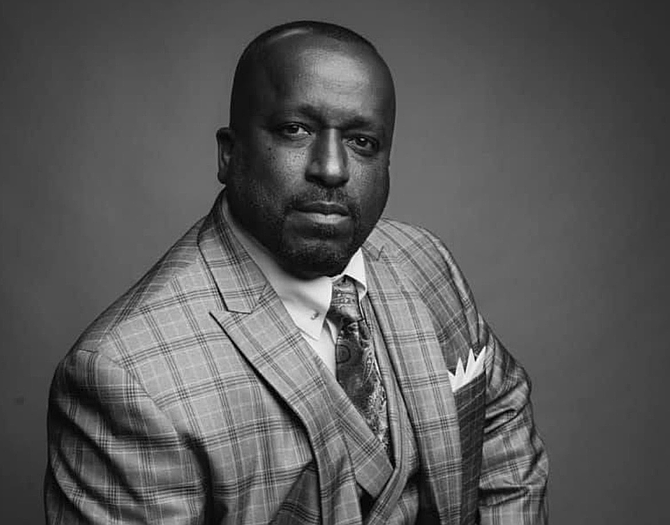
For years, Charles “Silk” Dunn crafted a compelling public narrative: a former convict who spent 24 years behind bars for drug offenses, transformed into a celebrated motivational speaker, life coach, and author who inspired at-risk youth across Georgia. Endorsed by celebrity figures including rapper Master P and Emmy-nominated actor Anthony Anderson, Dunn portrayed his lavish $1.4 million eight-bedroom Atlanta-area home with a private pool as the just reward for a life redeemed, a divine blessing for enduring decades of incarceration. But federal prosecutors say this inspiring transformation is nothing more than an elaborate front, masking the continued operation of a multi-state drug trafficking ring that moved hundreds of kilograms of cocaine through The Bahamas, with ties to a high-ranking Bahamian politician and a former convict whose sentence was commuted by ex-President Barack Obama.
The 57-year-old Dunn, who was arrested two years ago at his Fayetteville, Georgia home located roughly 30 miles outside Atlanta, is accused of leading the Georgia-based Drug Trafficking Organisation at the center of a sprawling multi-year investigation by the U.S. Drug Enforcement Administration (DEA). The case first gained public attention in mid-May 2024, after the arrest of Bahamian co-conspirator Jonathan “Player” Gardiner, who was rescued by U.S. military personnel from a downed plane off Florida’s coast. When authorities pulled Gardiner, 58, from the wreckage, they found he was carrying a bag holding $30,000 in Bahamian currency marked with the name of an unidentified senior Bahamian politician, referred to only as “Politician-1” in court documents. U.S. authorities have redacted the politician’s full identity to date.
In a May 15 affidavit from a DEA special agent, Dunn is named as the ringleader, identified previously only as unindicted co-conspirator “CC-1.” The document details allegations that the group discussed a $30 million narcotics shipment inside the Bahamian Parliament Building, a revelation that has sent shockwaves through Caribbean law enforcement and political circles. A further twist in the case came with the identification of a second key co-conspirator, “CC-2,” who is Ernest Mordeau Deas, also known as “Shorty.” Court records confirm Deas previously served a federal prison sentence for cocaine trafficking before his sentence was commuted by former President Barack Obama. After his release, he was placed on supervised release, but prosecutors now allege he immediately returned to drug trafficking. Deas and Gardiner first became connected while both were incarcerated at the same Florida federal prison between 2007 and 2008, serving time for overlapping drug trafficking and money laundering convictions.
One of the most remarkable details of the investigation is how it was conducted: court documents confirm that the DEA operated undercover confidential sources on Bahamian territory for at least three years, doing so entirely without the knowledge or consent of the Bahamian government, national police, or defense force. This covert operation has sparked ongoing questions about international law enforcement cooperation and sovereign immunity between the two nations.
Dunn’s carefully constructed public image as a reformed changemaker remains the most striking element of the case. After being sentenced to 30 years in prison in his home state of Ohio in 1992 at just 23 years old for running a drug trafficking ring, Dunn was released after 24 years and immediately set out to rebrand himself. He marketed himself as a “prisoner to changemaker” life coach, appearing on local television programs and giving lectures to youth groups across the Southeast. He even published two works: a motivational memoir titled *I Will Not Be Denied: Mastering The Changes*, and the four-volume *Sandpaper to Silk* series, which earned public endorsements from Master P and Anthony Anderson. Master P promoted the series in a social media video on Dunn’s Instagram, while Anderson called it a forthcoming bestseller in a promotional clip.
In one widely viewed Instagram video, Dunn gave his followers a tour of his Fayetteville estate, framing his luxury lifestyle as a reward for perseverance. “After all the pain I went through, 25 years of suffering … I wake up living like this because the God I serve is saying he gives you double for your trouble,” he told viewers. “People got to go to resorts to see this. I see this every day. Have an attitude of gratitude. Go through your suffering with grace and you’ll be blessed to wake up like this for the rest of your life too.” A local news article reposted on Dunn’s Instagram even compared his 24-year prison term to that of Nelson Mandela, the South African anti-apartheid icon who spent 27 years in prison before leading his nation.
Prosecutors, however, argue every part of this narrative is a carefully constructed lie designed to cover up ongoing criminal activity. When law enforcement raided Dunn’s home in 2023, they uncovered a cache of assets and narcotics that far outstripped the income of a full-time motivational speaker. Seized items included three high-end luxury vehicles: a $250,000 Lamborghini, a $125,000 Cadillac Escalade, and a $140,000 2019 Mercedes-Benz AMG GT. Investigators also took possession of more than $90,000 worth of fine jewelry, including two Rolex watches, multiple diamond-encrusted gold bracelets and rings, and a Versace dog tag. Beyond assets, authorities recovered five pounds of marijuana, half a kilogram of cocaine, heroin, THC-infused gummies, fentanyl, methamphetamine, 14 mobile phones, and multiple other electronic devices. A handwritten note dated June 27, 2023, found in Dunn’s primary bedroom simply read: “I have $10 million.” Prosecutors also seized four bank accounts holding a combined $653,000, $120,000 in cash from Dunn’s property, and an additional $270,000 in cash from an associate’s property. A .45 caliber Smith & Wesson pistol was also recovered during the search.
During a 2023 bail hearing, federal prosecutors pushed back hard against Dunn’s claims of redemption, arguing he had never left the drug trade. “We do believe that the defendant is a sophisticated and prolific drug trafficker operating in Georgia. That is how he funds his lifestyle,” prosecution attorneys told the court. Magistrate Judge Christopher Bly agreed, denying bail and noting that Dunn’s decades-long prior prison sentence had done nothing to deter his criminal activity. “Within a year or so of finishing the supervised release, best I can tell if I’m doing the math right, within a year or so of finishing supervised release you’re charged in Fulton County and then within another two years you’re charged in the current case,” Bly said.
Along with drug trafficking charges, Dunn also faces allegations that he planned a violent attack against a rival drug gang. The charges against him carry a mandatory minimum sentence of 10 years in federal prison and a maximum possible sentence of life imprisonment. His wife, Leticia Evans Dunn, has also been implicated in the scheme. Both Dunn and Deas have formally denied all charges against them and are awaiting trial. Requests for comment from Dunn’s legal team went unanswered as of press time.
-

Belize City Couple Charged After Cocaine Found in Home
A joint law enforcement operation targeting illegal narcotics and unregistered firearms across Belize has resulted in felony charges for a local Belize City couple, alongside a major haul of illegal weapons and ammunition seized over a five-day enforcement blitz. The operation, run by coordinated specialized police teams and regional law enforcement units across the country, ran from May 25 through May 29, 2026, with a targeted search in the Kings Park neighborhood of Belize City yielding a key drug bust.
During the search of a residential property on Vasquez Avenue, officers from the Eastern Division police unit uncovered 154 grams of suspected cocaine, leading to the immediate arrest of the home’s two residents: Corey Ottley and Tricia Ottley. Both have been formally charged with possession of a controlled substance with intent to supply, a charge that indicates authorities believe the pair intended to distribute the narcotic rather than hold it for personal use.
The Belize City drug arrest was just one outcome of the widespread nationwide enforcement push. Across targeted search operations in three key jurisdictions – Belize City, Corozal, and Belmopan – police also confiscated 10 illegal firearms. Officials report that these recent seizures have pushed the total volume of illegal weapons taken off Belize’s streets since the beginning of 2026 to 116, spanning multiple calibers. Alongside the firearms, law enforcement has seized a total of 3,724 rounds of unregistered ammunition so far this year. To date, 109 individuals have been taken into custody on charges linked to illegal firearms and ammunition possession across the country.
The crackdown comes as part of Belize’s ongoing efforts to curtail cross-border drug trafficking and reduce gun-related violent crime, which has remained a top public safety priority for law enforcement across the Central American nation. This latest operation reflects a coordinated, multi-regional strategy to target illegal contraband at the local level.
-

Dock deception fails
In a striking turn of events during an ongoing Jamaican gang trial in downtown Kingston, a retired police officer who initially arrested accused Klansman gang affiliate Carlos Williams took mere seconds on Friday to correctly identify him from a group of 25 co-accused, even after defense attorneys secured a last-minute seating rearrangement and the defendant attempted a surreptitious shirt swap to throw off the witness.
The former law enforcement officer is a key witness for the Crown in the high-profile trial of members of the Tesha Miller faction of the notorious Klansman gang, testifying to the details of two counts on the sweeping indictment against the group. During his direct testimony, he walked the court through the pre-dawn arrest of Williams carried out on April 16, 2023, by Jamaica’s former Counter-Terrorism and Organised Crime (C-TOC) unit at a residence on Okra Lane in Spanish Town, St Catherine.
According to the witness’s account, a search of the property uncovered a Ziploc bag stored in a dresser drawer holding 30 blank magnetic-strip cards and two embossed bank cards carrying a major Jamaican bank’s branding. He then took the then 27-year-old labourer into custody and charged him. Williams allegedly told the officer the two bank cards were his, gifted to him by a girlfriend living overseas.
When the acting deputy director of public prosecutions leading the case asked the former officer if he could pick Williams out of the dock of defendants, the witness confirmed he could, but defense attorney Petreta Gabbidon immediately objected. She requested the witness step outside the courtroom while she argued for a reshuffling of the defendant seating arrangement, a motion that was granted alongside co-counsel Lynden Wellesley’s request. Trial judge Justice Dale Palmer ordered the shuffle, instructing all defendants to remove any facial coverings and sit upright to ensure unobstructed visibility, after multiple accused had been observed slouching in their seats to hide their faces, some completely obscuring their features.
As the defendants rearranged themselves, Williams moved from his assigned seat in the secondary dock to the main holding area, where witnesses saw him attempt to trade his signature blue patterned shirt with another co-accused. The swap was cut short, however, when Justice Palmer spotted the half-completed exchange, with both men already stripped down to their white undershirts. The judge halted the swap immediately, ruling that unauthorised clothing changes could not take place in the courtroom, leaving the two men sitting side by side in matching white tees.
When the former officer returned to the stand to make his identification, he left the witness box, walked along both sides of the courtroom to get a clear view of every defendant in the docks, and within seconds correctly pointed to Williams, identifying him as the second-to-last man in the back row on the right side. When Justice Palmer asked the defendant to confirm his name, a dejected, crestfallen Williams replied, “Carlos Williams.” The former officer confirmed Williams faces a charge of possession of an unauthorised access device in addition to his more severe gang-related counts.
Williams, alongside co-accused Jermaine Clarke and Owen Billings, faces charges on counts 28 and 29 of the Crown’s indictment for knowingly facilitating the August 11, 2022, robbery and murder of Zamari McKay, a St Catherine resident.
During cross-examination, Wellesley attacked the former officer’s conduct during the arrest, comparing the pre-dawn operation to the biblical figure Nicodemus who visited Jesus under cover of night, claiming the officer “sneaked up” on his client. The witness pushed back, confirming the operation was a pre-planned targeted action. Wellesley also challenged the witness’s account of the evidence recovered, asserting that only one bank card with Williams’s name was found at the property, and that Williams only admitted ownership of the 30 blank cards, not the second bank card. The former officer firmly denied this claim, stating the suggestion was incorrect.
Separately, Denise Hinson, counsel for Clarke and Billings, questioned the authenticity of the witness’s investigative notes, arguing that the entries related to the 2023 arrest were a recent fabrication, not written in 2023 as the witness had testified. The former officer countered that he completed his final notes on the case on April 27, 2023, 11 days after the arrest, and finalised his official statement shortly after. He resigned from the Jamaica Constabulary Force roughly one year after the arrest.
The trial is scheduled to resume at 10:00 a.m. Monday at the Home Circuit Division of the Supreme Court in downtown Kingston.
-
Canadian poison seller pleads guilty to aiding suicides
In a court proceeding that has reignited global debate over unregulated online harm and assisted suicide, 60-year-old former Canadian chef Kenneth Law entered guilty pleas on Friday to 14 counts of aiding suicide, escaping more severe murder charges that prosecutors have abandoned after concluding a conviction would be unobtainable.
The case, which first drew international outrage after Law’s arrest in 2023, exposed a sprawling cross-border criminal operation that saw the defendant sell lethal packages of poison to vulnerable, suicidal people across 41 nations. Among the countries impacted were Australia, China, France and Brazil, with the United Kingdom recording the highest volume of sales at 330 packages shipped to British customers.
Originally, Canadian prosecutors had brought dual charges against Law: 14 counts of first-degree murder and an equal 14 counts of aiding suicide. But during the hearing held at a Newmarket, Ontario court, located just north of Toronto, prosecution representatives confirmed they would not move forward with the murder charges, stating they had no viable path to secure a murder conviction before the Canadian court system.
When the charges were read, Law stood in the secured defendant’s enclosure flanked by three defense attorneys, and clearly stated “I plead guilty” to the charge of assisting the suicides of 14 Canadian residents. A separate sentencing hearing scheduled for September will allow the court to hear victim impact statements from grieving families before a final sentence is handed down. Legal analysts note that as a serious criminal offense in Canada, aiding suicide carries a potential penalty of between 10 and 20 years behind bars.
Following the guilty pleas, prosecutors began presenting a 60-page agreed statement of facts that laid bare the systematic, predatory nature of Law’s online business. The document outlines that Law did not wait for vulnerable people to find him—he actively sought out potential customers on public suicide discussion forums, operating under the pseudonym “Greenberg.” When forum participants mentioned sodium nitrite, a common meat preservative that can be lethal in high doses, as a potential method of ending their lives, Law would redirect them to his own commercial websites, where he sold the powder in concentrated, fatal doses for approximately $80 per package.
To illustrate Law’s awareness of his illegal activity, prosecutors played a recorded phone call between Law and a journalist from The Times of London who had posed as a potential customer. When the reporter asked if Law’s business was legal, Law pre-planned a cover story he told the journalist to repeat to authorities if questioned: that the sodium nitrite was sold to improve swimmers’ lung capacity. Prosecutors also detailed that in dozens of cases, deceased victims were found by their family members with an open package of Law’s sodium nitrite next to their bodies.
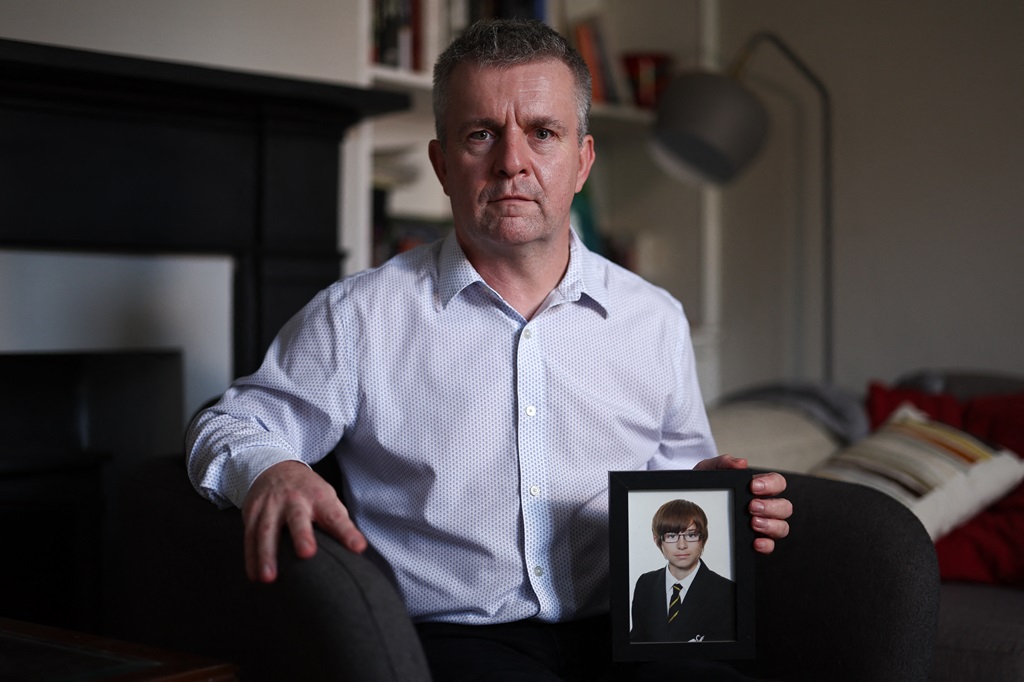
The decision to drop murder charges has left grieving families across the world disappointed and angry. David Parfett, whose 22-year-old son Thomas died by suicide in 2021 using poison purchased from Law, has become a prominent advocate for stricter regulations targeting online spaces that promote self-harm. Parfett told reporters that Canadian authorities missed a critical opportunity to codify the severity of Law’s actions. “If (Law) hadn’t been offering detailed instructions about how to take your own life, then the chances are my son would still be here. So again, for me, it’s murder,” he said.
Official records tie Law’s products to 79 deaths in the United Kingdom alone. UK’s National Crime Agency (NCA) confirmed that Law will not face additional prosecution in the UK, but all evidence related to British deaths will be presented during his Canadian sentencing hearing. In a joint statement, the NCA and British prosecution service noted that they had already explained their decision not to prosecute to victims’ families in full.
Parfett summed up the sentiment of many affected families, saying, “I am angry, but I am not surprised.” He also reiterated that families’ calls for a public inquiry in the UK have been rejected, saying, “If our own country will not put anyone on trial for these deaths, the very least it can do is hold a proper inquiry into how they were allowed to happen.”
Legal experts offer context for the prosecution’s decision. Dalhousie University law professor Robert Currie explained that Canadian prosecutors had been waiting for a separate case before the Supreme Court of Canada to clarify the legal definition of aiding suicide versus murder in this context. When the Supreme Court declined to address the key legal question, prosecutors lost confidence in their ability to convince a jury to convict Law on murder charges, leading to the decision to abandon the more severe counts.