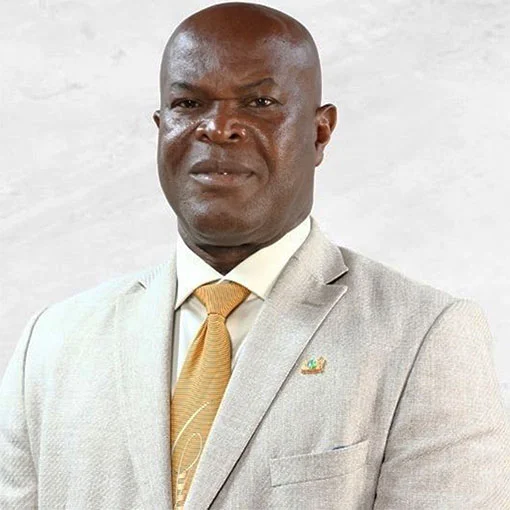
On November 9, local time, Suriname’s President Jennifer Simons formally announced during a Monday press conference that former vice president and current Vice Chair of the National Assembly Ronnie Brunswijk will no longer hold any official role in the restructuring of the national gold mining sector, marking a full overhaul of the previous regulatory model that has been widely criticized for ineffective enforcement. Simons clarified that the former Commission for the Ordering of the Gold Sector no longer has any legal standing, as the administration has scrapped the standalone regulatory body in favor of a two-tier operational structure consisting of a dedicated policy team and a frontline management team, with all enforcement duties transferred to authorized state agencies including the national police, the National Army, and the National Environment Authority (NMA).
The announcement came in direct response to ongoing public inquiries about Brunswijk’s involvement in gold concession allocations and his potential influence over sector policy, as Simons explicitly ruled out any official position for the veteran politician under the new regulatory framework. She emphasized that the old commission model had repeatedly failed to deliver tangible, long-term improvements to the sector, justifying the full structural replacement.
Under the new setup, the policy team will be tasked with drafting refined regulatory guidelines, compiling comprehensive sector data, and conducting regular performance evaluations of policy implementation, while the management team will oversee day-to-day operational execution. By consolidating enforcement power under formal state agencies, the administration aims to eliminate the fragmented, unaccountable oversight that defined the previous regime.
Simons also acknowledged decades of systemic regulatory neglect that allowed widespread illegal activity to take root across the gold sector: for years, unlicensed miners have operated on third-party concessions, and many sites designated for construction material extraction have been used for unauthorized gold mining. She noted that these long-standing irregularities cannot be eradicated overnight, as the government first needs to complete a full national audit to map every legal and illegal mining operation, verify existing concession agreements, and document all informal arrangements between concession holders and third-party operators.
“For years, we have had clear laws on the books, but we simply failed to enforce them,” Simons stated, adding that after the full inventory is completed, the government will make targeted, non-discriminatory decisions on a case-by-case basis, determining whether unlicensed operations will be shut down, formalized through legalization pathways, or addressed through targeted legislative amendments. She stressed that the reform process will be entirely impartial, free from preferential treatment for any individual or group, though immediate elimination of all past violations is not logistically feasible.
The new framework also shifts the government’s approach from reactive crisis response to proactive preventive governance, moving away from the costly pattern of deploying security and environmental agencies only after violent mining conflicts or irreversible ecological damage have already occurred. Simons warned that the multi-year reform process is likely to face pushback from groups that have operated outside state supervision for decades, but emphasized that reclaiming full state control over the strategically critical gold sector is a non-negotiable priority for the administration.
Brunswijk heeft geen rol meer bij ordening goudsector