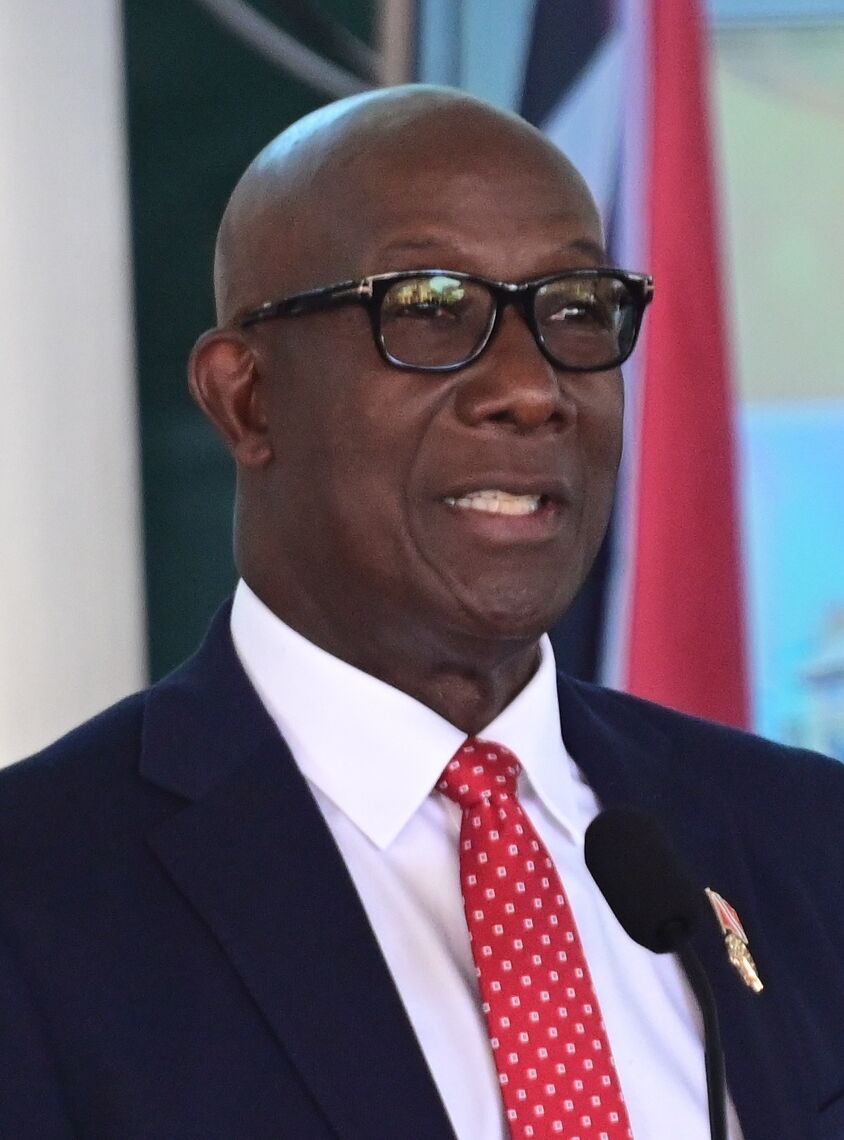
In a widely shared public Facebook post, former Trinidad and Tobago prime minister Dr. Keith Rowley has framed the outcome of the recent November 3 U.S. midterm elections as far more than a simple repudiation of former President Donald Trump, arguing that American voters delivered a deliberate, sharp rebuke to all political actors who enabled and amplified the former administration’s controversial agenda. The midterm results handed full control of both chambers of the U.S. Congress to the Democratic Party, delivering a historic, stinging political setback to Trump’s Republican faction.
Rowley’s remarks directly target sitting Prime Minister Kamla Persad-Bissessar and her ruling United National Congress (UNC) administration, alleging that the government’s close, unwavering alignment with the Trump White House over recent years has eroded Trinidad and Tobago’s long-held diplomatic sovereignty, broken core longstanding foreign policy principles, and damaged the country’s international standing.
He emphasized that the decisive electoral pushback from U.S. voters against Trump’s “destructive reign” carries a clear, urgent lesson for Trinidad and Tobago’s citizenry, urging residents to take stock of their own national political trajectory and reconsider the level of tolerance they have extended to policies that mirror the discredited Trump-era playbook. Rowley went on to accuse the UNC of overstepping traditional diplomatic boundaries while in opposition, when party representatives openly attacked and insulted Democratic leadership in the U.S., a critical regional neighbor and major trading partner. Once in power, he claims, the UNC government went even further by publicly endorsing what he described as the Trump administration’s documented patterns of racist rhetoric, aggressive military posturing, corrupt governance, and cruel punitive domestic and foreign policies.
In a further explosive allegation, Rowley claimed the UNC partnered with the controversial, now-defunct political consulting firm Cambridge Analytica to infiltrate local political processes, a move he argues compromised Trinidad and Tobago’s national dignity and sovereignty purely for the sake of securing electoral advantage.
He specifically called out two high-profile recent foreign policy decisions that he claims break decades of bipartisan T&T diplomatic precedent: the government’s October 28 vote against the annual United Nations resolution demanding an end to the longstanding U.S. trade embargo on Cuba, and its current refusal to defend the International Criminal Court (ICC) — a global institution co-founded under the leadership of legendary former T&T prime minister and president Arthur NR Robinson. The Persad-Bissessar administration has defended its Cuba vote as a principled stance rooted in concern for the welfare of ordinary Cuban people, rather than hostility to the nation, but Rowley dismissed that explanation, arguing the vote represented an abandonment of long-held humanitarian commitments and amounted to unnecessary “bootlicking” to curry favor with Washington.
The former prime minister stressed that Trinidad and Tobago does not need to sacrifice its core values, sell its national sovereignty, or act as a political vassal to any U.S. administration to maintain strong, mutually respectful bilateral ties with the United States. He pointed to the track record of his own People’s National Movement (PNM) party, which he said prioritized national self-respect, decency, integrity, and universal humanitarian principles to build positive diplomatic relations with all global partners, without abandoning the country’s independent diplomatic identity.
Rowley: Rejection of Trump, enablers