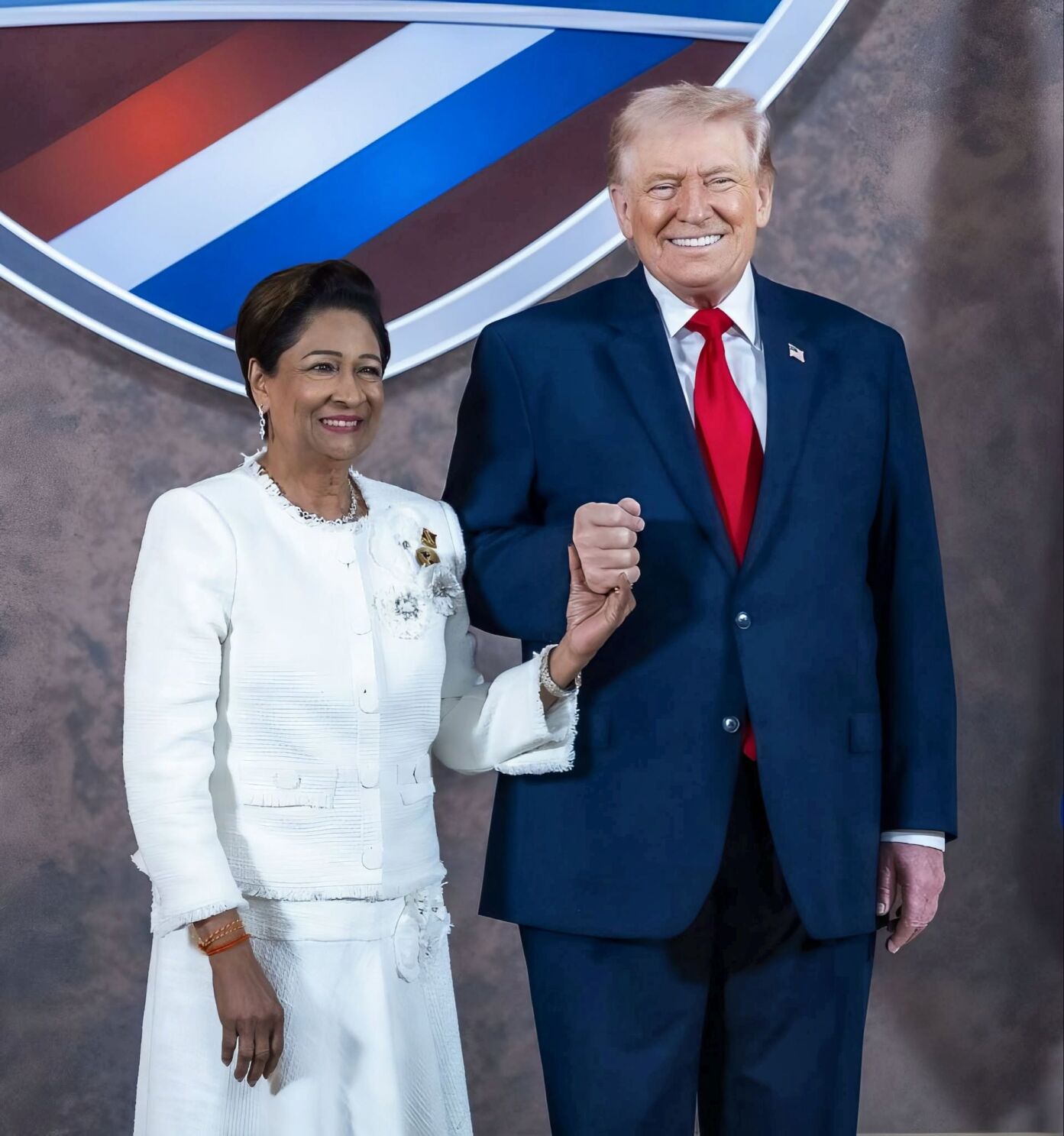
Port of Spain – Trinidad and Tobago Prime Minister Kamla Persad-Bissessar has forcefully pushed back against widespread concerns that the Republican Party’s bruising defeat in this week’s U.S. midterm elections could trigger domestic political fallout for her administration, which has positioned itself as one of the Caribbean’s most vocal backers of President Donald Trump. Speaking exclusively to the Trinidad Express in a recent interview, Persad-Bissessar rejected assertions that her long-stated unwavering support for the U.S. president would erode electoral support for her ruling United National Congress (UNC) government, framing the American electoral outcome as a purely domestic event with no bearing on Trinidad and Tobago’s voting patterns or bilateral relations with Washington.
The 2018 U.S. midterm contests handed Democrats decisive control of both the U.S. House of Representatives and Senate, flipping at least seven previously Republican-held Senate seats and notching significant gains across House districts in states ranging from Texas and Ohio to Maine. The sweeping losses ended the GOP’s full grip on Congress, creating a divided government set to constrain Trump’s legislative agenda for the final two years of his term, while granting Democratic lawmakers broad new authority to launch oversight investigations, challenge administration policy, and reshape U.S. domestic and foreign policy direction. Pundits and exit polls widely framed the results as a public rebuke of Trump’s leadership, driven overwhelmingly by American voters’ frustration with bread-and-butter economic strains: skyrocketing fuel costs, surging cost of living, and economic ripple effects from the prolonged conflict in Iran, a dynamic even Trump himself acknowledged as a key factor in his party’s underperformance.
Addressing critics who warned that the Democratic takeover of Congress could leave Trinidad and Tobago diplomatically vulnerable due to Persad-Bissessar’s close public alignment with Trump, the prime minister insisted her country’s diplomatic standing with Washington has never been stronger. “The U.S. state advances its own core national interests consistently, no matter which party controls the presidency, the Senate, or the House of Representatives,” she told the Express. “They know they have a reliable ally in my government, through good times and challenging periods, and that foundational mutual interest will not shift with changes in congressional control.”
Persad-Bissessar went on to note that decades of U.S. foreign policy toward Cuba, Venezuela, and the wider Caribbean have remained largely continuous across successive administrations, regardless of partisan control in Washington. She emphasized that Trinidad and Tobago’s governing principle will always be to prioritize its own national interests first, mirroring the “America First” framework adopted by U.S. policymakers across party lines.
She also moved to allay anxieties that the shifted balance of power in Congress would disrupt critical bilateral cooperation covering trade, private sector U.S. investment in Trinidad and Tobago’s energy sector, and joint regional security efforts targeting transnational crime, illicit firearms trafficking, and shared public safety priorities. “Nearly all U.S. investment in our domestic energy landscape comes from private commercial actors, which will remain entirely unaffected by shifts in congressional leadership,” she explained. “Our security partnerships, trade arrangements, and collaborative work on regional priorities will proceed exactly as normal, no matter which party holds majorities on Capitol Hill.”
The prime minister also brushed off public criticism of her administration’s close ties to the Trump White House from former Trinidad and Tobago Prime Minister Dr. Keith Rowley, dismissing his remarks as unfounded and noting that routine functional cooperation between the two national governments would continue uninterrupted. She reiterated that the UNC’s domestic political fortunes would be shaped exclusively by local issues and Trinidadian voters’ lived experiences, not by electoral outcomes thousands of miles away in the United States. “U.S. midterm results have never shaped our voting patterns here, and they never will,” she stated. “These outcomes follow the longstanding historical cycle of midterm pushback against sitting presidential administrations, and they pose zero risk to our strong, productive bilateral relationship with the United States.”