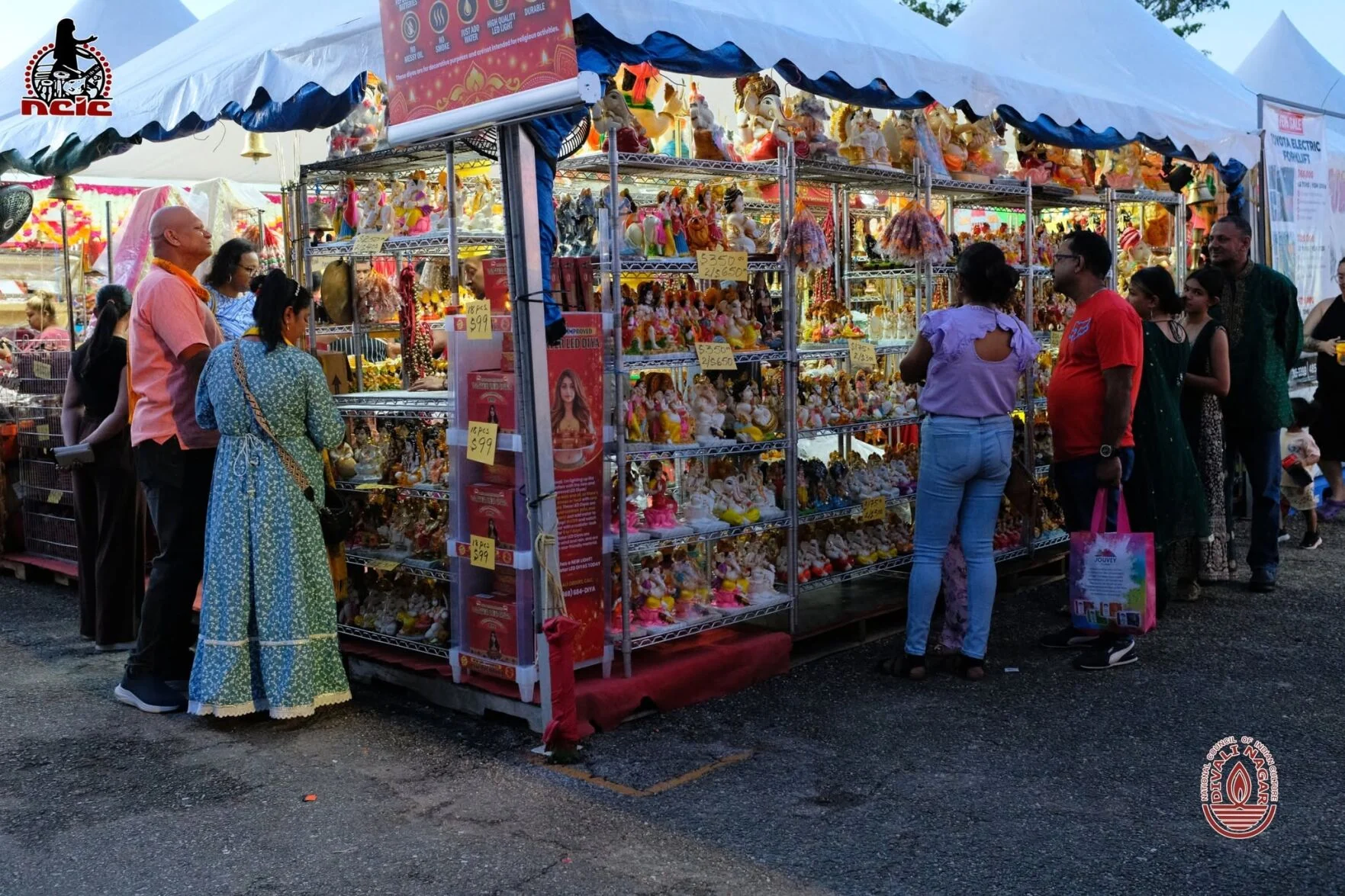
As the nine-day annual Divali Nagar cultural celebration crosses its halfway mark at the sprawling Chaguanas event complex, steady streams of attendees have flowed through the venue’s Narsaloo Ramaya Marg Road, even following a highly publicized pre-opening dispute between event organizers the National Council of Indian Culture (NCIC) and Prime Minister Kamla Persad-Bissessar. The NCIC initially projected a total turnout of at least 300,000 visitors for this year’s iteration, scheduling a diverse lineup of cultural programming to draw and retain crowds across the full event run.
Despite consistent foot traffic so far, the dozens of small business vendors who invested significant upfront capital, time, and labor to secure spots at the popular cultural gathering are reporting wildly divergent sales outcomes five days into the festivities. While a small subset of stall operators have seen higher customer volumes than previous years, a large majority are facing steep revenue shortfalls that threaten their ability to recoup their costs.
One long-time participating vendor, speaking on condition of anonymity, told local outlet the Express that small independent stalls are bearing the brunt of the downturn, with current sales totaling less than 25% of the revenue they generated at the same mid-point of the festival in prior years. The operator explained that their current projected earnings will not even cover the mandatory site rent for their stall, pointing to competing free events hosted 15 to 20 minutes away in nearby Couva that offered complimentary food, drinks, and live performances as a major unforeseen drain on attendees. The vendor raised questions about potential political motivations behind the scheduling of these overlapping rival events, noting that the usually packed venue, where visitors could barely navigate walkways or find seating in past years, feels far emptier this time around.
Beyond rent, vendors face steep additional overhead costs including custom tents, raised flooring, lighting installations, staffing, and inventory purchases, with many stall operators taking out personal loans to cover these expenses ahead of the festival. This year, for the first time in the vendor’s years of participation, they have also witnessed widespread social media campaigns calling for a boycott of Divali Nagar, with some users labeling the event negatively in posts that have circulated widely across local digital platforms. The vendor emphasized that small operators have no official channel to push back against this online backlash, and face mounting pressure to cover household bills and other personal expenses after pouring their resources into the festival.
A second anonymous vendor corroborated the severe revenue crunch, reporting a confirmed 60% year-over-year drop in sales that he attributed to a mix of recent unseasonably rainy weather that kept attendees away earlier in the week, broader cost-of-living pressures across the local economy that have left consumers far more hesitant to make discretionary purchases, and widespread boycott calls tied to the high-profile pre-event rift between organizers and the prime minister. The operator, who runs a popular specialty goods stall that was previously so crowded customers could barely move inside, calculated his total upfront costs for his 15×15 foot booth at roughly $30,000, including $13,500 in site rent, plus payments for fixtures and hourly staff, and noted that hitting that revenue target now appears extremely unlikely.
While many vendors are facing severe financial strain, some longstanding participants are holding out cautious optimism. A representative from Rennies Cocoa Products, a brand that has operated a stall at Divali Nagar for seven consecutive years, acknowledged a noticeable drop in foot traffic so far, but expressed hope that visitor numbers and consumer spending will pick up sharply in the final four days of the festival as local residents make last-minute cultural and holiday-related purchases.