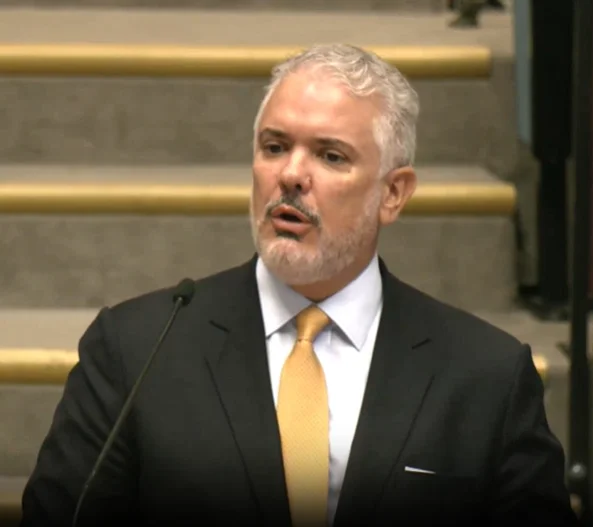
On October 29, 2026, the second Global Biodiversity Alliance (GBA) summit convened at the Arthur Chung Conference Centre in Liliendaal, Greater Georgetown, Guyana, drawing over 300 international delegates including policymakers, researchers, civil society representatives, and private sector leaders. Former Colombian President Ivan Duque, who held Colombia’s highest office from 2018 to 2022, laid out a bold, multi-pronged financing roadmap during his address to the gathering, targeting the mobilization of $200 billion in annual funding for global biodiversity conservation from international financial markets and diverse stakeholder sources. Duque emphasized that traditional funding streams such as bilateral government aid and philanthropic grants are insufficient to meet the staggering global costs of biodiversity protection, noting that the vast majority of untapped capital for conservation resides in the global private sector and mainstream financial markets. To standardize tracking of conservation progress and attract consistent investment, he proposed rolling out a unified, global standardized taxonomy system that codifies biodiversity performance as a verifiable Key Performance Indicator (KPI), complete with full evaluation and traceability frameworks. Duque urged leading multilateral financial institutions including the Inter-American Development Bank, World Bank, International Finance Corporation, and Development Bank of Latin America and the Caribbean to prioritize funding for regenerative infrastructure projects rooted in conservation principles, a move he argued would drastically cut borrowing costs for local governments working on biodiversity initiatives. He also advocated for KPI-linked debt-for-conservation swaps, describing the mechanism as an “intelligent capital deployment tool” that ties debt relief directly to measurable biodiversity outcomes, alongside outcomes-based financing structures such as conservation impact bonds, which allow private investors to fund community-led environmental and social programs tied to clear conservation milestones. Guyanese President Irfaan Ali, in his keynote address, highlighted the GBA’s explosive growth since its launch 16 months prior: the alliance has expanded from 17 founding members to 147 signatory nations spanning every continent, including Panama, the United Arab Emirates, Colombia, Antigua and Barbuda, India, and France. Ali issued a direct call to the private sectors of all GBA member states to collaborate on creating a unified cross-national investment vehicle dedicated to developing a global network of branded biodiversity resorts, bound by shared core values, harmonized regulatory standards, and a centralized operational platform. The initiative, he noted, would deliver tangible, scaled economic benefits to rural villages and Indigenous communities while embedding conservation into core commercial operations. Ali further proposed that all GBA member states align on a shared set of special tax and fiscal incentives for all verified biodiversity-positive investments, creating a unified global regulatory and incentive framework to remove frictions that currently block capital flows to conservation projects. He challenged the alliance to move beyond endless documentation of biodiversity financing gaps to develop actionable, bankable project pipelines, calling on all biodiversity-rich member nations to partner with the GBA secretariat to prepare shovel-ready conservation projects that can attract immediate investment.
Guyana-founded Global Biodiversity Alliance targets US$200 billion annually