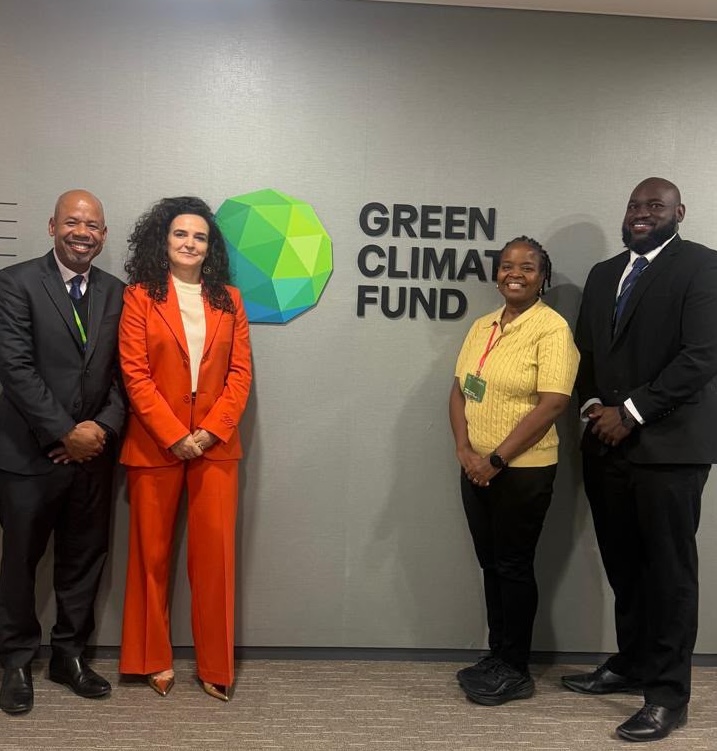
The Caribbean Community Climate Change Centre (CCCCC) has formally celebrated the recent approval of the landmark Climate Actions for Building Resilience in Coastal Communities (CABRIC) project by the Green Climate Fund (GCF), marking a historic, community-centered investment in targeted climate adaptation across the Caribbean region. Spanning a five-year implementation timeline, the $44 million initiative will deliver tangible support to five vulnerable Caribbean nations: The Bahamas, Belize, Grenada, Jamaica, and Saint Lucia. Its core design is structured around three interconnected priority pillars: reinforcing the operational capacity of local governance and civil society institutions, streamlining equitable access to dedicated adaptation funding for on-the-ground actors, and equipping at-risk coastal populations with tailored knowledge, tools, and resources to confront escalating climate hazards ranging from intensifying tropical storms to chronic coastal erosion and ocean acidification. In remarks delivered following the GCF’s formal sign-off, CCCCC Executive Director Dr. Colin Young emphasized the project’s transformative, community-first framing. “This is not a top-down climate intervention designed in distant capitals,” Dr. Young noted. “It is a purpose-built mechanism to ensure every dollar of grant funding reaches the communities bearing the brunt of climate harm, with women and girls positioned as central stakeholders in every stage of project planning, implementation, and benefit distribution.” The backbone of the CABRIC initiative is a $25 million locally governed adaptation grant facility, which will disburse funding through three distinct, accessible grant windows, providing up to $500,000 in financing per individual community-led project. Eligible investments span a wide spectrum of high-impact, context-specific solutions: climate-resilient smallholder agriculture systems, sustainable small-scale fisheries management, critical mangrove ecosystem restoration, community-level early warning systems for extreme weather events, retrofitting of local health facilities to withstand climate shocks, and targeted programming to address the often-overlooked social and mental health impacts of repeated climate disasters on coastal populations. Rochell Newbold, GCF Alternate Board Member, National Designated Authority, and Director of The Bahamas’ Climate Change and Environmental Advisory Unit, lauded the project’s unwavering focus on local leadership as a game-changing departure from traditional climate finance models. “Centering the communities that live with climate risk every single day is the only way to ensure funding does not get tied up in bureaucratic red tape and actually reaches the people who need it most,” Newbold explained. “The grant-based structure, paired with CCCCC’s established on-the-ground relationships across all five participating nations, guarantees full country ownership of this work, which will directly empower residents to build lasting resilience rather than relying on external, one-size-fits-all solutions.” Complementing the direct grant facility, the CABRIC project will roll out targeted technical assistance programs to build the long-term capacity of local nonprofits, community groups, and municipal agencies to design, manage, and sustain their own adaptation projects long after the initiative concludes. It will also support the development and rollout of gender-inclusive national coastal protection policies, alongside a regional Knowledge Hub and cross-national community of practice that will facilitate real-time sharing of actionable adaptation strategies, localized climate risk data, and documented lessons learned across all five participating nations. Kristin Lang, GCF Regional Director for Latin America and the Caribbean, underscored the project’s far-reaching transformative scope during her public remarks. “CABRIC moves adaptation decision-making and funding out of regional headquarters and directly into the hands of the coastal families most exposed to climate harm in these five countries,” Lang stated. “Its local grant facility will support no fewer than 118 distinct sub-projects, and the broader program’s institutional strengthening work will extend its reach to nearly 1 million total residents across the region. This GCF investment both builds long-term institutional capacity and finances context-specific solutions shaped entirely by local needs.” As the GCF-accredited regional Direct Access Entity leading CABRIC execution, CCCCC will coordinate closely with national governments across the five beneficiary states and local grant administrators to deliver the project, leveraging its decades-long mandate to support CARICOM Member States in accessing and effectively deploying global climate finance. Dr. Young closed his remarks by extending formal gratitude to all key stakeholders who collaborated to bring the landmark initiative to fruition. “We extend our deepest thanks to the five beneficiary nations for the consistent trust they have placed in CCCCC as a regional direct access entity, to our in-house team that led years of rigorous proposal development, to our five national grant administrator partners whose on-the-ground expertise will make project success possible, and to the Green Climate Fund for its ongoing confidence in our work to deliver equitable climate finance across the Caribbean,” Dr. Young said. “We remain fully committed to mobilizing and deploying resources that fortify our Member States’ resilience against the rapidly worsening impacts of the climate crisis.” The formal approval of the CABRIC project clears the path for immediate implementation of this integrated model that combines direct community investment, institutional capacity building, and cross-national regional collaboration, ensuring participating nations are far better prepared to address both current and future climate risks facing their coastal populations.
Green climate fund approves US$44 Million regional project to strengthen coastal resilience in The Bahamas, Belize, Grenada, Jamaica and Saint Lucia