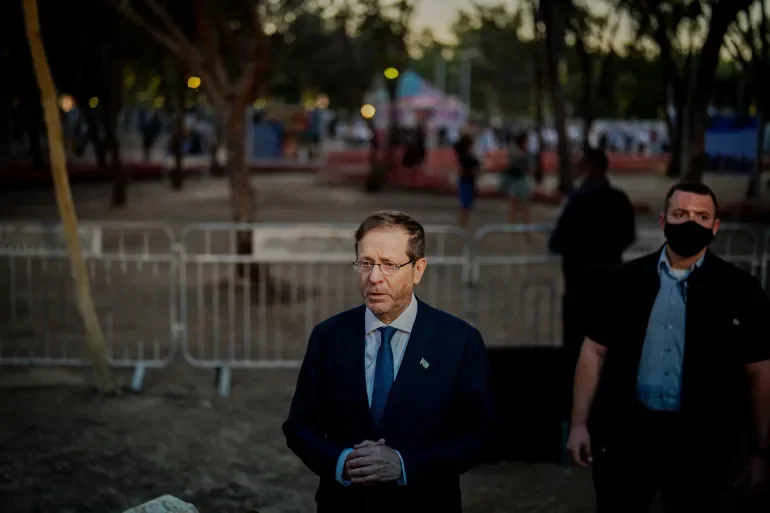
As of October 28, with 85.6% of ballots counted in Israel’s latest parliamentary election, no political bloc has secured the 61 seats required for a governing majority in the 120-seat Knesset, triggering urgent calls from Israeli President Isaac Herzog for cross-party compromise to avert a seventh national election in six years. The preliminary tally shows incumbent Prime Minister Benjamin Netanyahu’s right-leaning bloc holding 53 seats, the opposition coalition led by former military chief Gadi Eisenkot at 48 seats, and the three major Arab Israeli parties holding a combined 19 seats, enough to act as kingmakers in the upcoming coalition negotiations. This election marks the first time in 38 years that Israeli voters have cast ballots after a full, uninterrupted Knesset term, following six rounds of deadlocked elections held between 2019 and 2022 that left the country in persistent political gridlock. Netanyahu, addressing supporters in Jerusalem hours after polls closed, emphasized that his Likud party remained the single largest individual faction by preliminary projections, though he acknowledged final seat allocations would not be confirmed for another 24 to 48 hours. The prime minister framed the election as a mandate for a hardline right-wing government, arguing that Israel could not rely on partnerships with Arab parties he claims reject the country’s right to exist. He highlighted his administration’s recent military operations targeting Hamas, Hezbollah, and Iranian leadership figures, as well as the establishment of Israeli security zones in Gaza, Lebanon, and Syria, and claimed the current political moment offered a historic opportunity to work alongside U.S. President Donald Trump to permanently neutralize the Iranian military threat. However, Netanyahu’s bloc remains far short of a governing majority, and his longstanding refusal to partner with Arab factions leaves him with no obvious path to secure the 61 seats needed to stay in power. The unprecedentedly high 80% turnout among Arab Israeli voters — the highest participation rate recorded in this demographic since 1999, according to local broadcaster Channel 12 — has amplified the political weight of the Arab party faction, which represents roughly 21% of Israel’s total citizen population. Mansour Abbas, leader of the United Arab List (Ra’am), confirmed that both the Netanyahu-led right bloc and Eisenkot’s opposition have reached out to his faction for potential negotiations, adding that he hoped the final results would create a path for a majority coalition that could replace Netanyahu’s government. Still, forming any cross-bloc partnership with Arab parties remains deeply politically sensitive: multiple factions within Eisenkot’s opposition coalition publicly ruled out formal alliances with Arab parties during the election campaign, severely limiting Eisenkot’s ability to cobble together a 61-seat majority on his own. Veteran former Israeli ambassador Alon Pinkas warned that Arab parties cannot be sidelined from formal political decision-making and then only approached for last-minute support when their votes are needed, noting that any faction seeking their backing will have to meet clear, pre-negotiated policy demands in exchange for their support. President Herzog, who is formally tasked with selecting the politician best positioned to form a stable government once final election results are certified, has repeatedly stressed that Israel can ill afford another costly, divisive election cycle after years of repeated political impasse. The coming weeks of coalition negotiations will determine whether Netanyahu can rally enough small right-wing factions to hit a majority, Eisenkot can overcome internal opposition to strike a compromise deal with Arab parties, or the country will be forced to head back to the polls for a seventh time to resolve the deadlock.
Geen duidelijke meerderheid in Israël, president wil nieuwe verkiezingen voorkomen