On a recent Wednesday, Suriname’s President Jennifer Simons inaugurated the fourth International Business Conference (IBC) in Paramaribo, where she delivered a clear call to global investors: look beyond the country’s burgeoning energy sector to help build a sustainable, diversified national economy that delivers tangible quality-of-life improvements for all Surinamese people. Recognizing that the government holds a central leadership role in steering this long-term transformation, Simons established the National Development Platform in late June, led by prominent economist Karel Eckhorst. Eckhorst’s core mandate is to draft a broadly supported national development roadmap covering the period from 2030 to 2050.
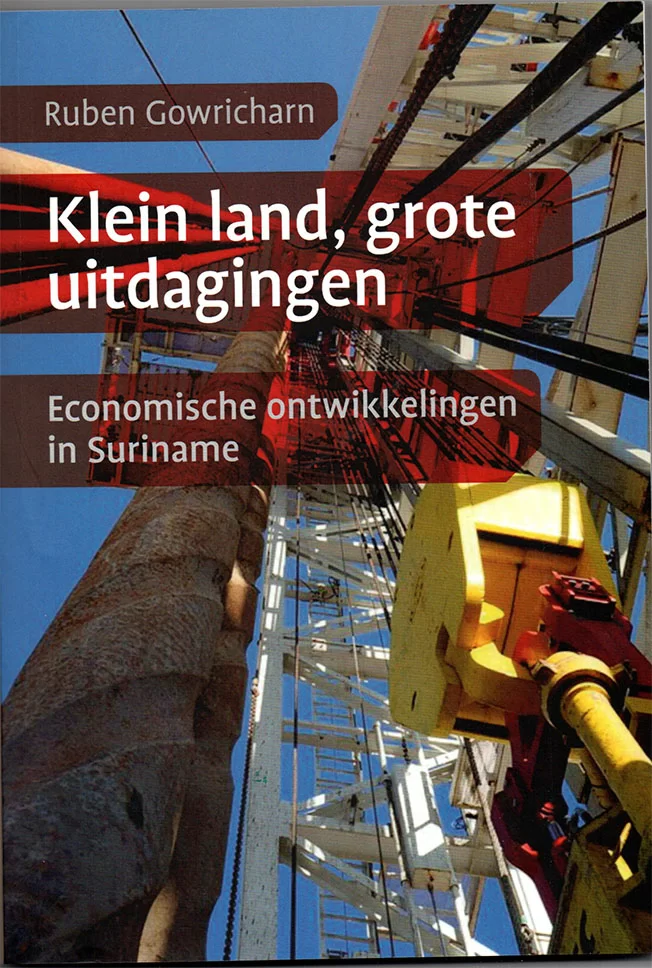
To support this ambitious planning process, Eckhorst now has access to a timely new publication, *Small Country, Big Challenges – Economic Development in Suriname*, written by dual-trained economist and sociologist Professor Ruben Gowricharn. In the book, Gowricharn critiques a widespread blind spot among Suriname’s economic analysts: most focus exclusively on monetary issues, overlooking non-financial factors that will ultimately define the success or failure of the country’s economic future.
One pressing unaddressed challenge Gowricharn flags is projected population growth tied to offshore energy development. He forecasts that the sector will draw an additional 45,000 residents to Suriname in the coming years, yet the country has not begun planning for how to expand access to healthcare, housing, education, and spatial infrastructure to accommodate this influx. The 17 provocative essays collected in the volume, prefaced by 86-year-old former Dutch minister Jan Pronk, cover a wide range of critical topics including poverty reduction, public sector resource allocation, the labor market impact of oil expansion, diaspora economics, development policy, institutional reform, and inflation control in small open economies. Several essays have already been published in the official journal of the Association of Economists of Suriname (VES) starting in May 2025, and are available to read on the VES website.
In his foreword, Pronk reflects on the unfulfilled goals of past Dutch development aid to Suriname, much of which was implemented during his tenure, before praising Gowricharn’s work as a rich collection of practical, realistic proposals that are both worth pursuing and achievable. A longstanding priority for Pronk is his call to restructure Suriname’s national army into an environmental police force tasked with protecting law and order in the country’s interior – a proposal he first put forward in 1975, when Suriname gained independence, when he argued the nation needed a development-focused force rather than a traditional professional military. The idea also aligns with ongoing efforts to reform Suriname’s unregulated gold mining sector.
One of the volume’s most insightful essays, titled “Broad Prosperity”, examines past long-term planning efforts. A decade earlier, former President Santokhi assigned sociologist Professor Marten Schalkwijk a similar mandate to develop a 2030-2050 strategy, leading the Strategic Working Group for Oil and Gas Policy. Schalkwijk’s team, which included a steering committee and five working groups covering education, healthcare, growth and investment, environment and liveability, and regulation, finalized a draft report *Suriname 2050: A Sustainable Future Path for All Surinamese* well ahead of the May 25 national elections. However, the Santokhi administration sidelined the report amid election season and never released it publicly, though it circulated privately through professional networks.
Gowricharn dismisses the Schalkwijk draft as an unrealistic optimistic message, questioning aggressive economic projections including a planned cut in poverty from 18.5% to 5% and a forecast doubling of labor productivity, while noting the draft lacks a clear governance framework for the widely discussed Savings and Stabilization Fund. Notably, the essay includes Schalkwijk’s direct response to Gowricharn’s critique. Despite their disagreements over specifics, both scholars agree on a core point: Suriname can no longer rely on short-term, reactive policy, and must commit to intentional long-term development planning. This shift, Gowricharn argues, requires a change in national mindset, starting with an inclusive public debate that gives all segments of Surinamese society the opportunity to shape the country’s future through all media channels – a goal that aligns directly with Simons’ mandate for a broadly supported plan from Eckhorst.
In his introduction, Gowricharn acknowledges that Karel Eckhorst was one of two key collaborators who supported the book’s development over the past two decades of working together. This close partnership makes it all but certain that Eckhorst will draw heavily on Gowricharn’s practical, grounded insights as he drafts the new national development plan. For writer Roy Khemradj, the book is a valuable contribution to Suriname’s future from Gowricharn, a Surinamese scholar based in the Dutch diaspora. Published by LM Publishers, the book is priced at €24.50.