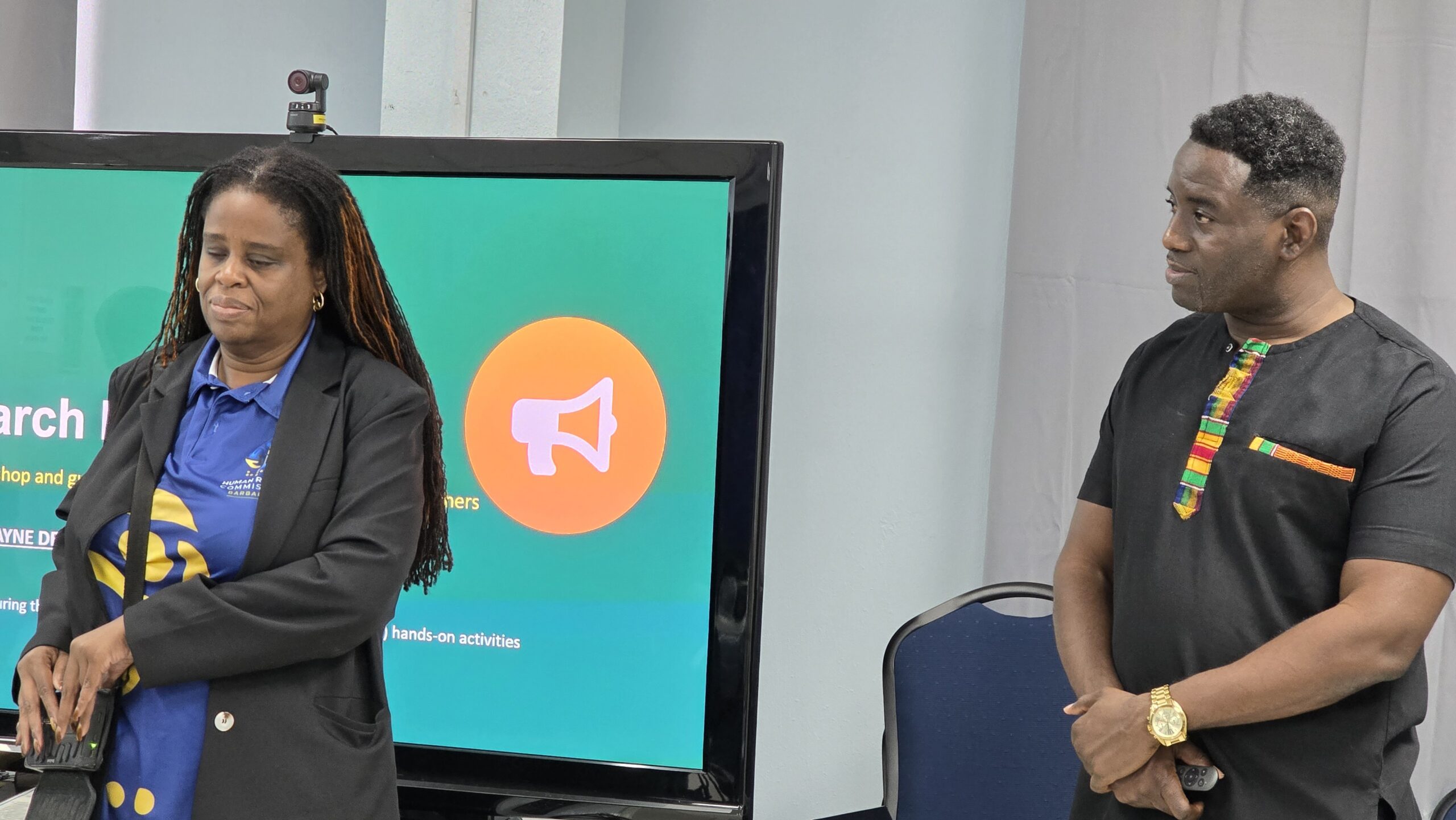
A collaborative capacity-building workshop hosted for the Barbados National Student Council is putting campus safety data directly into the hands of young people, equipping them to turn on-the-ground observations of school infrastructure issues and bullying into actionable policy changes for education authorities. Held Friday, the event brought together roughly 20 student representatives from 12 secondary and primary institutions across the island, marking the first in a new series of partnerships between the Barbados Human Rights Commission, the National Student Council, and the University of the West Indies (UWI) School for Graduate Studies.
Speaking to reporters on site, Human Rights Commissioner Kerry-Ann Ifill explained that the workshop’s core mission is to bridge the gap between raw student-collected data and institutional decision-making. Long before the workshop, hundreds of students across 15 Barbadian schools participated in a nationwide school mapping exercise, where they walked their campuses to identify safe and unsafe spaces, and document the challenges they face daily. Friday’s training walked participating students through the process of cleaning, organizing, and structuring that field data into formal findings that can be shared with school leadership and national education officials.
“Today we are focusing on how data drives decisions,” Ifill said. “These young people already put in the work to conduct on-the-ground research. Now we are showing them how to leverage that information to create the tangible change they want to see in their schools.”
Per early analysis of the student mapping data, the most prevalent concerns raised center on inadequate infrastructure and maintenance issues across campuses. Students reported widespread unsanitary conditions in school bathrooms, marked by heavy graffiti and poor cleaning, as well as a widespread shortage of trash receptacles that contributes to pervasive litter on school grounds. Many classroom desks have also sustained significant damage from termite infestations, leaving learning spaces in disrepair. Beyond infrastructure, students also documented limited food variety in school canteens, and flagged a notable recent rise in bullying incidents that has eroded many students’ sense of personal safety on campus.
National Student Council President Shakir Daisley noted that the mapping exercise was completed several months ago, but student leaders have been working through the raw data to prepare it for distribution. Friday’s workshop is a key step in that finalization process. Once compiled, the full findings will first be shared with local school student councils, then submitted to the Ministry of Education Transformation for review, before being released to the broader public. Daisley emphasized that the project gives students a rare, direct voice in shaping school policy that impacts their daily lives. “I just hope that we all can take the information and then take it back to our schools and then see what we can use to benefit ourselves,” he said.
Leading the workshop’s research training session was Professor Dwayne Devonish, director of the UWI School for Graduate Studies, which is celebrating its 30th anniversary of coordinating graduate-level research and studies across the region this year. Devonish argued that teaching research and data literacy to young people long before they reach tertiary education builds critical thinking skills that benefit communities long into adulthood.
“I have this belief that research should not begin at a university. It should begin as young as the primary and secondary school student populations,” Devonish said. “Because when we can teach our young people to be scientific in their endeavours, to be research-oriented, we can actually develop adults who are critical, who are careful in their assessments, and who are able to create their own knowledge.”
Beyond campus safety, Devonish added that the workshop is intended to build a culture of youth-led research across the Caribbean that can be used to tackle a wide range of pressing regional challenges, from climate change to violent crime. “If we can use research as a tool, we can make a difference. We don’t have to put it on the face of an older person. Research can actually be executed by very young people that we have here,” he said.
Ifill echoed that the project aligns with the Human Rights Commission’s core strategic priorities, which place a heavy focus on education and youth engagement. By embedding data literacy and youth advocacy early, the commission hopes to cultivate a lifelong habit of civic engagement among young Barbadians. “Coming out of this workshop, we hope that they can transform what they took and make it into a report, into data that can help the schools to rearrange how they approach safety in schools,” Ifill said.