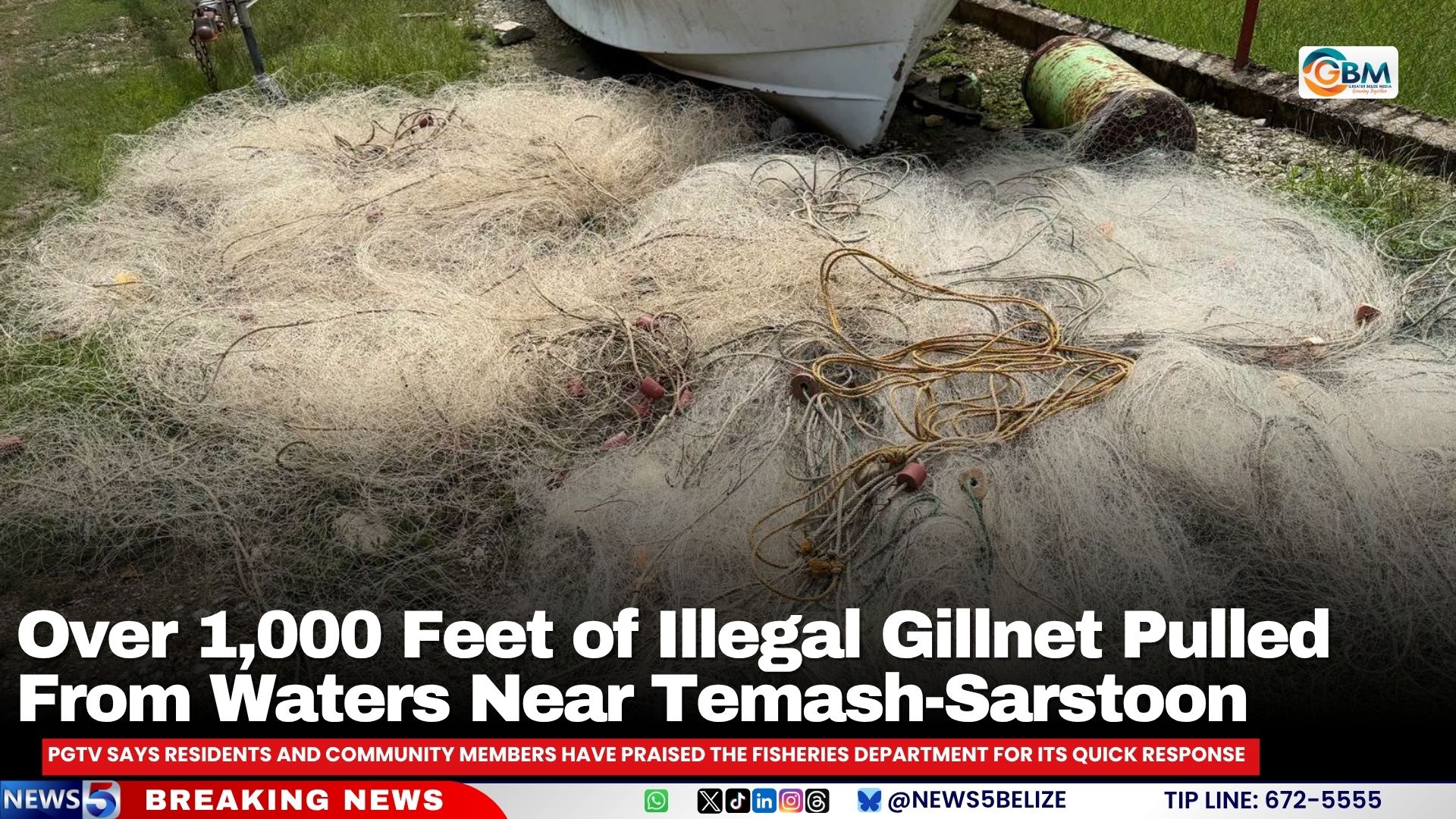
In a targeted enforcement action aimed at curbing destructive unauthorized fishing, Belize’s Fisheries Department has removed more than 1,000 feet of banned gillnet from open waters in the Temash-Sarstoon region of southern Belize, local broadcaster PGTV confirmed. The night operation was launched after authorities received credible tip-offs about unregulated fishing activity operating south of Punta Gorda, allowing enforcement officers to successfully locate and retrieve the large illegal net deployed in the area.
Gillnets have been fully prohibited across all of Belize’s internal waters, territorial sea and Exclusive Economic Zone since November 2020, when the government enacted Statutory Instrument 158, formally the Fisheries Resources (Gill Net Prohibition) Regulations. Under the country’s strict regulations, anyone caught violating the ban faces maximum penalties of a $5,000 fine, six months of imprisonment, or both. The ban followed a two-year stakeholder process that included a structured transition program for licensed domestic gillnet fishers, who voluntarily surrendered their equipment in exchange for livelihood support.
Marine conservation organizations have long sounded the alarm over the ecological harm of gillnets. Oceana Belize famously dubs the gear “walls of death,” as the indiscriminate nets trap and kill unintended marine species, including protected manatees, sea turtles and sharks, which suffocate after becoming entangled.
The Temash-Sarstoon area is no stranger to this ongoing illegal activity, which has plagued southern Belize’s coastal ecosystems for years. Earlier in 2026, Coast Guard Commandant Rear Admiral Elton Bennett identified the southern Belize coastline as a persistent hotspot for unregulated gillnet deployment, with banned nets regularly recovered near Sarstoon, Barranco and Hunting Caye. While Bennett noted that authorities suspect the majority of these nets belong to fishermen from neighboring Guatemala, due to their proximity to the international border, no suspects have been apprehended during recent recovery operations to confirm this connection.
This most recent seizure comes on the heels of a much larger recovery effort documented in 2025. That July, the Toledo Institute for Development and Environment (TIDE) reported that Guatemalan and Honduran fishermen were routinely using gillnets, long lines and illegal night fishing tactics within the protected Sapodilla Cayes Marine Reserve. By mid-2025, the Belize Coast Guard had already removed more than 15,000 feet of gillnet – equal to roughly 100 full illegal nets – from the reserve.
Following the latest seizure, local community members and residents have publicly praised the Fisheries Department for its rapid response to reports of illegal activity and its ongoing work to safeguard Belize’s valuable marine ecosystems and wild fisheries. Authorities are now urging the general public to continue reporting any suspicious unauthorized fishing activity to help enforcement teams stem the ongoing damage to protected marine resources.