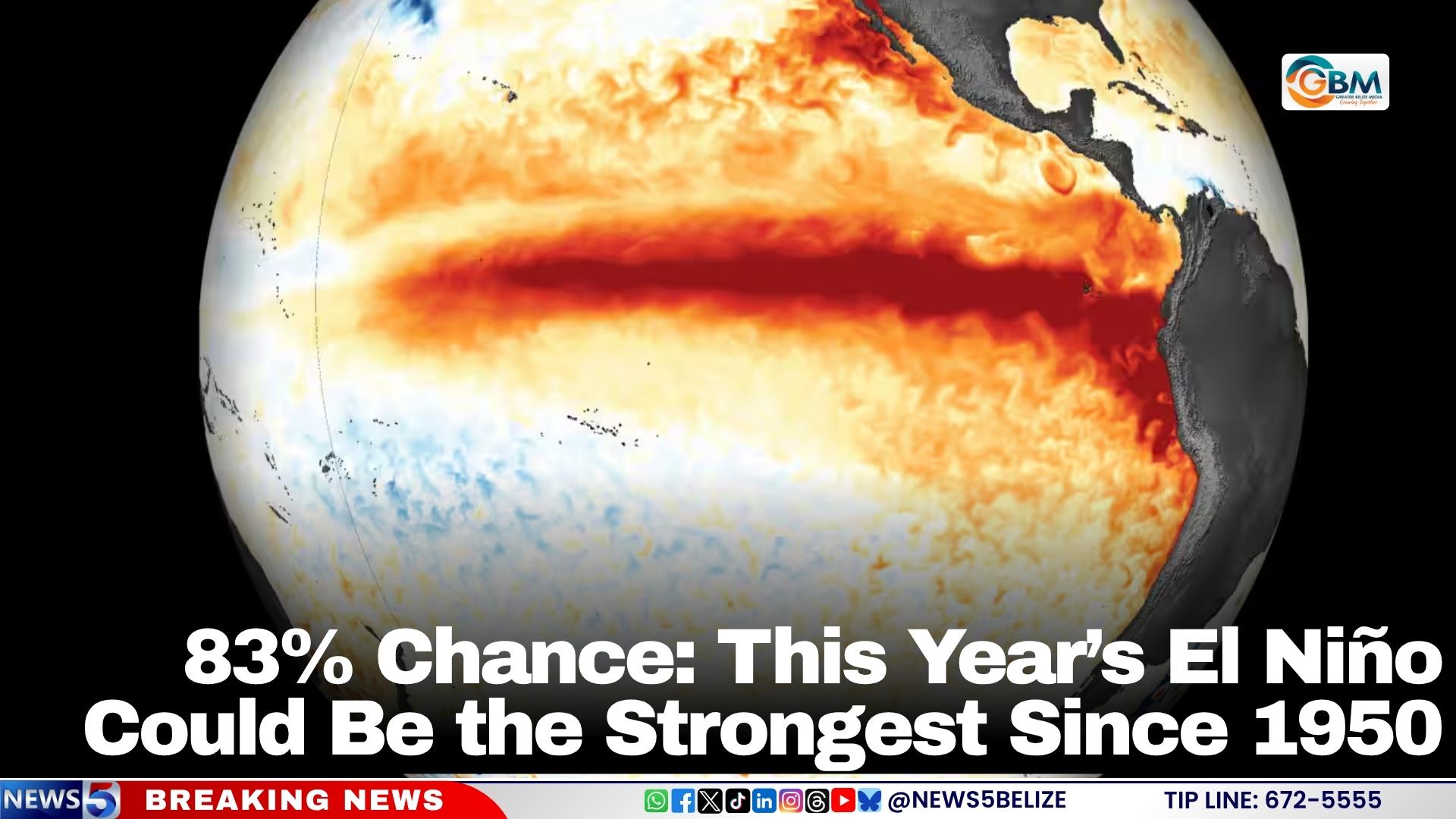
Climate scientists across the globe are sounding a heightened alarm over the 2026 El Niño event, with the United States National Oceanic and Atmospheric Administration (NOAA) now estimating an 83% chance this cycle will become the most powerful recorded since official tracking began in 1950. That figure marks an upward revision from the agency’s previous 75% probability forecast released earlier this year.
NOAA’s Climate Prediction Center projects the event will maintain strength from strong to very strong through the first quarter of 2027, spanning January to March. Understanding the mechanics of El Niño is key to grasping its far-reaching impacts: the climate pattern develops when average surface temperatures in the central and eastern Pacific Ocean rise well above long-term normal levels. This abnormal warming shifts global atmospheric circulation, reshaping long-term weather patterns, altering rainfall distributions, shifting temperature trends, and modifying storm activity across every inhabited continent.
Independent data from Australia’s Bureau of Meteorology reinforces the severity of the current event: average weekly sea-surface temperatures in the key central Pacific monitoring region have already hit the highest level ever recorded in the agency’s datasets. Climate researchers are now closely tracking whether the event will meet the formal criteria for classification as a “Super El Niño,” a designation reserved only for events with extreme, unprecedented ocean warming.
Strong El Niño events bring a predictable set of elevated climate hazards around the world: forecasters typically see a drop in Atlantic hurricane activity during strong El Niño cycles, but a corresponding increase in the number and intensity of tropical cyclones across the Pacific. The pattern also amplifies the risk of prolonged, severe drought in some vulnerable regions while triggering catastrophic flooding in others. While NOAA emphasizes that a stronger El Niño does not guarantee more extreme impacts in every affected region, it significantly raises the likelihood of severe weather events across many parts of the globe.
For small Central American nations like Belize, the risks are already becoming tangible. Last week, Belize’s Department of the Environment (DOE) confirmed the country has been stuck in far drier conditions than the historical average for this time of year. Reduced cumulative rainfall and depressed river flows across the country have already begun to negatively affect water quality in the New River, one of the country’s key water resources, with broader risks to agricultural production looming as the El Niño strengthens through the end of the year.