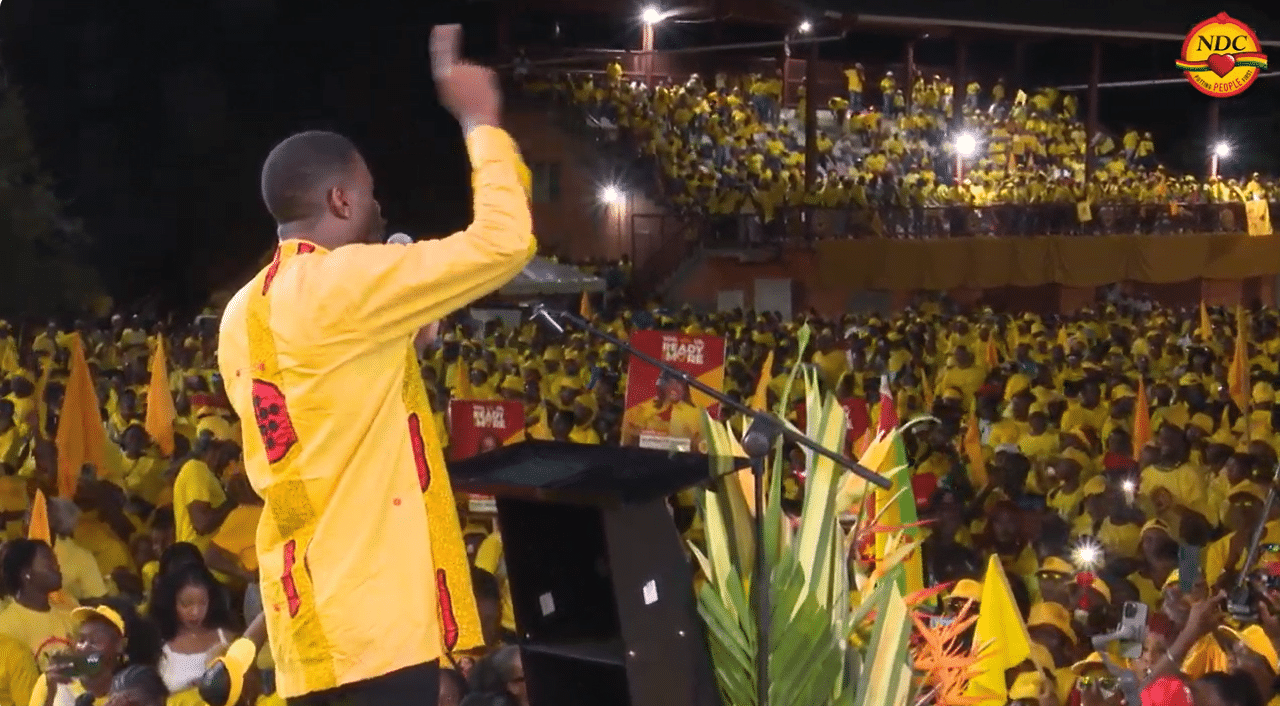
On a energized rally attended by thousands of ruling party supporters, Grenadian Prime Minister Dickon Mitchell has officially locked in November 5, 2026 as the date for the country’s next general election. The announcement, capped by the traditional symbolic blowing of conch shells, kicked off what is shaping up to be a tightly contested political race for the Caribbean nation’s 15 parliamentary seats.
Addressing the crowd of his National Democratic Congress (NDC) backers, the incumbent leader struck a confident tone, signaling his ambition to secure a full sweep of all 15 House of Representatives seats. He centered his opening campaign pitch on the progress his administration has delivered for everyday Grenadians, highlighting policy measures that have reduced the cost of basic consumer goods and cut household electricity costs via a government subsidy that will remain in place through the end of 2026.
Approximately 70,000 eligible voters across Grenada and its sister islands Carriacou and Petit Martinique will head to the polls next month to select their representatives for the new parliamentary term. The NDC’s primary challenger is the main opposition New National Party (NNP), now led by former educator Emmalin Pierre. Pierre stepped into the party’s top role following the impending retirement of Dr. Keith Mitchell, a veteran political figure and former prime minister who is wrapping up a 43-year career in active politics. Last week, during the final sitting of the outgoing parliament, Dr. Mitchell, a mathematician by training, reflected on his decades in office, pointing to landmark infrastructure projects that expanded access to electricity, improved water supplies, upgraded telecommunications networks, and developed the country’s sports facilities as his key legacy.
As campaigning gets underway, two central issues are dominating the political conversation across the country. The first is the persistent pressure of a rising cost of living, which has remained a top concern for Grenadian households. The opposition NNP has also levied sharp allegations against the incumbent NDC administration, accusing it of mismanagement and reckless public spending. Beyond domestic economic issues, the election coincides with a critical turning point for the country’s potential energy future: a government-appointed panel of local and international geoscience experts is currently analyzing seismic and geological survey data, with the end goal of inviting major global oil and gas firms to launch exploration activities in Grenada’s offshore territories. The outcome of the election could shape the trajectory of this potential natural resource development project for years to come.