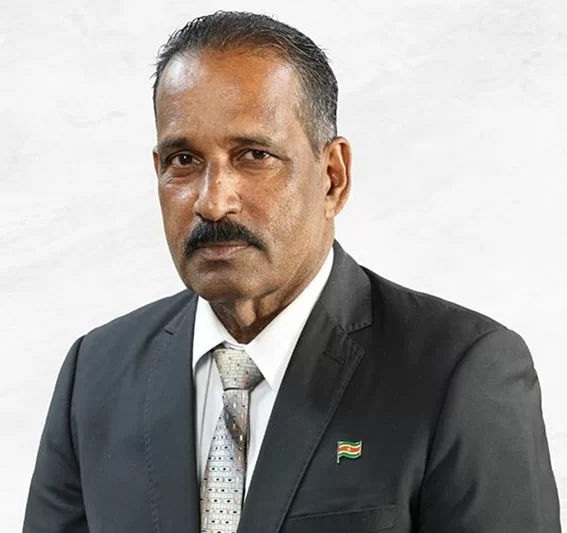
A political controversy over a contested shipment of rice imported from Guyana has rocked Suriname’s agricultural sector, with ruling party parliamentarian Mahinder Jogi publicly standing firm in support of Agriculture, Livestock and Fisheries Minister Mike Noersalim’s handling of the case.
The dispute centers on a shipment imported by local rice processor B. Ramadhin, a company that has been publicly linked to Jogi’s party, the VHP. But Jogi, in an interview with local outlet Starnieuws, emphasized that these political connections should have zero bearing on how the investigation and regulatory process moves forward. “This is not a partisan political issue. This is about the future of the entire rice sector, which is foundational to our country’s economy and livelihoods,” he stated.
Jogi’s comments come amid growing public speculation that high-ranking government officials have attempted to exert political pressure to force the release of the disputed shipment, after Minister Noersalim confirmed that the required import protocols were not properly followed, and that he would not back down from enforcing regulatory rules. Jogi explicitly praised the minister for refusing outside interference, noting “I am glad the minister has made clear that no one should pressure him to cut corners. I only hope that no improper influence manages to sway the final outcome.”
Highlighting the stakes of the dispute, Jogi warned that putting private or political interests ahead of the thousands of Surinamese rice farmers who depend on a stable, fair local market would carry irreversible long-term consequences. “Generations of Surinamese families have invested their lives, their work, and all their resources into this sector. If we make the wrong choice here, all of that blood, sweat, and entrepreneurship could be lost,” he said. Jogi added that the government has a core responsibility to prioritize the collective good of the sector over the commercial interests of one or two connected operators.
To resolve the dispute transparently and prevent future legal challenges, Jogi called for a coordinated multi-agency response, rather than leaving the issue solely with the Ministry of Agriculture. He proposed that the Ministry of Finance, Planning and Economic Affairs also participate in the investigation, with involvement from justice and law enforcement authorities if necessary. Jogi also stressed that the case must follow full due legal process from the start to avoid future court orders that would force the release of the shipment after the fact.
Beyond the import controversy, Jogi also addressed ongoing market conditions for local rice farmers, noting that current increases in farmgate paddy prices represent a long-overdue win for producers. As of October 2024, farmers are receiving more than 700 Surinamese dollars per bale of wet paddy, a sharp jump from the 400 to 500 Surinamese dollars per bale that farmers were forced to accept in previous growing seasons.
The higher price point finally delivers some financial relief for farmers who have operated under strained conditions for years, Jogi explained, making it all the more critical to protect this progress from being undermined by unregulated cheap imports. He warned that allowing underpriced foreign rice to enter the local market would push down local paddy prices and erode the recent gains farmers have made, calling this outcome a serious threat to the entire sector.
In closing, Jogi emphasized that any policy decision around rice imports cannot only center the commercial interests of importers and processors. Farmers, he said, are an essential link in the rice supply chain, and policy must guarantee they can earn enough to cover their production costs and sustain their operations long-term.