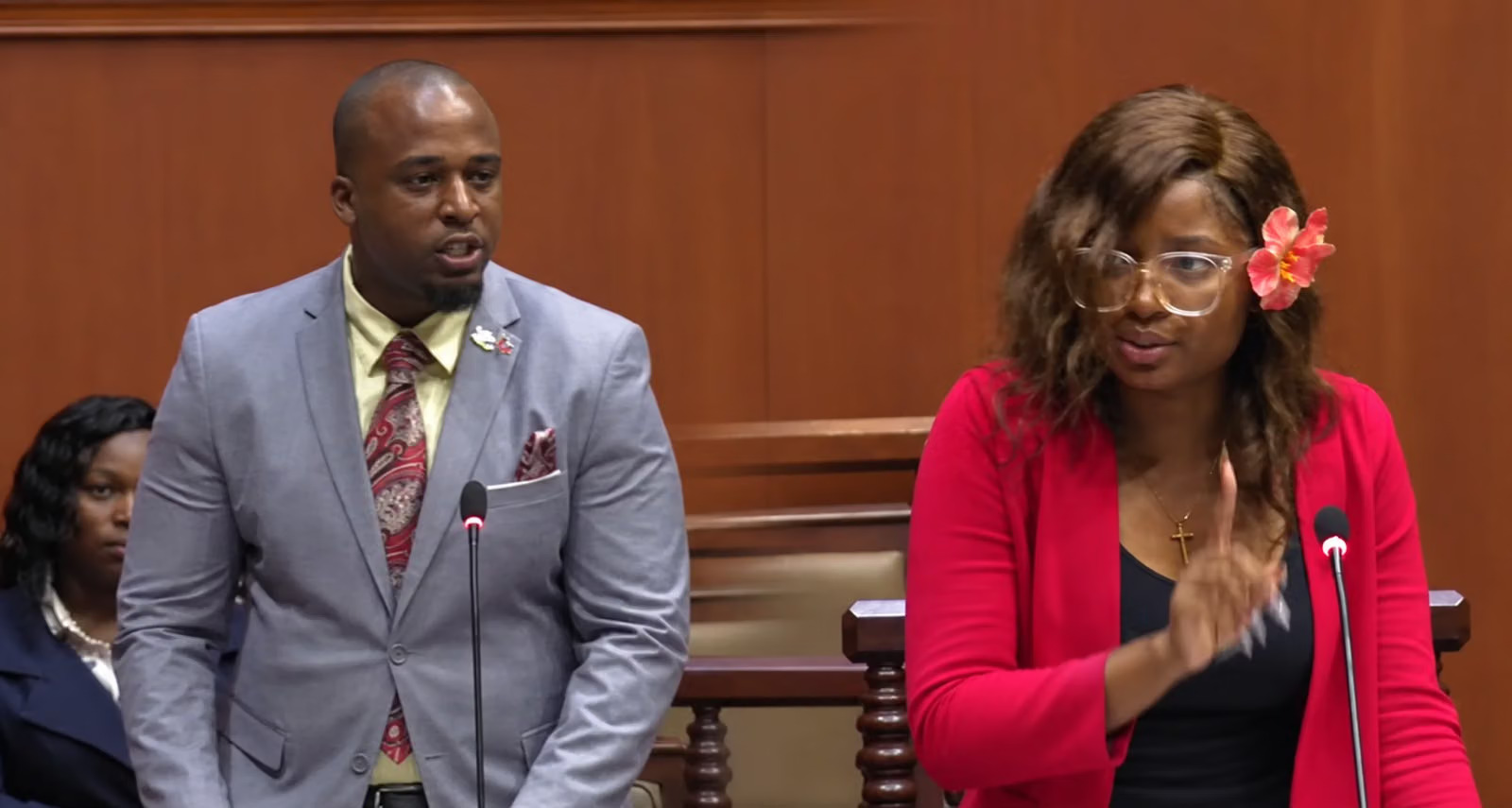
A recent sitting of the Youth Parliament in Antigua and Barbuda has shone a bright spotlight on three of the most pressing challenges currently facing the nation’s education sector: delayed compensation for teachers, widespread out-of-pocket spending by educators on basic classroom supplies, and the growing risks of overreliance on artificial intelligence among students.
Two participating youth parliamentarians brought personal and professional perspective to the debate, outlining urgent calls for action while also acknowledging incremental progress in expanding youth inclusion in national governance.
For Cornelius, the representative for St. John’s City East, the most critical unaddressed issue is the large volume of retroactive payments still owed to teaching staff across the country. While she openly recognized the existing policy measures the government has rolled out to support the education workforce, she emphasized that resolving these outstanding wage obligations must stay at the top of the political priority list. In her address, Cornelius argued that public appreciation for educators’ work means little without tangible financial support: teachers cannot cover daily living costs and personal financial obligations on praise alone, and they are fully entitled to receive every cent of the compensation they have already earned.
Taylor, another participant who drew from his own professional background as a practicing educator, shifted focus to the hidden financial burden that many teachers carry voluntarily just to keep their classrooms functional. He called out the widespread unspoken expectation that educators should dip into their own already modest salaries to purchase the basic books, stationery, learning tools and other materials necessary to deliver quality instruction to students.
Beyond educator welfare, Taylor also turned attention to the fast-growing integration of artificial intelligence into student learning. While he acknowledged the tangible benefits of AI as a tool that can help students access new information and break down complex concepts more easily, he issued a clear warning against allowing the technology to replace independent, critical learning. His core concern is that many students are becoming overly dependent on pre-generated AI answers to complete assignments, skipping the rigorous process of building their own deep, foundational understanding of core academic subjects.
Notably, the two youth delegates did not restrict their comments exclusively to criticism of existing education policy and governance. Both representatives highlighted what they view as meaningful progress under the current Gaston Browne administration, specifically noting that the government has opened new formal channels to incorporate young people’s perspectives and voices into national policy discussions.
In all, their presentations struck a balanced tone: pairing measured praise for expanded youth participation with urgent calls for targeted action on long-standing unaddressed challenges. By leveraging the Youth Parliament platform, the delegates successfully elevated long-simmering concerns that affect both educators and students across Antigua and Barbuda, bringing these underdiscussed issues to the attention of national policymakers and the broader public.