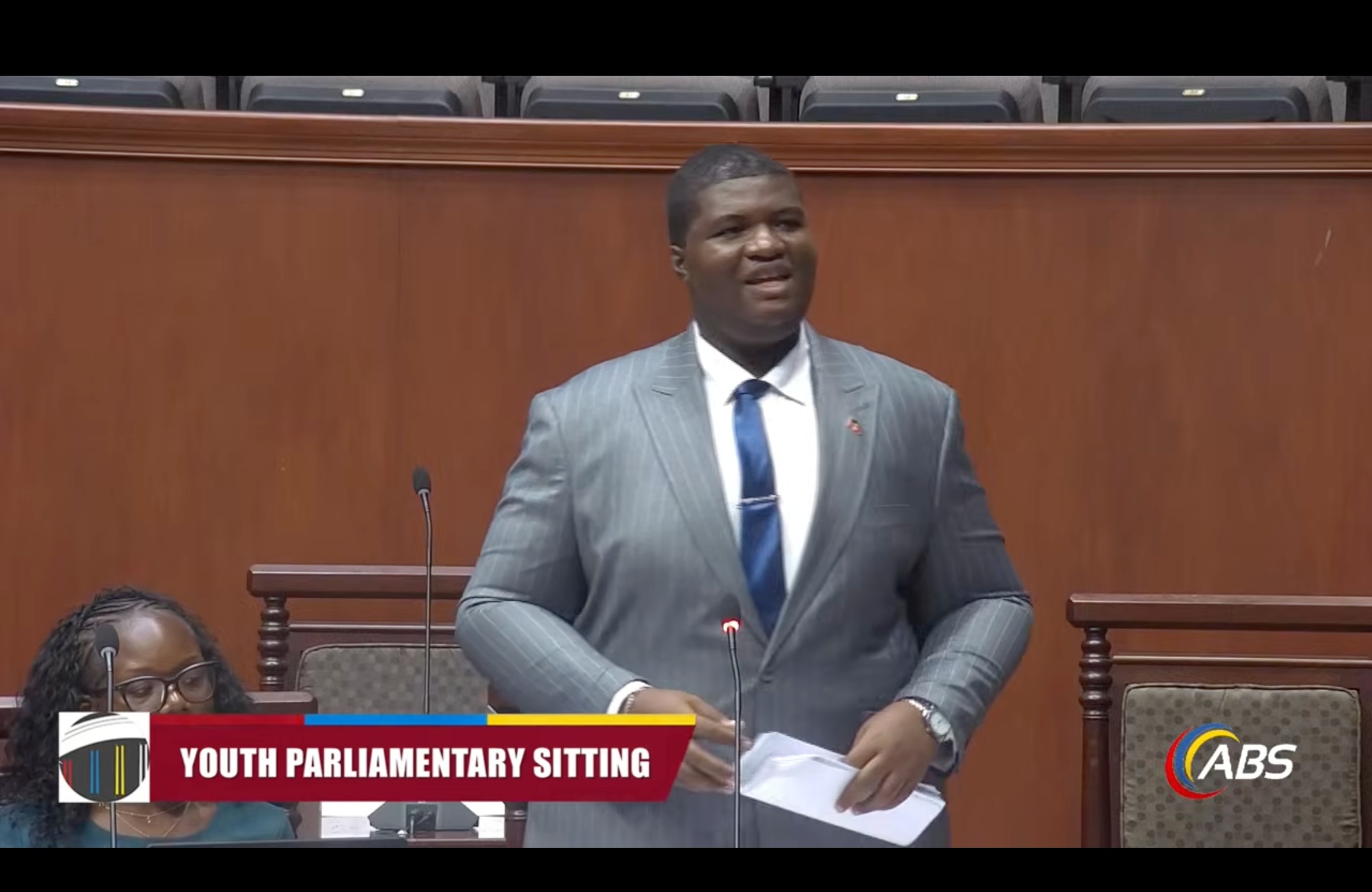
In a landmark Friday sitting that highlighted youth-led advocacy for educational progress, all 14 voting members of Antigua and Barbuda’s National Youth Parliament have thrown their full support behind an ambitious, wide-ranging resolution focused on the continuous modernization, strengthening, and inclusive expansion of the nation’s education system.
The push for this resolution originated from a formal decision adopted at the 2026 General Assembly of the National Youth Parliament Association of Antigua and Barbuda, and was formally introduced to the chamber by Youth Prime Minister Jawan Jackson, who presented the full text of the proposal to assembled members. Ahead of the vote, delegates engaged in a robust, far-reaching debate that touched on nearly every corner of the national education ecosystem: from aging school infrastructure and gaps in teacher staffing to special education accessibility, student mental health support, digital integration, artificial intelligence preparedness, vocational skills training, campus safety, and equitable access to post-secondary education.
The carefully crafted resolution frames education modernization not as a rejection of existing frameworks or past progress, but as a necessary, proactive response to shifting global and local conditions. It explicitly recognizes the 2008 Education Act No. 21 as the foundational legislative guide for the nation’s education sector, and clarifies that calls for updates do not mean the current system is obsolete, nor that earlier reform efforts have failed. Instead, the document argues that education laws, policies, and administrative structures require regular, thoughtful review to keep pace with evolving technology, changing labor market demands, shifting institutional priorities, and the growing diversity of student needs. It also acknowledges the significant investments the national government has already made in tertiary education, technical and vocational training, school infrastructure, and student support services, emphasizing that future reforms should build on these existing gains rather than starting from scratch.
At its core, the resolution centers on advancing educational equity as a non-negotiable goal. It argues that meaningful access to quality education extends far beyond simply granting students admission to a school; it requires guaranteed access to qualified, trained educators, up-to-date learning resources, targeted support services, diverse course offerings, and clear pathways that connect secondary education to further study, skilled employment, and economic opportunity. The document also calls for a fundamental shift in how educational success is measured, arguing that the system must center the diverse abilities, interests, and needs of young people by expanding credible pathways in academia, technical skills, vocational trades, professional fields, and entrepreneurship, rather than tying success to a single, one-size-fits-all educational model.
A key priority highlighted in the resolution is expanding inclusive support for marginalized student groups. It calls out specific attention to students living with disabilities, students on the autism spectrum, students with learning differences, and other students with unique educational needs, arguing that these learners require targeted accommodations, specially trained staff, and accessible support services to turn the formal goal of inclusive education into tangible, on-the-ground practice rather than leaving it as an unfulfilled policy statement.
Beyond accessibility and equity, the resolution identifies student well-being as a critical pillar of a 21st-century education system. It names on-campus mental health counselling, career guidance, student safeguarding, and early intervention for at-risk youth as increasingly essential components of any system that aims to prepare young people for responsible adulthood and productive, meaningful participation in national society.
In a nod to fiscal responsibility, the resolution also mandates that all proposed reforms be properly costed, aligned with the nation’s budget constraints, and implemented in a way that does not weaken funding for other essential public services or place an unfair, unnecessary tax burden on Antigua and Barbuda’s residents.
Addressing the youth chamber ahead of the vote, Jackson explained that the resolution was designed to be intentionally comprehensive to capture the full scope of changes needed, stressing that the process of modernization and the implementation of reforms must move forward in tandem. He also called for the statutory Education Review Committee, established under the existing Education Act, to expand its mandate and take a more active role in ongoing system assessments, covering everything from physical campus conditions and curriculum relevance to student learning outcomes, education service delivery, and the status of the national teaching workforce.
After the conclusion of the debate, National Youth Parliament Speaker Ezekiel Francois read the key operative clauses of the resolution aloud before bringing it to a formal vote. In a procedural move requested by Jackson, a division was called, requiring each member’s vote to be recorded individually. When the ballots were counted, the result was unanimous: 14 votes in favor, with no votes cast against the proposal.
“Based off of that vote, this resolution would stand passed at the vote of 14 ayes, so all the House would have approved it,” Francois declared, before formally confirming that the resolution calling for the continued modernization, strengthening, and inclusive development of Antigua and Barbuda’s education system had been officially adopted by the National Youth Parliament.