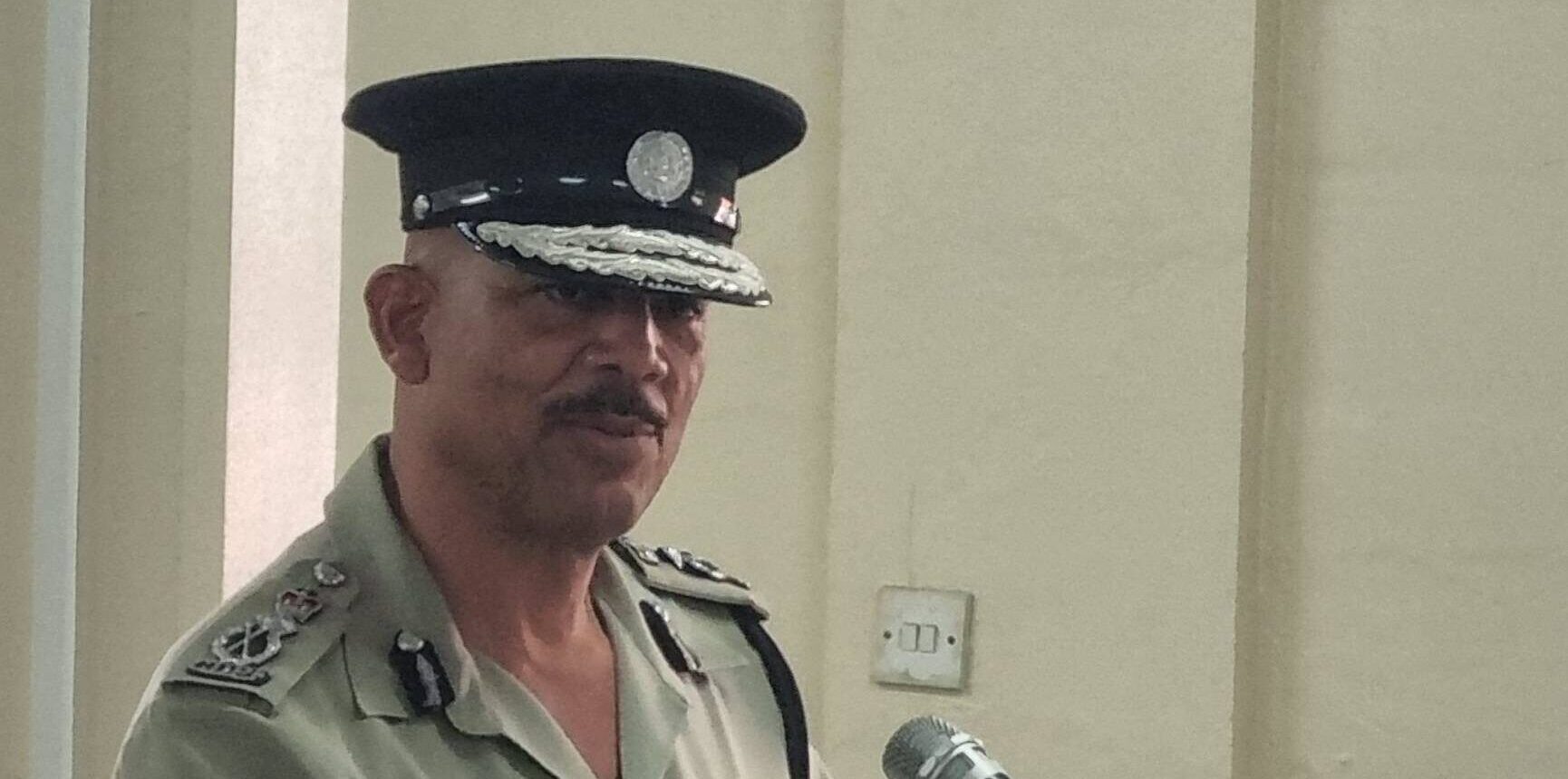
At an official press conference hosted by the Ministry of National Security and Legal Affairs, Dominica’s top law enforcement leader has confirmed that four probationary members of the national police force have been terminated from their positions amid an ongoing internal investigation.
Police Chief Lincoln Corbette, the head of the island nation’s police service, outlined key details of the dismissals while withholding sensitive information that has not been made public. Among the four fired officers, one has not faced any formal criminal charges, Corbette explained. Even so, the officer’s on-the-job behavior and inappropriate language triggered substantial concerns among department leadership that rose to a level severe enough to justify removal while the individual was still serving in their probationary status. Chief Corbette declined to disclose the officer’s name, nor did he release a full accounting of the specific allegations leveled against the terminated employee.
Corbette went on to clarify the standard operating procedures for newly recruited law enforcement officers in Dominica. All new hires are required to complete a two-year probationary term before gaining permanent status, and this trial period can be extended at the department’s discretion if needed. Throughout this probationary window, any officer found to be lacking in personal character or unfit for the demands of police service can be dismissed through the department’s formal disciplinary process. Before a final termination decision is made, the officer must receive formal notice of the concerns raised about their conduct and be given a fair opportunity to respond to those claims.
In this specific case, the police chief confirmed that all four affected officers were given adequate time to prepare and submit their responses to the allegations. For one of the four officers, leadership granted an extended deadline to allow more time for their response.
A fifth officer connected to the underlying investigation has already completed their probationary period, and is currently going through a separate review process, according to Corbette. Any criminal proceedings involving this officer will take priority over internal disciplinary action, but administrative disciplinary measures can still be pursued in line with established institutional protocols once the criminal process moves forward.
Chief Corbette did not share a full public breakdown of the investigation that led to the dismissals, and he declined to name which of the officers involved are currently facing criminal charges. His remarks, however, made a clear distinction between two separate processes: termination from the police force and criminal prosecution, emphasizing that these outcomes are decided independently of one another.