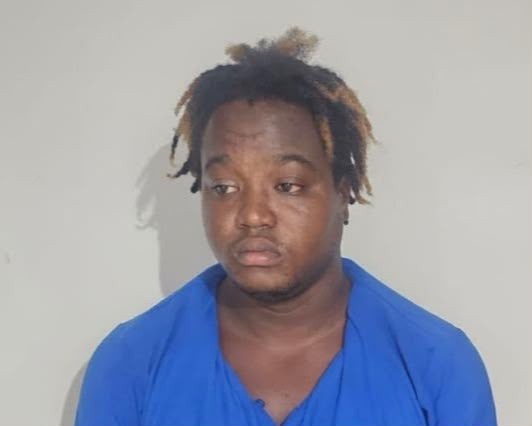
On Monday, September 7, 2026, 25-year-old Dwayne Ross, a video editor employed by Guyana’s Opposition Leader Azruddin Mohamed, formally signaled his intention to force law enforcement to produce concrete evidence to support charges that he illegally operated a drone near the private residence of President Irfaan Ali in Leonora, West Coast Demerara. Ross appeared before Vreed-en-Hoop Magistrate Ravindranauth Singh to enter a plea on three criminal charges brought under Guyana’s Civil Aviation Act: two counts of unlawful operation of an unmanned aerial vehicle under separate statutory provisions, and a third count of operating an aircraft without official authorization. He pleaded not guilty to all three counts.
Following the plea, Magistrate Singh granted bail to Ross, setting bail at GY$200,000 for each individual charge. As conditions of his release, Ross was ordered to surrender his passport to the court, check in with local law enforcement on a monthly basis, and return for a preliminary hearing at the Leonora Magistrates’ Court on September 30.
In court submissions ahead of the upcoming trial, Ross’s defense counsel Eusi Anderson argued that the charges against his client are legally flawed and factually dubious, noting that Guyana’s existing Civil Aviation Act does not include a formal legal definition of a drone, undermining the validity of the prosecution’s case. Anderson formally requested the court to order the full preservation and disclosure of all evidence related to the alleged incident, which authorities say occurred on the previous Thursday. This includes all closed-circuit television footage from the area surrounding the President’s private residence, any private video recordings captured by third parties, all body camera footage generated by arresting officers, and dashboard camera footage from police vehicles involved in the stop and search.
Prosecutors pushed back against the defense’s narrative, rejecting Ross’s claim that he was merely seated as a passenger in a parked vehicle on a roadside parapet at the time of the incident. According to the prosecution, Ross’s vehicle was only intercepted at Goed Fortuin after law enforcement conducted a high-speed chase to stop the vehicle. Prosecutors also told the court that Ross confessed to owning the drone in question during a formal forensic interview, adding that members of the presidential guard witnessed Ross standing on the access road to the residence holding a drone remote control, while the unmanned aircraft hovered roughly 30 feet above President Ali’s private property.
Anderson disputed the prosecution’s account, telling the court that Opposition Leader Azruddin Mohamed has already offered to let law enforcement inspect the seized drone at a local police station to pull its flight log data, which the defense says will prove the drone was never flown over the President’s residence at the date and time prosecutors claim. He added that the drone in question was already broken when it was seized during a search of Ross’s Georgetown home. Anderson also noted that police conducted the warrantless search of Ross’s residence on suspicion he was hiding illegal firearms and ammunition, not drone-related evidence, and only claimed the broken drone as evidence after failing to find any weapons.
Further procedural friction emerged in court during the hearing: when pressed repeatedly by Magistrate Singh, the prosecuting attorney was unable to state the statutory maximum penalties for the charges Ross faces. The magistrate also urged Anderson to avoid laying out full substantive defense arguments during the initial bail hearing, keeping the proceeding focused on the release application rather than the full merits of the case.
Defense counsel also laid out his client’s version of events, stating that when police first approached a vehicle parked near a local mosque in Leonora to question individuals about reports of drone operation, Ross was seated in the back of the vehicle with no connection to any drone operation in the area. Anderson emphasized that his client never intended any harm to President Ali, never conducted surveillance of the President or his private property, and vehemently rejects all charges brought against him. “These charges are bad at law and they are wholly denied,” Anderson told the court.