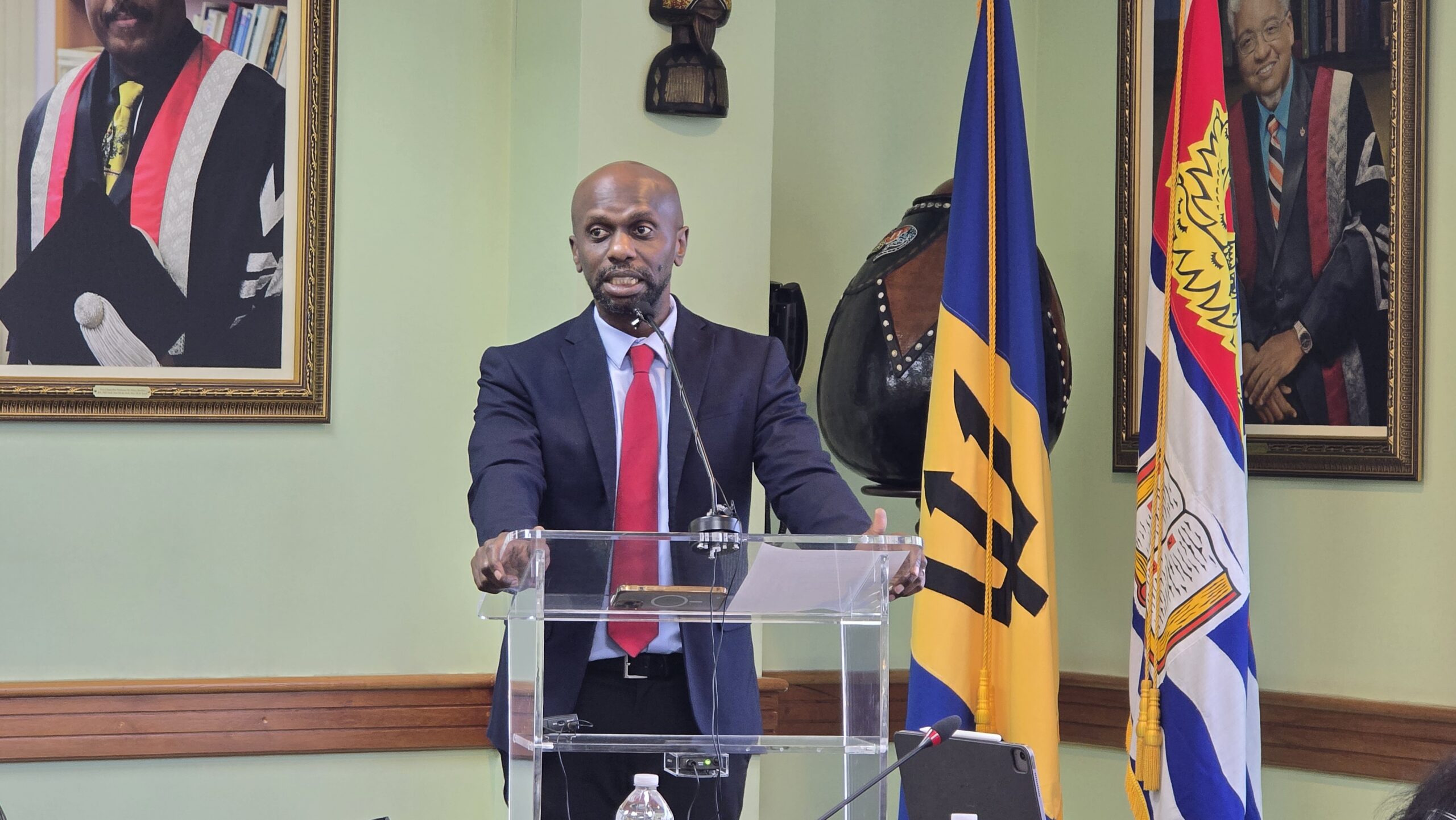
Barbados is facing a mounting threat to long-term economic growth as plummeting workforce productivity and a shrinking labor pool collide, prompting two leading Caribbean institutions to launch a new collaborative initiative to reverse the trend. On Tuesday, the University of the West Indies (UWI) at Cave Hill joined forces with the Human Resource Management Association of Barbados (HRMAB), signing a landmark memorandum of understanding to tackle pressing workplace challenges that are holding back the island nation’s economic potential.
Deputy Principal Professor Winston Moore of UWI Cave Hill issued a stark warning about the current state of Barbados’ labor market, revealing that the country’s total workforce shrank by approximately 2,700 workers during the first half of the current year. Driven largely by an aging population where retirements are consistently outpacing new entrants to the workforce, this contraction comes on top of years of sluggish productivity growth. Since 2018, annual labor productivity has averaged just 0.8% nationwide, a figure that leaves Barbados at risk of hitting a permanent “long-run speed limit” on economic expansion, Moore emphasized.
Barbados’ economy is uniquely dependent on its human capital: the service sector, which employs 86% of all working Barbadians, forms the backbone of the country’s overall output. This makes effective human resource management not just an administrative concern, but a core determinant of Barbados’ global competitiveness, Moore explained during the signing ceremony held at the Jacqueline Wade Conference Room. “Our competitiveness is therefore a human resource question in the most literal sense, and the people in this room are the ones who manage it,” he stressed.
Moore pointed out that while the Barbadian economy has posted more than 20 consecutive quarters of expansion and unemployment has fallen to roughly 6% in recent years, these positive headline figures mask the underlying demographic and productivity challenges. With growth in economic output reliant on just two drivers – more workers, or higher output per worker – the island is quickly exhausting the first source of growth. “If productivity continues to grow at 0.8% while the labour force contracts, then 0.8% is close to our long-run speed limit, whatever we write in a development plan,” Moore added.
Contrary to common narratives that frame productivity growth as purely a matter of technological advancement or capital investment, Moore argued that organizational people management is the unsung driver of productivity gains. “Most of what economists call the productivity residual is, on closer inspection, management. It is how work is organised, how people are selected, how quickly a new hire becomes competent, whether a supervisor knows how to have a difficult conversation, whether a good employee sees a reason to stay,” he said. This reality positions human resources professionals as key leaders in solving Barbados’ productivity crisis, particularly through management practices that boost employee engagement and output.
As the largest provider of skilled new graduates to the Barbadian labor market, UWI Cave Hill carries a unique responsibility for building the nation’s future skills base. The campus currently serves roughly 6,600 students across seven faculties and more than 350 academic programs, producing more than 1,200 graduates annually – 914 at the undergraduate level and 360 at the postgraduate level. “Every decision we take about a course outline, a competency, an assessment method or a work placement becomes part of the national skills stock three or four years later,” Moore noted. “There is no other institution in this country whose curriculum choices show up so directly in the productivity statistics, and none that carries a heavier obligation to get those choices right.”
The new partnership with HRMAB is designed to bridge the gap between academic training and employer needs, giving the professional association a formal voice in curriculum design and program review at UWI. For the university, HRMAB provides on-the-ground insight into shifting labor market demands, including emerging skills that evolve faster than traditional academic curriculum committees can adapt. In exchange, UWI brings its teaching expertise and research capacity to the partnership, enabling evidence-based testing of workplace interventions rather than relying on anecdote or assumption.
Under the terms of the agreement, UWI students will gain access to structured work placements, industry mentorship, and exposure to professional HR standards set by HRMAB. For HRMAB members, the partnership opens access to continuing professional development opportunities, UWI faculty expertise, and campus research facilities. The two organizations also plan to conduct joint, cross-sector research on productivity trends to build a more robust evidence base for policy and practice.
Moore proposed that the first joint initiative under the new partnership be an annual skills demand review, co-conducted by both institutions to align academic output with labor market needs. “If we do that well, it will be worth more than the signature we are about to witness,” he said.
HRMAB President Tisha Peters echoed the urgency of the partnership, noting that the global future of work is already reshaping skill needs in Barbados. Citing the World Economic Forum’s *Future of Jobs Report 2025*, Peters explained that the global economy is projected to see net growth of 78 million new jobs by 2025, as 170 million new roles created are partially offset by 92 million existing jobs displaced by technological and economic change. By 2030, an estimated 39% of current workers’ core skills will either be transformed or rendered obsolete, she added.
Peters emphasized that this shift does not mean fewer opportunities, but rather different types of opportunities that require coordinated preparation from academia, professional associations, and employers. “Some graduates may build careers in artificial intelligence, data analytics, cybersecurity, renewable energy or digital transformation. Others will enter familiar professions such as HR, finance, education and healthcare—but will practise them in very different ways,” she said. “The future of work is not only about new jobs; it is also about new ways of doing existing jobs.”
Pushback against the common claim that technology will displace human workers, Peters noted that the real risk lies in failing to adapt to new tools. “People who did not learn how to work with technology could be at a disadvantage,” she said. She called on academic institutions to combine rigorous core academics with digital literacy, interdisciplinary training, and hands-on practical experience, with the goal of enabling students to use emerging technologies critically, ethically, and responsibly. “The goal is not to replace sound academic thinking with technology, but to use technology to extend it,” she added.