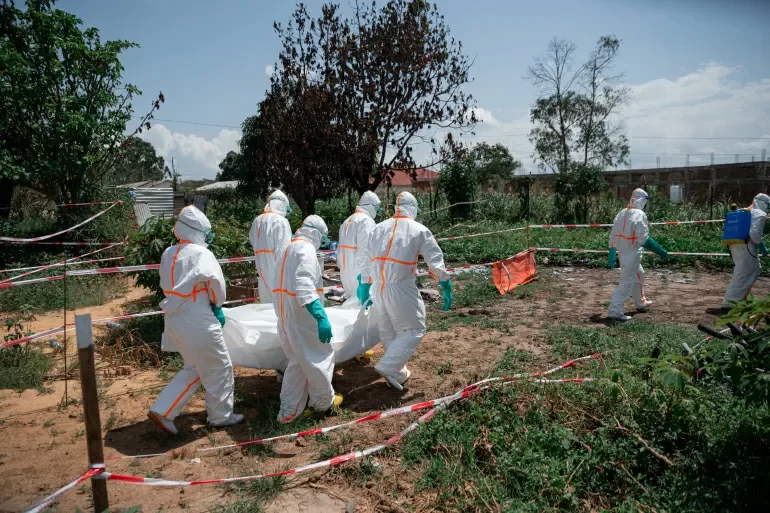
The Democratic Republic of the Congo (DRC) is currently grappling with its deadliest Ebola outbreak on record, with the death toll climbing to 2,325 as of mid-August, according to the country’s National Institute of Public Health. This figure surpasses the 2,299 fatalities recorded during the 2018–2020 outbreak, the previous deadliest event in the nation’s history of Ebola responses.
Confirmed infections have now reached 4,945 total cases, with 101 new positive detections reported in just the 24-hour period preceding the institute’s latest update. Tom Fletcher, the United Nations Humanitarian Coordinator, emphasized that this outbreak is spreading faster than any previous Ebola event recorded in the DRC. He warned that urgent, scaled-up action and global solidarity are critical to bringing the virus under control before it becomes completely unmanageable.
This outbreak marks the 17th recorded Ebola event in the DRC, and it first outpaced the 2018–2020 outbreak in total case counts back in late July. World Health Organization (WHO) Director-General Tedros Adhanom Ghebreyesus issued a stark warning this week: if transmission continues at its current rate, the outbreak could overtake the devastating 2014–2016 West African Ebola crisis, which killed more than 11,000 people across the region.
A unique set of challenges is amplifying the severity of this outbreak. Unlike previous large Ebola events in the DRC, the current outbreak is caused by the Bundibugyo strain of the ebolavirus, for which no fully approved vaccines or targeted treatments currently exist. Response efforts are further hampered by systemic barriers: the DRC’s fragile public health infrastructure, the remote, hard-to-reach location of many affected communities, and ongoing armed conflict along the country’s borders with South Sudan, Uganda and Rwanda all slow coordinated containment work.
The DRC has faced recurrent Ebola outbreaks for decades, a pattern partially driven by its geographic location within the Congo Basin, where the virus is naturally hosted in wild animal populations, particularly fruit bats. Spillover to humans most often occurs after contact with infected wild animals, followed by secondary human-to-human transmission. Long-standing structural issues including persistent political instability, widespread poverty, and limited access to basic healthcare have also made it far harder to curb outbreaks once they emerge.
Alarming new data shows the case fatality rate has surged from roughly 20% in June to 47% today, meaning nearly half of all confirmed Ebola patients are now dying from the virus. This trend runs directly counter to the typical pattern of Ebola outbreaks, where fatality rates usually fall as contact tracing improves and patients receive care earlier in the course of infection.
Thomas Parisch, a senior official with Doctors Without Borders (MSF), explained the root of this rising mortality: most cases are only detected far too late, often after the patient has already died in the community, leaving no window for life-saving intervention.
Right now, public health researchers are conducting clinical trials of several experimental vaccines and targeted therapies for the Bundibugyo strain, while health authorities are also investigating whether existing Ebola treatments developed for other strains can offer any cross-protection. As of the latest update, evidence of that cross-protection remains limited exclusively to preclinical animal studies, with no conclusive human trial data available yet.