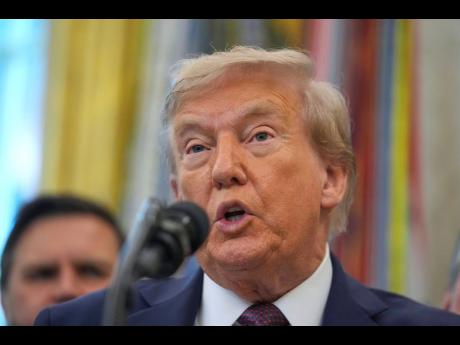
A new Reuters/Ipsos public opinion survey has delivered a striking blow to former U.S. President Donald Trump, with his national approval rating dropping to 31% — the lowest point of his entire political career. The downshift, a one-point decline from results recorded just two weeks earlier, signals rapidly escalating public discontent with Trump’s leadership, and casts significant uncertainty over his Republican Party’s prospects in the fast-approaching November congressional midterm elections, where control of both chambers of the U.S. Congress will be up for grabs.
The poll’s findings paint a deeply favorable picture for Democrats ahead of the vote. When asked to choose between an unnamed Democratic and Republican congressional candidate, registered voters favored Democrats by a 12-point margin: 47% backed the Democratic hopeful, compared to just 35% who supported the Republican candidate. Analysts emphasize that these results capture a snapshot of current voter sentiment, rather than a definitive forecast of outcomes in individual competitive congressional districts, where local candidate profiles and campaigning often shift race-level dynamics.
Worsening economic anxieties, most notably skyrocketing gasoline prices that have strained household budgets across the country, have been a key driver of rising public frustration. The survey found that a substantial 68% of American adults disapprove of Trump’s approach to managing the national economy, a rejection of economic policy that has long been a central talking point for Republican campaigning.
Conducted as an online survey over four days concluding on the preceding Monday, the poll collected responses from 1,679 American adults, 1,279 of whom were confirmed registered voters. The results carry a margin of error of two percentage points for all adult respondents and three percentage points for the subset of registered voters, aligning with standard polling accuracy practices for national public opinion surveys. With the midterm elections officially set for November 3, both major parties are now ramping up campaign spending, outreach, and messaging in a bid to shift voter sentiment before ballots are cast.