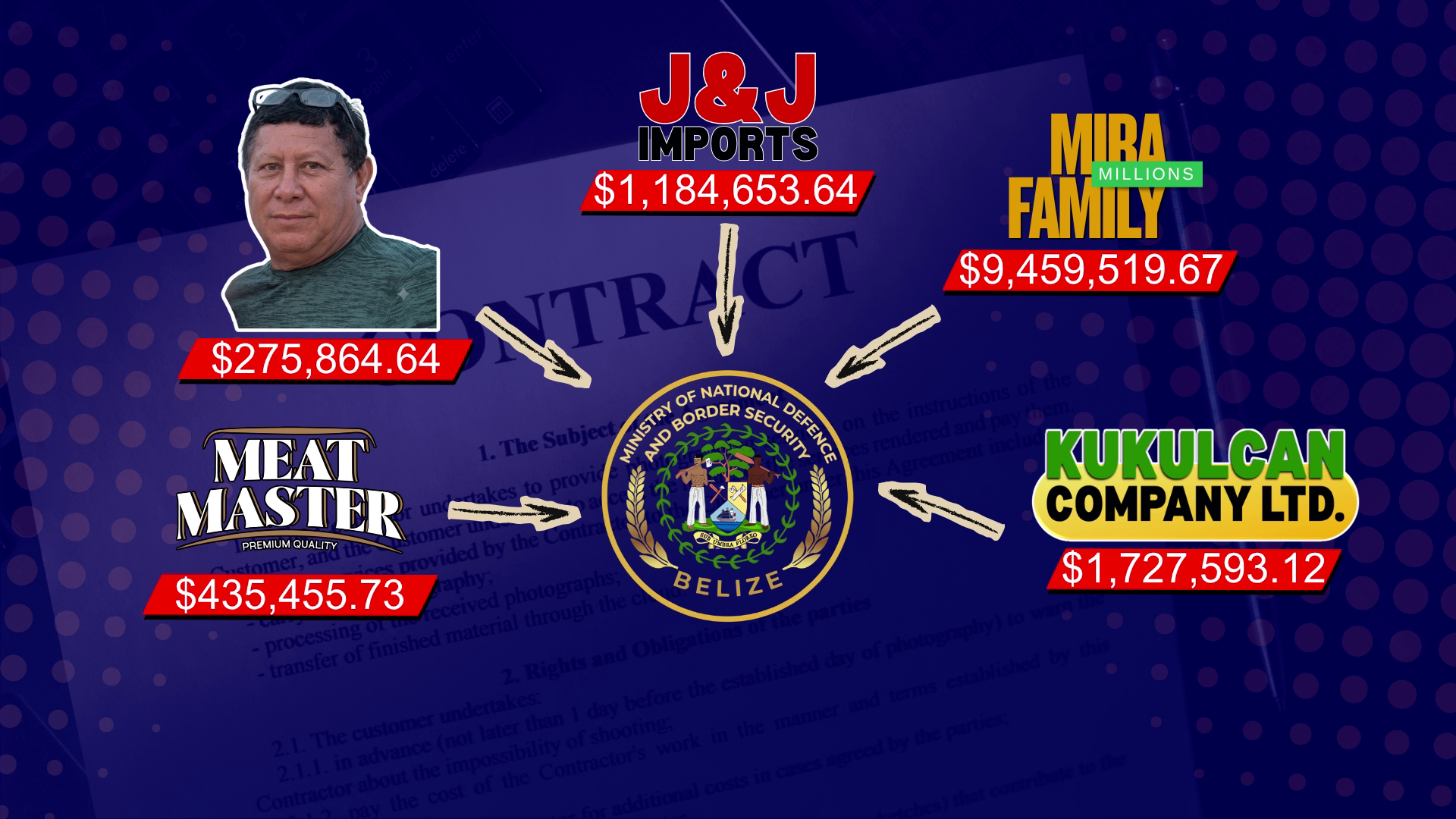
On July 8, 2026, public scrutiny has emerged around a controversial payment pattern at Belize’s Ministry of Finance, where a single vendor received more than $300,000 in government funds via 35 separate invoices processed in a single business day. An independent review of the payment records uncovered recurring identical amounts across multiple invoices, most notably $9,425 and $9,750, leading to widespread speculation that the large total contract was intentionally split into thousands of smaller sub-payments to evade public transparency and financial accountability requirements.
In an official response to media inquiries, Francis Usher, Chief Executive Officer of the Ministry of Finance, has pushed back against claims of improper activity, outlining the administrative practice that led to the clustered payment structure. According to Usher, the multiple same-value invoices did not represent an attempt to split a large contract. Instead, he explained, vendors routinely consolidate delivery documentation for batch submission to the ministry’s accounting department, rather than filing separate payment requests after every individual delivery.
The payments in question, Usher confirmed, correspond to supplies delivered to the Belize Defence Force (BDF) and the Belizean Coast Guard by local vendor Meat Master, covering completed orders spanning a full two-month period. The standard procurement process requires every delivery to follow strict verification protocols: suppliers start with a formal quotation, receive an official purchase order, complete delivery, then have the order jointly certified as matching the purchase order by both the vendor and the receiving agency (the BDF or Coast Guard) via a signed waybill. Instead of submitting payment requests for each small delivery immediately, vendors accumulate all completed order paperwork to submit in a single bi-monthly or monthly batch, leading to dozens of invoices being processed for payment on the same day when the batch is cleared.
Despite Usher’s denials of intentional wrongdoing, widespread public concern over the perception of a lack of transparency has pushed the Ministry of Defense to implement immediate changes to its payment processing policies. The longstanding practice of processing repeated individual payments of less than $10,000 will be discontinued immediately. Going forward, the ministry’s accounting team will consolidate all outstanding invoices from a single vendor into one single combined payment, a reform that many public accountability advocates argue should have been in place from the beginning.
Usher acknowledged that the public has interpreted the small, repeated payment pattern as an attempt to avoid disclosure and oversight, but he reaffirmed that no such intent existed. He explained that vendors had developed the practice of requesting small individual payments because they received cleared funds faster, which helped small businesses maintain the working capital they need for ongoing operations. Now, even when individual invoices still come in below $10,000 per delivery, the ministry will aggregate all invoices per vendor before issuing a single combined payment to strengthen clarity and eliminate any perception of improper activity.
“If anything we welcome the scrutiny and accountability and we want to demonstrate that it is a transparent process,” Usher said.
As of July 8, an official audit into the payment practices remains ongoing, and Usher confirmed that the Ministry of Defense continues to cooperate fully with auditors conducting the review.
This report is adapted from a transcribed evening television newscast, with original Kriol language remarks standardized to English for publication.