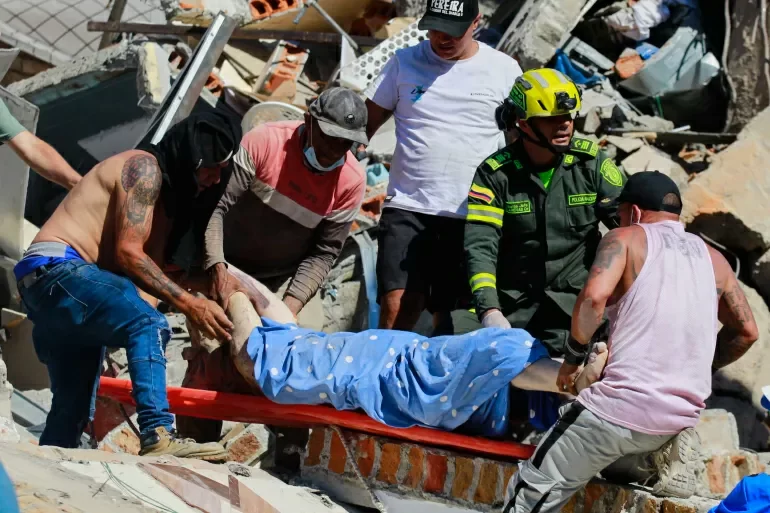
On August 10, 2026, a powerful 7.4-magnitude earthquake—the strongest seismic event to hit Colombia in this century—struck the western region of the South American nation, leaving a growing trail of death and destruction. As of August 11, official updates confirm the death toll has climbed to at least 224, with more than 2,700 people still unaccounted for across the hardest-hit areas.
The coastal Chocó region, along with the major urban centers of Cali and Pereira, bore the brunt of the quake’s damage. In Cali, a bustling city home to approximately 2.2 million residents, dozens of buildings collapsed or suffered severe structural damage, forcing hundreds of displaced residents to take shelter on public streets. Thirty-five of the confirmed fatalities are recorded in Cali alone. Across both Cali and Pereira, widespread destruction has left thousands of people homeless, with crumbled structures dotting the urban landscape as recovery teams work around the clock.
Colombia’s recently inaugurated President Abelardo de la Espriella has declared a national state of emergency, deploying the entire national military and police force to lead and support rescue operations. Rescue workers, volunteer civilians, and military personnel have been working nonstop, sifting through collapsed rubble and listening for signs of life trapped below. Multiple successful rescues have already been reported: two women and two children were pulled alive from fallen buildings in Cali, while a young boy was extracted from the wreckage of a collapsed bakery in Pereira.
The remote Chocó region presents one of the greatest challenges to response teams. Much of the area is only accessible by boat or aircraft, making it difficult to get a full, accurate assessment of the damage and casualties. In response, the Colombian government has deployed specialized teams including structural engineers, search-and-rescue units, and detection dogs to reach isolated communities and deliver life-saving aid.
Daily life across all impacted regions has been severely disrupted. Authorities have implemented overnight curfews in Cali, Armenia, Manizales, and other affected areas to maintain public order. Local hospitals are operating at maximum capacity amid a surge of injured patients, and regional airports have temporarily suspended operations to allow for critical safety inspections of infrastructure. Despite the chaos, local communities have rallied together: residents are sharing food, donating emergency supplies, and actively joining search efforts to help their neighbors.
The international community has moved quickly to offer support to Colombia. The United States has committed $15.5 million in emergency humanitarian aid, while the European Union has deployed satellite imagery technology to help guide and inform on-the-ground rescue operations. Neighboring nations including El Salvador and Mexico have also offered assistance, sending specialized rescue teams and medical supplies to support the response. Colombian global pop icon Shakira has also publicly called for national unity and solidarity across the country as it navigates this crisis.