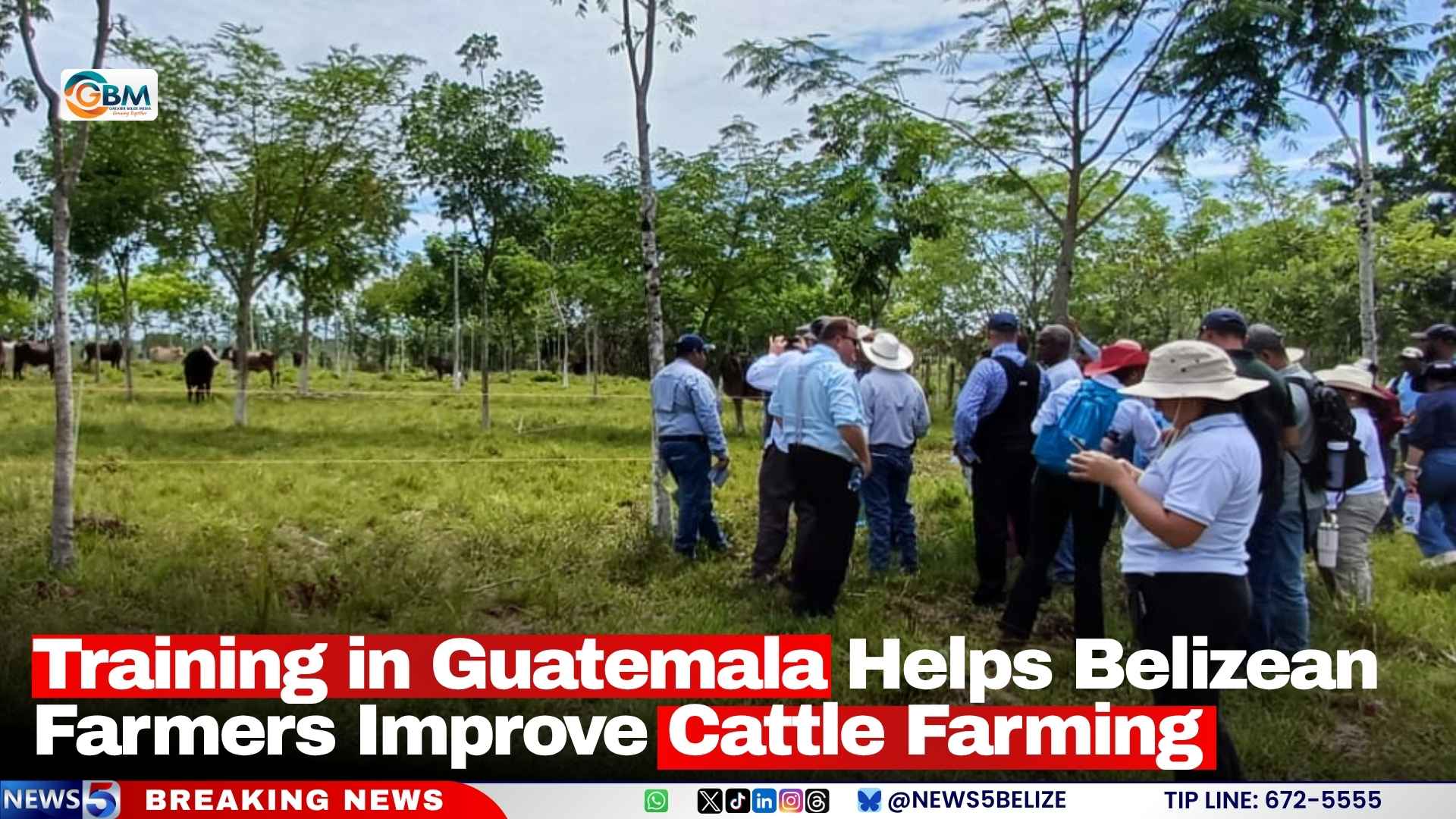
In a collaborative regional push toward more environmentally responsible agriculture, a delegation of cattle farmers, conservation leaders and government officials from Belize traveled to Guatemala’s Petén region in early June 2026 to gain hands-on training in a forest-friendly cattle raising method. The knowledge-sharing exchange was organized by The Nature Conservancy’s Belizean branch, bringing together cross-sector stakeholders from across the Selva Maya region to address shared challenges in the livestock industry.
Participants from Belize included representatives from the Belize Maya Forest Trust, the Belize Livestock Producers Association, the country’s Forest Department, and independent local cattle producers. Together, they gathered to study silvopasture, an innovative regenerative agricultural approach that diverges from the conventional practice of clearing all trees to create open grazing pastures.
Unlike traditional cleared grazing systems, silvopasture integrates native tree cultivation directly into cattle grazing lands. This model delivers multiple ecological and economic benefits: trees naturally boost soil fertility by cycling nutrients and preventing erosion, protect critical watershed habitats from runoff, extend the productive lifespan of grazing land, and cut down on deforestation pressure by reducing the need to clear intact forest for new pasture. During the training, Petén-based farmers who have already adopted silvopasture on their own ranches opened their properties to the visiting delegation, walking attendees through real-world implementation, outcomes and problem-solving for the system.
For Belize, sustainable cattle farming is a matter of urgent economic and ecological importance. The livestock sector remains a cornerstone of rural livelihoods across the country, contributing heavily to the national agricultural economy. However, years of conventional grazing practices have left many grazing lands degraded, and the sector is increasingly strained by the growing impacts of climate change, from prolonged droughts to unpredictable rainfall. At the same time, unregulated clearing of forest for new pasture has put increasing pressure on Belize’s ecologically critical Selva Maya forest system, one of the most biodiverse intact tropical forest landscapes left in Central America.
Organizers of the exchange emphasized that the cross-border training program represents a new model of regional cooperation for conservation. The initiative demonstrates how Belize and its regional neighbors are working together to build a more sustainable future for both livestock production and forest conservation in the Selva Maya, aligning economic development for rural communities with long-term environmental protection.